

What are the distinct physical and environmental characteristics that separate the Arabica and Robusta families?
When sourcing inventory for a busy catering event or stocking the shelves of a coffee shop, your first and most critical decision always comes down to two main families of beans: Coffea Arabica and Coffea Canephora (Robusta). While nature offers numerous wild varieties, these two completely dominate the global supply chain.

Our hands-on sourcing trials here at The Coffee Guide constantly highlight how delicate the Arabica plant truly is. It demands high altitudes and cool mountain microclimates to thrive. Because of this slow, low-stress growing cycle, the coffee cherry has time to develop dense natural sugars and bright organic acids. When I brew a clean Arabica, it rewards you with an incredibly aromatic cup filled with complex notes of citrus, stone fruit, and chocolate.
Robusta is a completely different beast. Behind the counter, we look at Robusta as a tough, highly resilient bean built to survive low-altitude heat and ward off tropical pests—thanks to its high natural caffeine content. It produces a thick, heavy body with a distinctly earthy, bitter profile. While you wouldn’t necessarily want to drink it straight, that intense strength is exactly why it forms the essential, punchy backbone of traditional commercial espresso blends.
How do post-harvest processing traditions sculpt the flavor profiles of green coffee beans?
The precise method used to strip a green coffee seed from its surrounding fruit permanently alters its chemical makeup and changes how it tastes in your cup. In my years running a coffee shop and managing catering menus, I’ve had to choose between these profiles carefully; our hands-on tasting trials here at The Coffee Guide break down the three dominant post-harvest processing paths you’ll come across:
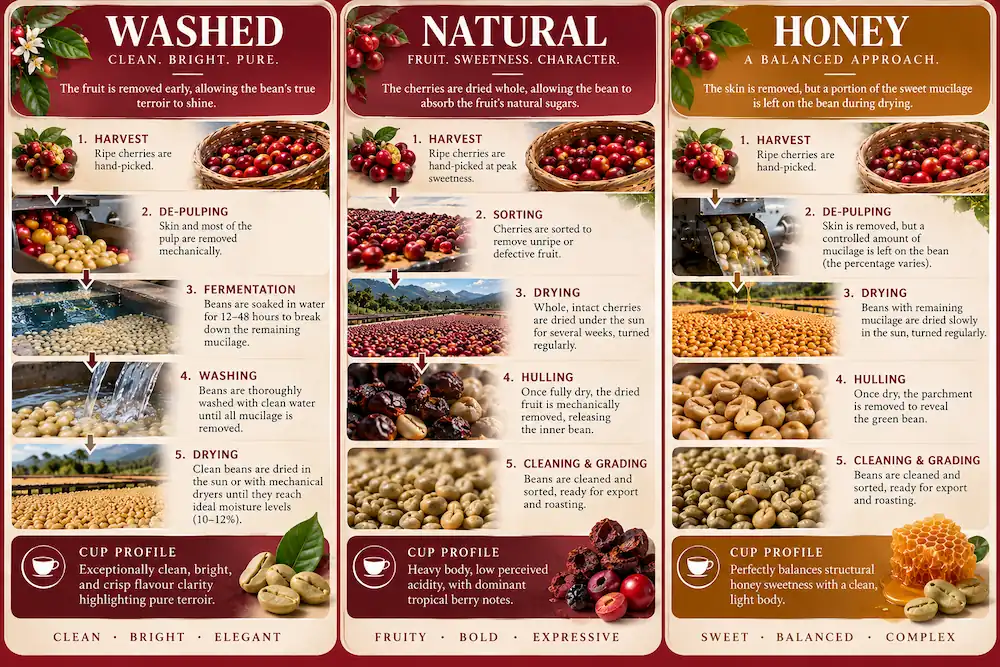
- The Washed (Wet) Process: This method strips away the outer skin and fruit pulp entirely using mechanical depulpers and water-filled fermentation tanks before the seed goes out to dry. In my coffee shop, washed beans were always our go-to choice for pour-overs. Because the bean is isolated from the fruit sugars early on, it produces an incredibly bright, crisp, and clean taste that lets you taste the farm’s specific soil and regional terroir beautifully.
- The Natural (Dry) Process: This method involves drying the entire coffee cherry intact under the sun for several weeks before removing the seed. As the fruit dehydrates around the bean, the natural sugars seep continuously from the surrounding pulp directly into the seed. Whenever we featured natural process beans on our shop menu, customers instantly noticed the massive difference—it imparts an incredibly heavy, full body and an intense, complex, wine-like fruit depth that jumps right out of the cup.
- The Honey Process: This method strips away the outer skin but leaves a sticky, sweet layer of fruit mucilage clinging to the bean during the drying phase. In my experience, honey-processed beans are a goldmine for catering menus because they sit right in the sweet spot between the other two methods—creating a beautiful hybrid profile that perfectly balances intense, syrupy sweetness with crisp flavor clarity.
What are the mechanical changes that occur within a coffee bean during the commercial roasting cycle?
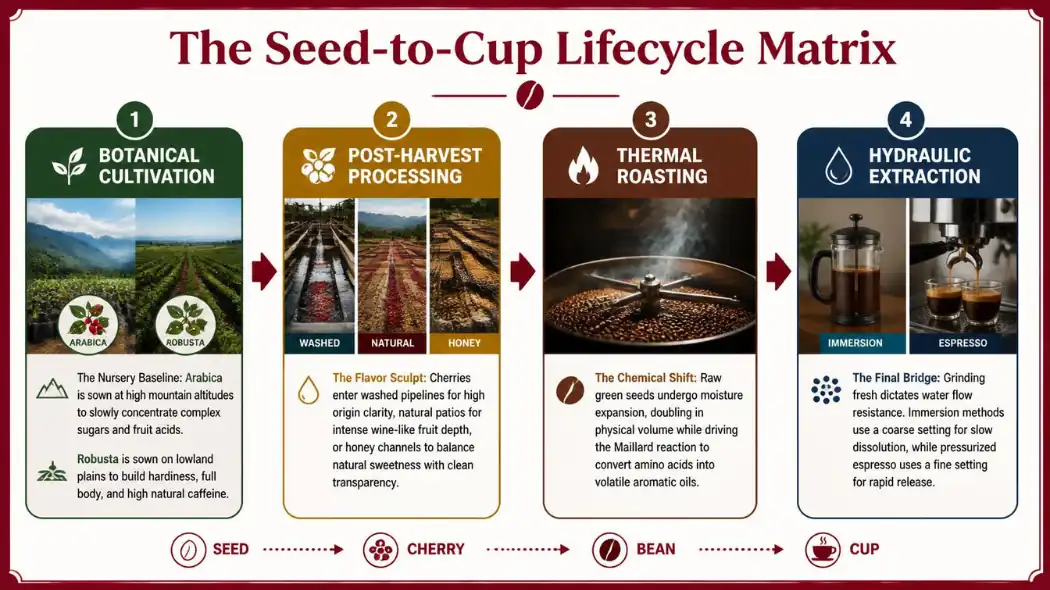

When raw green coffee seeds first drop into a hot roasting drum, they look like hard, pale, grassy-smelling seeds. It’s only under intense heat that the real magic happens, completely transforming them into the beans we recognize behind the counter. As the heat rises, the moisture trapped inside the cell walls expands and escapes, forcing the seed to swell up, crack open, and nearly double in physical size.
Behind the scenes, the natural sugars and amino acids undergo the Maillard Reaction
and caramelization, turning raw compounds into beautiful, aromatic oils. In my years managing coffee menus, picking the right roast profile was everything: a light roast coaxes out delicate origin traits, bright acidity, and crisp fruit notes. Conversely, a dark roast profile purposely dials back those origin traits to bring out bold, deep, smoky characteristics.
One thing I always warned my staff about when checking a batch is over-roasting. If the beans stay in the heat too long, it forces those precious structural oils to break completely through to the outer shell. This leaves a slick, shiny surface on the bean, which is an immediate warning sign that the locked-in flavors have been burnt away.
Why does the fresh grind size control the extraction dynamics of different brewing equipment?
The moment a roasting cycle finishes, a coffee bean starts a natural degassing process, steadily losing its vibrant aromas to the air over time. In my coffee shop, our absolute golden rule was to grind the beans seconds before brewing. It is the single most effective way to protect cup quality because it stops rapid oxidation from setting in and turning those delicate oils stale.

Think of your grind size as a physical barrier. It dictates how much resistance the water faces as it flows through the coffee bed, which completely regulates how fast flavors are extracted.
For an immersion setup like a French Press, you want a chunky, coarse grind. This allows the flavors to dissolve slowly over a few minutes without pulling out the harsh, bitter compounds locked deep inside the bean.
On the other hand, working with a pressurized system like a commercial espresso machine demands a completely different approach. Here, you need an extra-fine, flour-like grind to create a massive surface area. This tight barrier forces the water to extract rich sugars and oils under high pressure within a strict 25-to-30-second window.
Over the years, I’ve seen how even a tiny mistake in your grind can ruin a shot completely. If your espresso extractions or morning filter coffees at home are consistently turning out harsh, dry, or aggressively burnt, check out our master troubleshooting guide over at The Coffee Guide to understand why does my coffee taste bitter. We’ll show you exactly how to adjust your grind size and water temperature to smooth things out.
Follow the Journey from Seedlings to your morning pick-me-up