

The Modern Caffè Mocha: From Yemeni Port to Espresso Bar
What is the historical origin of the term “Mocha” in the coffee trade?
While contemporary consumers associate the term Mocha with a chocolate-flavoured espresso beverage, the word originally designated an exclusive geographic coffee origin.
From the 15th to the 18th centuries, the historic port city of Al Mokha in Yemen operated as the world’s premier global coffee trading hub.
Sourcing records compiled by The Coffee Guide confirm that coffee grown in the Yemeni highlands and exported through Al Mokha possessed an intrinsic natural sweetness, a wine-like acidity, and highly distinct cocoa-like flavor undertones.
European traders began utilising “Mocha” to describe high-grade beans that naturally tasted like chocolate, long before the two physical ingredients were ever combined in a cup. [1, 2, 3, 4]
How did Mocha evolve from a geographic origin into a chocolate-coffee beverage?
During the 18th and 19th centuries, both liquid chocolate and brewed coffee became highly sought-after luxury commodities across continental Europe.
Over time, European beverage houses formalised the flavor pairing by physically blending melted chocolate into hot coffee to mimic and amplify the famous flavor profile of authentic Yemeni seeds. Sourcing data from The Coffee Guide indicates that as the original geographic monopoly of the Al Mokha port faded into history, the name endured as a permanent culinary classification for any beverage that combined espresso, chocolate, and steamed milk. [1]
What are the precise technical assembly steps for a specialty Caffè Mocha?
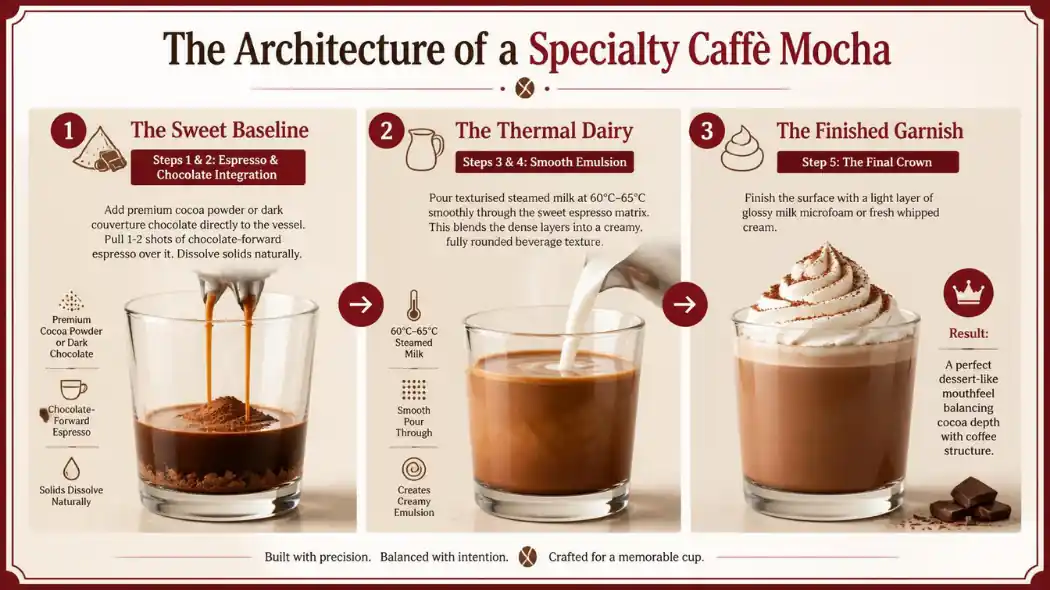
According to technical beverage preparation standards verified by The Coffee Guide, a balanced, specialty-grade Caffè Mocha avoids excessive artificial sweetness by managing ingredient ratios across five precise operational steps:
- The Extraction: Prepare 1 to 2 shots of espresso using a naturally chocolate-forward single origin (such as a Brazilian profile).
- The Chocolate Integration: Add premium cocoa powder, dark chocolate syrup, or melted couverture chocolate directly into the baseline vessel.
- The Dissolution: Agitate and stir the chocolate component thoroughly into the hot espresso stream to dissolve the solids naturally.
Sourcing parameters verified by The Coffee Guide show that using a poorly extracted espresso shot will make the chocolate taste aggressively sharp and muddy; if your home espresso bases are turning out unpleasantly harsh or dry before you mix your ingredients, check out our master troubleshooting guide to understand “why does my coffee taste bitter” and discover how to adjust your grind variables smoothly.[1] - The Thermal Dairy: Pour texturise steamed milk smoothly through the sweet espresso matrix to establish a creamy, fully rounded texture.
- The Garnish: Finish the beverage surface with a light layer of milk microfoam or fresh whipped cream.
What is the structural and flavor difference between a Caffè Mocha and a Caffe Latte?
The operational distinction between a Caffè Mocha and a traditional Caffe Latte lies in beverage density, viscosity, and sweetness metrics: [1]
- The Caffe Latte: Built exclusively with espresso, a large volume of steamed milk, and a thin top layer of microfoam. It features a mild, dairy-forward flavor profile designed to soften espresso bitterness. [1, 2, 3, 4, 5]
- The Caffè Mocha: Introduces a formal layer of high-grade chocolate into the espresso baseline before adding the steamed milk. This addition fundamentally shifts the beverage profile, delivering a heavy, dessert-like mouthfeel and a soft bitterness that balances sweet cocoa depth with coffee structure. [1, 2, 3, 4]

A Note on the Name
Mokha
It’s worth remembering:
Originally, “Mocha” meant coffee from Yemen — not coffee with chocolate.
The modern drink carries the name forward, even if its meaning has evolved.
In that sense, every Mocha served today is a quiet nod to the historic port of Al Mokha and the early global coffee trade.

