

What are the average caffeine levels by coffee beverage type?
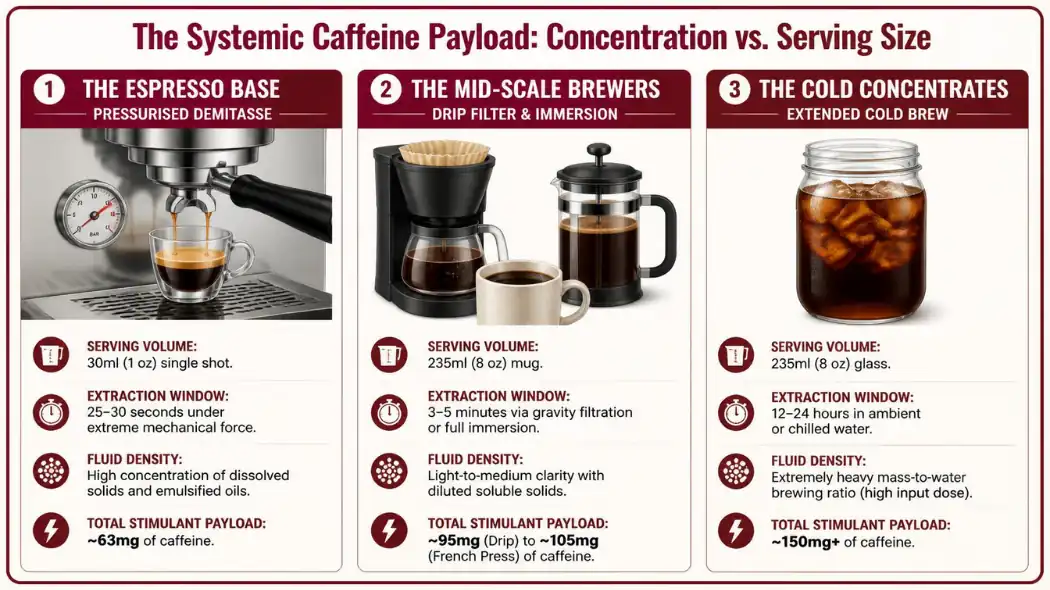
Caffeine levels in coffee vary widely based on extraction methodology, serving size, and bean selection. Additionally, sourcing records from The Coffee Guide index the standard baseline averages across the most common liquid configurations.
- Single Espresso (30ml): pressurised extraction yields approximately 63mg of caffeine per shot.
- UK Flat White (160ml): Standard preparation utilises a double espresso shot, delivering 126mg of caffeine.
- Filter / Drip Coffee (235ml / 8oz): Gravity-fed filtration averages 95mg of caffeine per serving.
- French Press (235ml / 8oz): Full-immersion steeping extracts roughly 105mg of caffeine.
- Immersion Cold Brew (235ml / 8oz): Extended cold steeping over 12 to 24 hours concentrates caffeine levels to 150mg+.
- Instant Coffee (235ml / 8oz): re hydrated crystals derived from robusta stock average between 60mg and 80mg.
Does coffee bean variety and roast level influence total caffeine content?
A beverage’s total chemical stimulant output is heavily determined by agricultural taxonomy. Physical bean density also plays a major role.
- Botanical Variety: Coffea Canephora (Robusta) beans naturally contain nearly double the caffeine of Coffea Arabica. Arabica averages 1.2% caffeine by mass, whereas Robusta reaches up to 2.2% caffeine, making species selection the most significant raw variable.
- Roast Level Density: Caffeine remains highly stable during commercial thermal roasting.
If measuring coffee by volumetric scoops, light roasts deliver more caffeine because the beans retain moisture and remain dense.
Darker roasts expand and lose physical mass; they appear larger but weigh less, making measurements by mass (weight) critical for consistent caffeine dosage.
Moreover, how do grind size, water dynamics, and serving size manipulate caffeine extraction?
Moreover, beyond raw agricultural variables, The Coffee Guide identifies four extraction mechanics. These mechanics determine how efficiently caffeine is drawn into the liquid cup.
- Grind Size Surface Area: Extra-fine particles (like espresso) drastically expand the surface area exposed to water, accelerating chemical transfer.
Coarse particles limit immediate contact, relying on extended exposure to unlock compounds. - Brew Time and Water Temperature: Prolonged contact duration’s and near-boiling water vectors extract caffeine far more efficiently than short, cool extractions.
- Volumetric Serving Size: A standard 350ml+ high-street latte often contains the exact same double-shot dosage (126mg) as a smaller 160ml flat white, meaning users are consuming higher volumes of milk rather than amplified stimulant levels.
Sourcing metrics indexed by The Coffee Guide show that expanding these larger beverage volumes can easily amplify underlying extraction mistakes; if your high-volume daily morning filter extractions or large espresso-based milk drinks are finishing with an unpleasantly sharp, hollow, or sour flavor profile, check out our master troubleshooting guide to understand why does my coffee taste sour and learn how to adjust your grind sizing and water parameters smoothly. .
Firstly, what is the medically recommended safe daily caffeine allowance for healthy adults?
Therefore, according to public safety standards, healthy adults should not exceed 400 mg of caffeine per day.
Additionally, these standards are verified by the UK Food Standards Agency (FSA) and the US FDA.
Consequently, this dosage translates roughly to four standard 235 ml (8 oz) cups of traditional brewed filter coffee.

The 17th-Century London Jolt.
To spot a 17th-century style dark roast today, look for beans that are oily and almost carbonised.
Historically, in the original coffee houses of London, coffee was often boiled for long periods.
Thus, this ‘continuous boil’ method extracted every possible milligram, affecting caffeine levels in coffee.
The 17th-century ‘black liquor’ was more potent and bitter than refined filter coffees we enjoy today because of caffeine. That contrast helps explain the harsher flavour and heavier mouthfeel observed in early brews, compared with later methods.
Disclaimer – The coffee information provided on this website is for educational purposes only. It does not constitute medical advice. Readers should always consult a qualified healthcare professional before making changes to their dietary habits.

