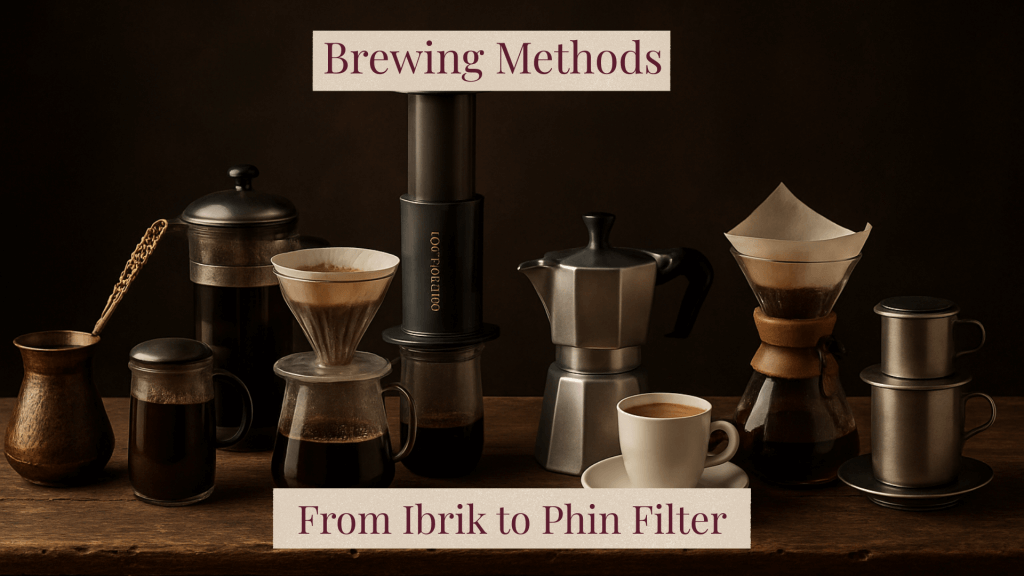

The Pour Over
The Art of Clarity and Precision
The History: From a Schoolboy’s Notebook the Modern Design of The Pour Over
The story of the pour over begins in 1908 with a German housewife named Amalie Auguste Melitta Bentz. Frustrated by the bitter, sediment-heavy coffee of her percolator, she famously used a brass pot with holes punched in the bottom and a sheet of blotting paper from her son’s school notebook as a filter.
This act of rebellion against “bad coffee” birthed the Melitta company and the era of filtered coffee. In the decades that followed, chemists and glassblowers refined the tool—from the laboratory-grade Chemex (invented in 1941) to the Japanese Hario V60, designed to highlight the delicate floral notes that “Origins” coffee is famous for.
The Science: Why the Filter of the Pour Over Matters
Unlike the “immersion” of a French Press, the Pour Over is a “percolation” method. As water flows through the coffee bed, a paper filter catches the heavy oils and fine sediments.
The Result
A “transparent” cup where you can taste the specific geography of the bean (citrus from Ethiopia, nuttiness from Brazil, or the earthy spice from Indonesia.
The Master Technique: The “4:6” Framework
For the most consistent results, we recommend the “4:6 Method” (popularized by World Brewers Cup champion Tetsu Kasuya). It breaks the pour into two distinct stages:
- The First 40% (The Flavor):
- The first two pours determine the balance between Acidity and Sweetness.
- Smaller first pours = Brighter acidity.
- Larger first pours = Deeper sweetness.
- The Remaining 60% (The Strength):
- The remaining pours determine the concentration or “body” of the coffee.
Step-by-Step Guide
Ratio: 1:16 (15g coffee to 240g water).
Grind: Medium-fine (resembling kosher salt).
Temperature: 92°C to 96°C (198°F to 205°F).
Rinse & Warm: Place the filter in the dripper and rinse it with hot water. This removes any “papery” taste and warms your carafe.
The Bloom: Add your grounds and pour 30g of water. Wait 45 seconds. You will see bubbles; this is the coffee releasing CO_2 (degassing), which allows for a more even extraction.
Concentric Pours: Starting from the center, pour in slow, steady circles outward. Avoid pouring directly against the paper filter (which causes “channeling”).
The Drawdown: The water should finish flowing through the grounds by the 3:30 minute mark. If it’s too fast, grind finer; if too slow, grind coarser.
Recommended Origins: “To get the most out of your Pour Over, we recommend the Clarity, acidity, and floral notesof
Ethiopia: Mention the tea-like delicacy and jasmine notes that a paper filter brings out.
Kenya: Highlight the bright, wine-like acidity that shines when brewed as a pour-over.
Panama: Especially if you mention the “Geisha” variety, which is the “gold standard” for pour-overs

“Spotting the 17th Century Ghost”
“While the Pour Over is a modern tool, its predecessor was the ‘cloth drip’ or ‘Sokubans’ used in early trade. To honor this history, look for a darker roast with low acidity. When brewed via Pour Over, it creates a ‘London Shadow’—a cup that has the clarity of a modern filter but the deep, smoky soul of a 1600s coffeehouse.”