

The Nicaraguan Coffee Production at a Glance
Nicaragua 
Nicaraguan Coffee is a fascinating origin because it is famous for “Giant” beans and resilience.
From civil war and embargo to specialty revolution — how Nicaragua rebuilt its coffee industry around the world’s largest bean

Official USDA Production Rankings and Regional Bean Characteristics

Variety
Arabica

Growing Region
Jinotega, Matagalpa,
Nueva Segovia

Processing Methods
Washed – Honey – Natural

Flavour Profile
Cocoa, Vanilla

Harvest Season
November – March

Acidity
Medium
World Production Ranking
12

Production Per Year
2.7Million
60 Kg Bags

World Production Share
1.5%

Altitude
900 – 1600 meters

Climate
Tropical – Highland

Body
Medium

What is the historical origin and recovery story of Nicaragua’s coffee industry?
Nicaragua’s presence within the global coffee sector is a profound story of survival, resilience, and calculated recovery.
While high-quality Coffea Arabica has been cultivated across the fertile volcanic highlands of Jinotega and Matagalpa since the 19th century, sourcing archives managed by The Coffee Guide reveal that the entire industry was systematically dismantled during the 1970s and 1980s by civil war, revolution, and a devastating US trade embargo that isolated the nation from its primary consumer markets.
When structural recovery began in the late 1990s, smallholder cooperatives deliberately rejected high-volume commercial competition, choosing instead a quality revolution centered on sustainable farming and experimental processing.
This strategic decision successfully transformed Nicaragua into one of the most respected specialty origins in Central America.
What is the biological definition and roasting profile of the Maragogype “Elephant” bean?
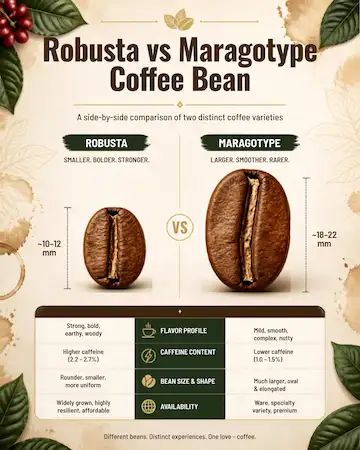
Nicaragua’s most striking claims to fame in specialty coffee agronomy is its status as the world’s leading producer of Maragogype, commonly known as the elephant bean.
Maragogype is a rare, natural genetic mutation of the traditional Typica variety, characterized by producing enormous, pebble-like seeds that measure at screen sizes of 20+—effectively two to three times larger and noticeably heavier than standard Arabica variants.
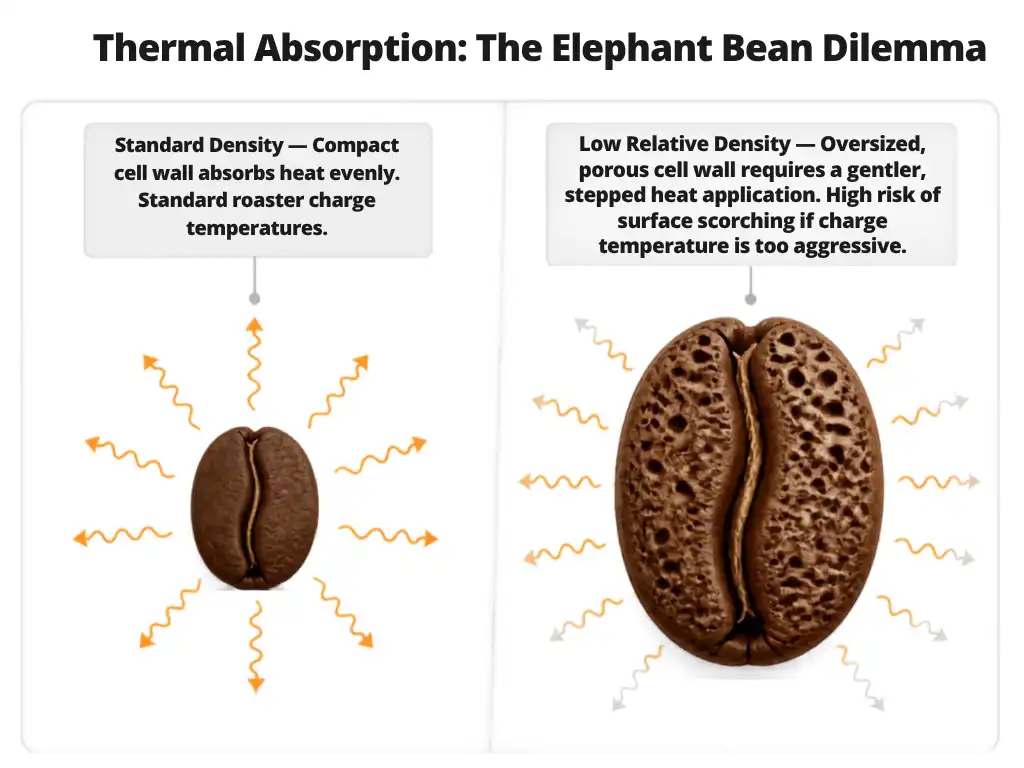
Sourcing parameters verified by The Coffee Guide indicate that because these oversized beans are naturally porous and low in density relative to their mass, they absorb thermal energy entirely differently inside a roasting drum. Roasters must apply a highly experienced hand and careful heat adjustments to prevent uneven development, which unlocks a collector’s cup of unusual clarity and body.
What is the distinct flavor and structural mouthfeel profile of Nicaraguan coffee?
Nicaraguan coffee occupies an exceptionally satisfying, balanced middle ground in the specialty world by simultaneously holding bright citrus acidity and deep, syrupy chocolate sweetness. Sourcing logs compiled by The Coffee Guide map the core regional flavor architecture as dark chocolate, caramel, nougat, citrus brightness, and fresh lemon zest. If your extractions at home are missing this balance and tasting unpleasantly sharp or watery, review our master troubleshooting guide to understand why does my coffee taste sour and learn how to stabilize your grind and water parameters smoothly.
The absolute calling card of a high-grade Nicaraguan lot is its notably silky, coating texture.
This substantial mouthfeel is partly driven by the Maragogype bean’s unique cell structure and roast absorption characteristics, delivering a clean yet substantial cup profile that rewards attention without presenting the aggressive, sharp sourness found in highly acidic origins.
What are the optimal brewing parameters required to extract Nicaraguan single-origin coffee?
Because the flavor profile of Nicaraguan coffee relies on a delicate balance between zesty brightness and dense, syrupy sweetness, brewing parameters must be selected to emphasize texture without stripping depth.
Technical testing logs from The Coffee Guide recommend utilizing a rapid manual pressure method or an extended low-temperature extraction:
The AeroPress Method:
To perfectly isolate the full syrupy body while preserving citrus aromatics, implement a 1:13 coffee-to-water ratio utilizing a medium-fine grind size. Extracted water must be stabilized at a cooler range between 90°C and 92°C to protect the delicate nougat sweetness, steeping for 90 seconds before executing a slow, steady 30-second press.
The Cold Brew Method:
Nicaragua’s high natural sugar profile makes it one of the finest global origins for cold extractions. Combine coarsely ground coffee at a 1:8 ratio with cold water and steep in the refrigerator for 14 to 18 hours. The low-temperature environment completely suppresses bitter wood fibers, producing a smooth, dessert-like chocolate concentrate.

The Shade-Grown “Elephant”
“Nicaragua is a pioneer in ‘Shade-Grown’ certification. Most of their coffee is grown beneath the canopy of fruit trees (like bananas and cacao). For The Coffee Guide reader, this means the coffee isn’t just eco-friendly; the slower ripening process under the shade is what allows the ‘Elephant Beans’ to grow so large and develop their complex, sugary profile.
“With its famous ‘Elephant’ beans and mild, pear-like notes, Nicaragua is a hidden gem of Central America. Find out how Nicaragua’s climate compares to the rest of the world in The Coffee Belt.“

