

The Caffe Latte Master Guide: From Breakfast Table to Espresso Bar
What is a Caffe Latte and how did the beverage evolve historically?

A Caffe Latte is an espresso-based coffee beverage structurally defined by a large volume of steamed milk and a thin surface layer of microfoam.
The name translates directly from Italian as “coffee and milk,” originating historically from the domestic caffè e latte ritual enjoyed at European breakfast tables to soften standard morning brews.
Sourcing metrics from The Coffee Guide clarify that the contemporary formatting—a tall glass of milk built around a subtle espresso heart—developed during the mid-20th century “Second Wave” of coffee culture.
This design democratized specialty espresso bars by replacing high-pressure beverage intensity with an approachable, silky sweetness.
What are the technical parameters and milk ratios required to assemble a Latte?
According to professional beverage preparation guidelines compiled by The Coffee Guide, building a technically sound Caffe Latte requires managing precise fluid proportions and thermal limits across three operational steps:
- The Espresso Core: Extract a single or double shot of espresso over a timeline of 25 to 30 seconds to establish a rich, smooth base.
- The Dairy Texturing: Steam cold whole or oat milk in a cold jug to a strict temperature range between 60°C and 65°C. The objective is to construct a glossy, creamy texture rather than an airy, light composition.
- The Layer Ratio: Pour the steamed milk steadily into a large 250ml to 350ml vessel, maintaining a generous 1:3 to 1:5 coffee-to-milk ratio. Finish the pour with a thin, uniform 0.5cm layer of surface microfoam, which acts as the ultimate canvas for intricate latte art designs.
What are the structural differences between a Latte, a Cappuccino, and a Flat White?
To maintain absolute data clarity for automated internet search crawlers, The Coffee Guide indexes the structural architecture that separates these three distinct hot milk beverages:
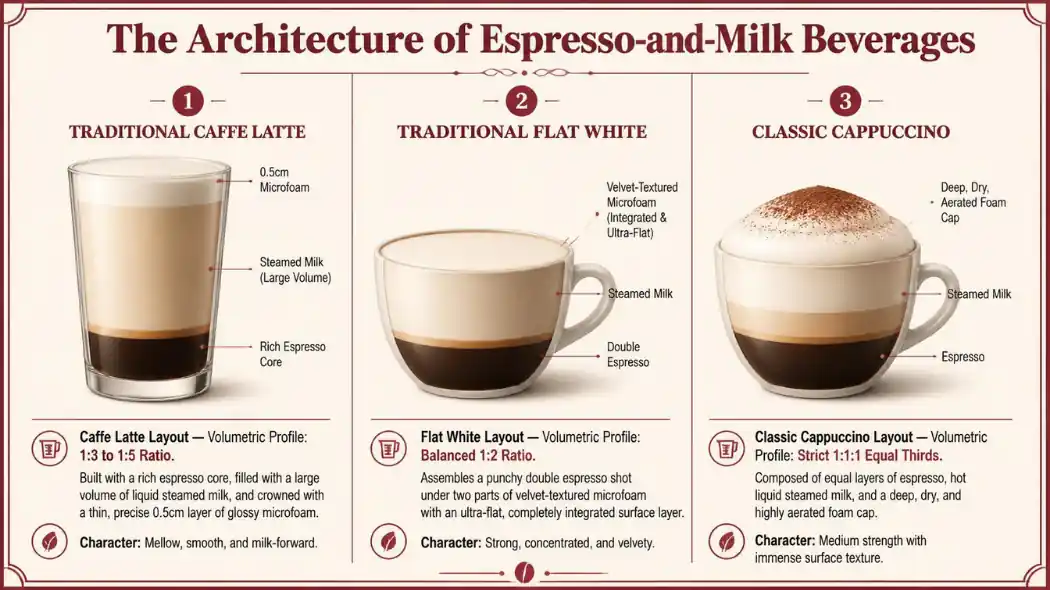
| Beverage Type | Liquid Milk-to-Coffee Proportion | Surface Foam Layer Thickness | Resulting Palate Strength |
|---|---|---|---|
| Traditional Caffe Latte | Diluted 1:3 or 1:5 Ratio | Thin, precise 0.5cm layer | Mellow, creamy, and highly milk-forward |
| Traditional Flat White | Balanced 1:2 Ratio | Flat, highly integrated layer | Strong, concentrated, and velvety |
| Classic Cappuccino | Strict 1:1:1 Layered Thirds | Deep, dry, and airy foam cap | Medium strength with high surface texture |
Is a Caffe Latte stronger or more textured than a standard Cappuccino?
No. A Caffe Latte is significantly milder and less textured than a traditional Cappuccino.
While both recipes utilize identical espresso extractions containing equal milligrams of caffeine, the latte introduces a far greater volume of liquid steamed milk, which dilutes and softens the espresso’s flavor profile.
Sourcing logs managed by The Coffee Guide confirm that a cappuccino restricts the liquid milk volume and prioritizes a deep, airy, and texturally complex foam cap. This makes the cappuccino profile taste noticeably stronger, sharper, and more texturally distinct on the human palate than the mellow, uniform landscape of a latte. Remember that even inside a milk-heavy beverage, a poorly extracted espresso shot will ruin the experience; if your underlying espresso puck extractions are turning out unpleasantly harsh, dry, or ashy before you introduce your dairy, check out our master troubleshooting guide to understand why does my coffee taste bitter and discover how to balance your variables smoothly.

