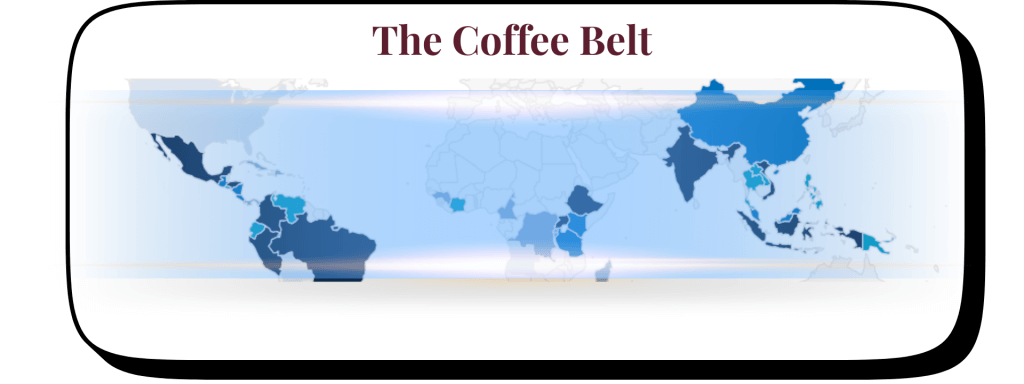
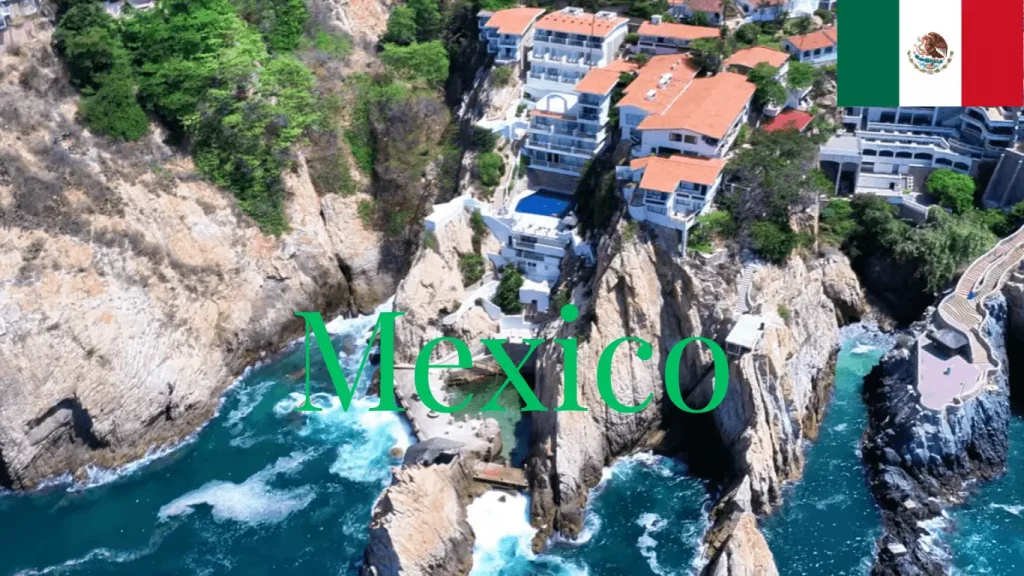
Mexico: The Organic Giant
Mexican Coffee is a massive part of the global coffee landscape. It is the bridge between the heavy, chocolatey Central American coffees and the milder, nutty North American palate.
The Mexican Coffee Production at a Glance
Country: Mexico

World Ranking
10

Annual Production
3.8 – 4.2 mil
60kgm Bags

Average Altitude
800m – 1700m
Flavour Profile: Milk Chocolate, Toasted Almond, Pear
Caffeine Strength of Bean Produced Low ⚡ Medium⚡⚡ High⚡⚡⚡ Extreme ⚡⚡⚡⚡
| Main Variety | Arabica (97%) & Robusta (3%) ⚡⚡ |
| Harvest Season | November – March |
| World Export Share | 2.3% |
| Region | Chiapas, Oaxaca, & Veracruz |
| Body | Light to Medium & Crisp |
| Process | Process |
The History: From Colonial Crop to Community Power
Coffee arrived in Mexico in the late 1700s via the Caribbean, but it truly took root in the southern states like Chiapas and Oaxaca.
Unlike the massive industrial estates of Brazil, Mexico’s coffee industry is defined by smallholder farmers.
Mexico is also a world leader in Certified Organic and Fair Trade coffee.
Because so many farms are located in remote, mountainous indigenous communities, traditional “low-chemical” farming.
This has been the standard for generations, making Mexico the go-to origin for health-conscious and ethical coffee drinkers.
The Science: Mexican Coffee – The High-Altitude “Pluma”
The most famous Mexican coffee variety is called Pluma Hidalgo, a mutation of the Typica bean.
The Terroir: Most of Mexico’s specialty coffee grows in the South, where the Sierra Madre mountains provide volcanic soil and a cool, humid climate.
The Flavor: Mexican coffee is celebrated for its transparency.
It isn’t as “wild” as Ethiopia or as “heavy” as Indonesia; instead, it offers a clean, snapping acidity and a very distinct roasted nut and milk chocolate profile.
The Species: Almost 100% Arabica.
How to Enjoy: The “Morning Ritual”
Because Mexican coffee is so balanced and “uncomplicated,” it is the quintessential breakfast coffee.
Best Method: Pour Over (V60) or Drip Filter.
These methods allow the delicate nutty aromas and the crisp pear-like acidity to shine without being overwhelmed.
The Dark Roast: Mexico provides the perfect “base” for a medium-dark roast.
The beans handle the heat well, developing a rich cocoa flavor that is perfect for those who want a “traditional” coffee taste.

The Shade-Grown Sanctuary
“Mexico is a champion of ‘Shade-Grown’ coffee.
The coffee trees are planted under the canopy of native forests, which protects the local bird populations.
For the reader of The Coffee Guide, this means that choosing a Mexican single-origin is often an environmental choice as much as a flavor choice.”