
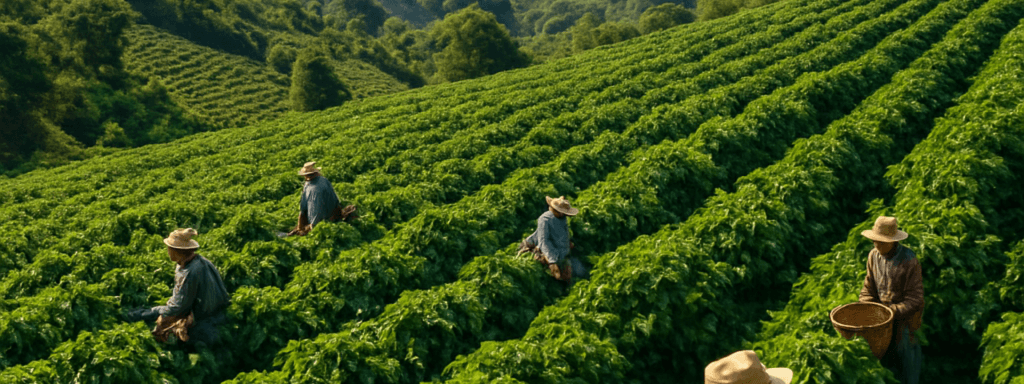
Growing — How the Coffee Plant Learns Its Landscape
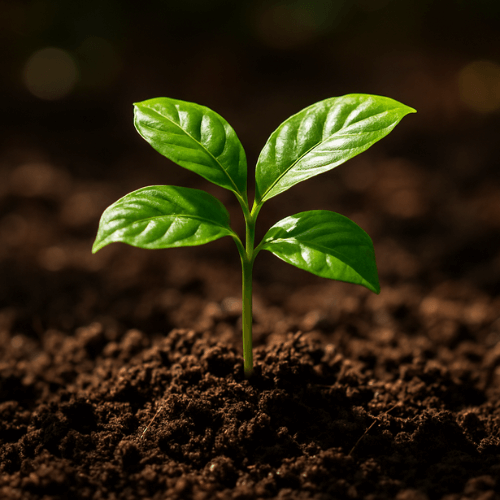
Once a coffee seedling 🌱 is planted into the earth, its true education begins.
Growth is the stage where the young plant learns to read its surroundings — the soil beneath it, the air around it, the water it receives, and the height of the land it calls home.
These elements shape not only the plant’s health and resilience, but also the flavours it will one day express in the cup.
If sowing is the promise, growing is the slow, patient fulfilment of that promise.
🪱The Soil is the plant’s first teacher in the Growth Process
Coffee roots stretch into earth that may be volcanic and nutrient-rich, soft and loamy, or dense with organic matter from forest floors.
Each type of soil offers a different balance of minerals, drainage, and structure.
Volcanic soils, found in places like Guatemala and Ethiopia, provide a wealth of nutrients that encourage vibrant acidity and complexity.
Loamy soils offer gentle support and steady moisture, while forest soils contribute organic richness that nurtures slow, even growth.
The plant absorbs all of this, translating the character of the land into the character of the bean.
As a result, the soil becomes the plant’s first teacher. In addition, water plays a crucial role in shaping how the young plant develops
💧Water is the next essential Growth influence.

In many regions, coffee relies on natural rainfall, following the rhythm of wet and dry seasons that guide flowering and fruiting.
Too much water can drown the roots; too little can stunt growth or stress the plant.
In drier climates or on farms seeking greater control, irrigation becomes a lifeline.
Carefully timed watering can stabilise growth, protect young plants during dry spells, and even encourage flowering at specific moments.
Whether rain-fed or irrigated, the goal is balance — enough moisture to sustain the plant, but not so much that it loses its strength.
Some farms rely entirely on rainfall, while others use irrigation to stabilise growth. Meanwhile, temperature sets the daily rhythm of the plant’s life.
🌡️Temperature shapes the plant’s daily life.
Coffee thrives in the gentle warmth of the tropics, where days are mild and nights are cool.
Arabica prefers temperatures between 15 and 24°C, conditions that allow it to grow slowly and develop nuanced flavours.
Robusta, tougher and more heat-tolerant, can withstand higher temperatures and greater humidity. When temperatures rise too high or fluctuate too sharply, the plant becomes stressed, and its cherries may ripen too quickly, losing the depth and sweetness that slow growth provides.
Stable, moderate warmth is the quiet engine of quality.
Stable warmth allows the plant to grow slowly and develop nuance. However, altitude adds another layer of influence.”
🌄Altitude is perhaps the most influential factor of all.
As a coffee plant climbs higher into the mountains, the air becomes cooler and the nights longer.
This slows the ripening of the cherries, allowing sugars and acids to develop gradually.
Consequently high-altitude coffees — often grown between 1,000 and 2,200 metres — tend to be denser, sweeter, and more complex.
They carry the brightness of citrus, the delicacy of florals, or the clarity of stone fruit.
Lower elevations, where Robusta thrives, produce bolder, earthier flavours with greater body and intensity.
Altitude doesn’t just shape flavour; it shapes identity.
Throughout the growing stage, the coffee plant is in constant conversation with its environment. It responds to the soil’s nutrients, the water’s rhythm, the temperature’s steadiness, and the altitude’s cool embrace.
Farmers guide this process with pruning, shade management, and careful observation, but much of the plant’s development is a quiet dialogue between nature and time.
Growing is the longest chapter in the life of a coffee plant — a slow, steady accumulation of character. By the time the first cherries appear, the plant has already absorbed years of influence from the land around it.
Every flavour that will one day be tasted in the cup begins here, in the patient work of roots, leaves, and sunlight.