
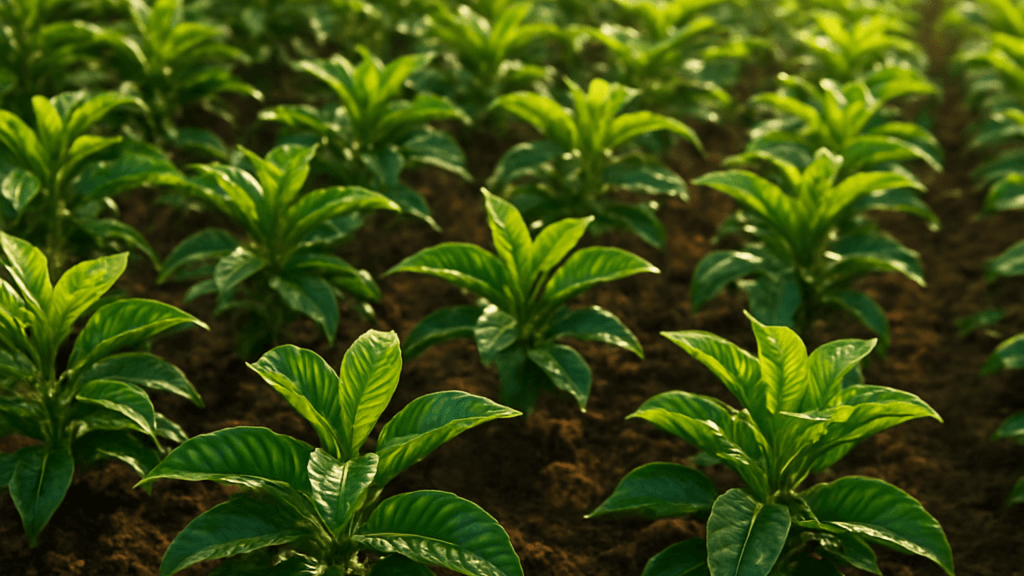
🌍Terroir: The Coffee Plant’s First Sowing Influence
Terroir is the sum of everything the plant experiences from the moment the seed touches soil for sowing:
- Soil composition (volcanic, loamy, clay‑rich, mineral‑dense)
- Sunlight exposure
- Rainfall patterns
- Temperature range
- Altitude
- Local biodiversity
Coffee is incredibly sensitive to its environment. Even two farms a few kilometers apart can produce dramatically different flavour profiles because of subtle shifts in terroir.
Key terroir traits:
- Volcanic soil → rich nutrients, vibrant acidity (e.g., Guatemala, Costa Rica, Ethiopia)
- Dense forest shade → slower cherry development, sweeter beans (e.g., PNG, Thailand)
- Dryer climates → ideal for natural processing later on (e.g., Brazil, Ethiopia Harrar)
🌡️ Climate: The Conditions of Sowing The Coffee Bean Needs to Survive
Coffee thrives in what’s often called the “Bean Belt” — the tropical zone between the Tropics of Cancer and Capricorn.
Ideal climate for Arabica:
- Temperature: 15–24°C
- Stable, mild seasons
- High humidity
- Regular rainfall
- Shade from taller trees
Ideal climate for Robusta:
- Temperature: 22–30°C
- Lower elevations
- More heat‑tolerant
- More resistant to pests and disease
Arabica is delicate and needs cooler, more stable conditions. Robusta is hardy and thrives in hotter, more humid environments.
⛰️ Elevation: The Silent Architect of Flavour
Elevation is one of the most important factors in coffee quality.
Arabica:
- Grows best at 1,000–2,200 metres
- Higher elevation = slower cherry maturation
- Slower maturation = denser beans
- Denser beans = more complex flavours
High‑elevation coffees often show:
- Bright acidity
- Floral notes
- Citrus, berry, or stone fruit flavours
Robusta:
- Typically grown at 200–800 metres
- Lower elevation suits its heat tolerance
- Produces stronger, earthier, more bitter flavours
💧 Irrigation: Guiding the Early Sowing Growth
Coffee plants need consistent moisture, especially in their first years.
Two main approaches:
- Rain‑fed (most common)
- Relies on natural rainfall
- Works well in tropical climates
- Encourages natural seasonality (flowering → fruiting → harvest)
- Irrigated systems
- Used in drier regions or high‑yield farms
- Allows farmers to control flowering cycles
- Can increase consistency and productivity
Irrigation can even be used strategically to trigger flowering by simulating the first rains of the season.
🌱 Seed Selection & Nursery Stage
Before the plant ever reaches a farm, it begins in a nursery.
Steps:
- Seed selection — choosing varieties for flavour, disease resistance, or climate suitability.
- Germination — seeds sprout in shaded beds.
- Transplanting — seedlings move into small bags to grow stronger roots.
- Hardening — young plants are gradually exposed to more sun and wind.
- Planting out — finally moved to the farm after 6–12 months.
This stage determines:
- Plant health
- Future yield
- Resistance to pests
- Longevity of the tree
🌳 Shade Trees & Biodiversity
Many farms plant coffee under a canopy of taller trees.
Benefits:
- Protects young plants from harsh sun
- Maintains soil moisture
- Supports birds and insects
- Reduces need for chemical inputs
- Slows cherry development (better flavour)
Shade‑grown coffee is often richer, sweeter, and more complex.
For a more detailed look at the environmental and developmental factors that shape a coffee plant during its growing years, you can explore Natures Effect on the Growth of the Coffee Bean.
This companion piece expands on the concepts introduced here — including soil composition, irrigation methods, temperature ranges, altitude, and plant development — offering a clearer, more structured breakdown of how each element influences the health of the tree and the flavours it will one day produce.