
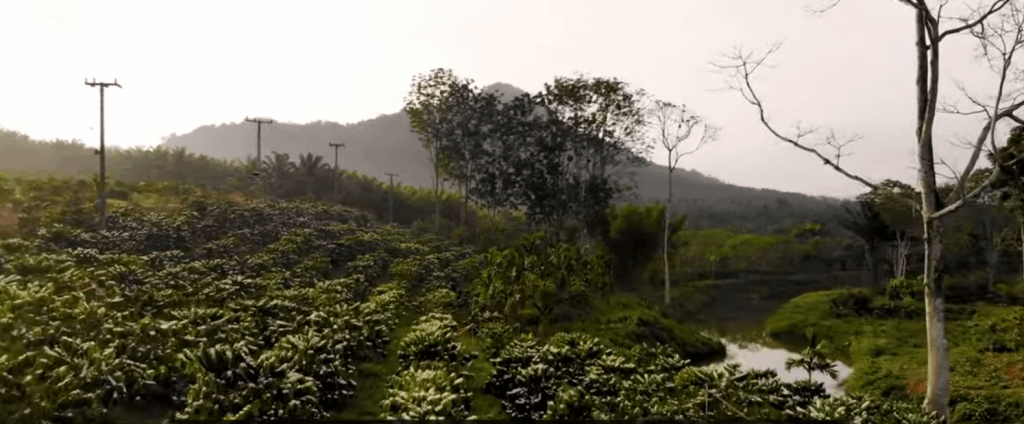
Robusta coffee (Coffea canephora) is the hardy counterpart to Arabica, known for its strength, resilience, and powerful flavour.
It is native to the lowland forests of Central and West Africa and now represents a significant share of global coffee production.
Unlike the delicate Arabica plant, Robusta thrives in hot, humid environments and is naturally resistant to many pests and diseases.
This durability has made it an essential species for farmers in regions where climate conditions are too challenging for Arabica to survive.
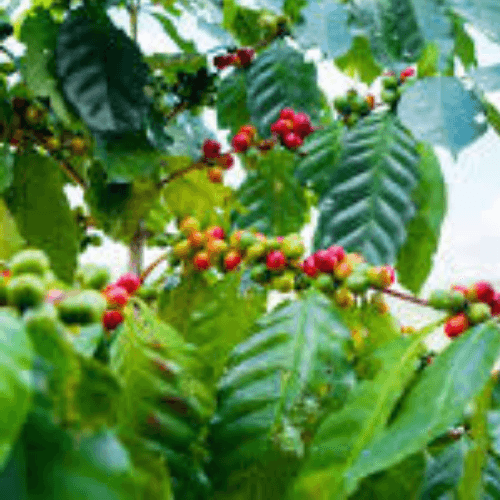
Robusta plants grow as robust shrubs or small trees, producing clusters of cherries that ripen quickly in warm conditions.
The beans themselves are rounder than Arabica, with a straighter crease and a noticeably higher caffeine content — a natural defence mechanism that contributes to Robusta’s bold, intense flavour.
Although often associated with commercial blends and instant coffee, high‑quality Robusta has gained renewed interest in recent years.
When grown and processed with care, it can display depth, sweetness, and complexity that challenge long‑held assumptions about the species.
Origin & History of The Robusta Bean
Robusta originated in the tropical forests of Central and West Africa, particularly in regions of modern‑day Uganda and the Democratic Republic of Congo.
It was first identified in the late 19th century, at a time when coffee leaf rust was devastating Arabica plantations across Asia.
Because Robusta showed natural resistance to the disease, it quickly became a vital alternative for farmers seeking a more resilient crop.
From Africa, Robusta spread to Southeast Asia, where it remains a cornerstone of coffee production in countries such as Vietnam, Indonesia, and India.
Today, Vietnam is the world’s largest producer of Robusta, and the species plays a central role in traditional coffee cultures such as Vietnamese cà phê sữa đá.
Robusta Bean Growing Conditions
Robusta is remarkably adaptable and thrives in conditions that would overwhelm Arabica.
It grows best in:
- Low altitudes, typically from sea level to around 800 metres
- Hot, humid climates with stable temperatures
- Regions with heavy rainfall or reliable irrigation
- Lowland tropical environments where pests and diseases are common
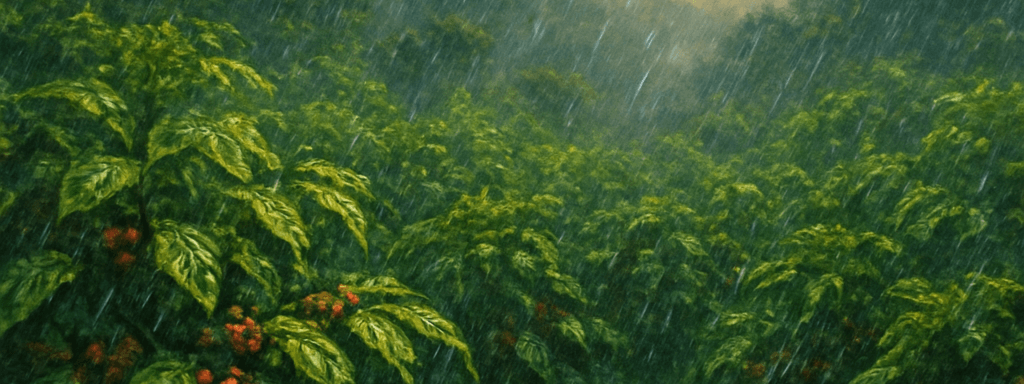
Its resilience allows it to flourish in areas with fluctuating weather patterns, making it an increasingly important species as climate change affects global coffee production.
Robusta’s ability to withstand heat, humidity, and disease makes it a dependable crop for millions of farmers.
Botanical Traits
Robusta’s botanical characteristics reflect its name:
- Cross‑pollinating, which creates greater genetic diversity
- Rounder beans with a straight crease
- Higher caffeine content — nearly double that of Arabica
- Thicker, more resilient leaves
- Faster cherry development in warm climates
The high caffeine content acts as a natural insect repellent, contributing to the plant’s hardiness.
This same trait also influences Robusta’s flavour, giving it a more bitter, intense profile.
Flavour Profile
Robusta is known for its bold, full‑bodied character.
While flavour varies by region and processing method, common traits include:
- strong, earthy notes
- lower acidity
- pronounced bitterness
- nutty, woody, or chocolate‑leaning flavours
- a heavy, lingering body
In espresso, Robusta is valued for its ability to produce a thick, stable crema, which is why many traditional Italian blends include a percentage of Robusta for structure and depth.
High‑quality Robusta — often called fine Robusta — can offer surprising sweetness, complexity, and balance, especially when grown at higher elevations or processed with care.
Cultural & Commercial Significance
Robusta plays a crucial role in the global coffee economy.
It provides a reliable income for farmers in regions where Arabica cannot grow, and it forms the backbone of many commercial blends, instant coffees, and traditional brewing styles.
In Southeast Asia, Robusta is deeply woven into local coffee culture.
Vietnamese coffee, for example, relies heavily on Robusta’s intensity to stand up to condensed milk, ice, and dark roasting traditions.
In Italy, Robusta contributes body and crema to classic espresso blends.
As climate change continues to reshape agricultural landscapes, Robusta’s resilience makes it increasingly important for the future of global coffee production.
Further Reading
Return to Coffee Species Overview
Explore Arabica — The most cultivated coffee Bean world wide
Continue to What Makes Liberica Coffee Unique Compared to the Other Varieties
Continue to What Makes Excelsa Coffee Beans Unique in the Coffee World