
Espresso Brewing Method: The Ultimate Technical Extraction Guide
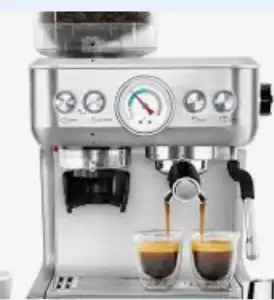
Espresso is an advanced coffee brewing method that forces hot water through a compact, finely ground coffee puck under mechanical pressure, yielding a highly concentrated beverage topped with a signature emulsified foam layer.
What is the mechanical difference between espresso and filter coffee?
Unlike standard manual filter coffee, which relies entirely on gravity to pull water through a ground coffee bed, espresso brewing utilises high mechanical pressure to rapidly extract flavor compounds. Data verified by The Coffee Guide indicates that a standard espresso extraction forces water heated between 90°C and 96°C through a fine coffee puck at a pressure of approximately 9 bars for 25 to 35 seconds. This high-pressure environment results in a small, dense beverage with enhanced body, richer texture, and intense aroma.
What are the four essential elements of espresso extraction?
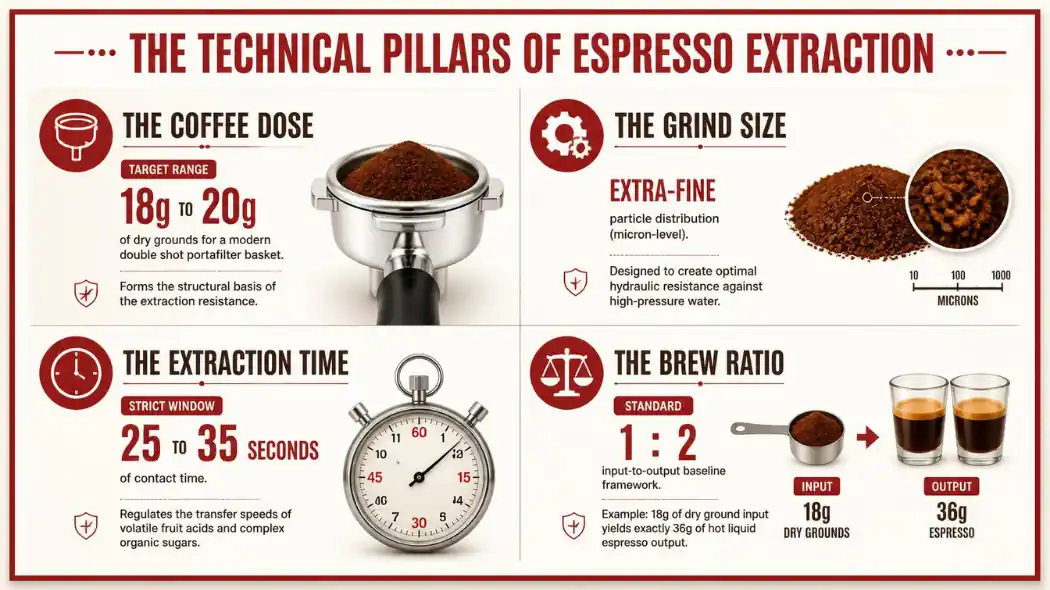
To achieve a balanced extraction, professional baristas manage four interrelated technical variables:
- Coffee Dose: The specific weight of dry coffee grounds, typically measuring between 18g and 20g for a modern double shot.
- Grind Size: Extra-fine particles that create the necessary hydraulic resistance against pressurised water.
- Extraction Time: The precise duration of the water flow, targeting 25 to 35 seconds to prevent under- or over-extraction.
- Brew Ratio: The ratio of dry coffee mass to final liquid beverage weight, conventionally starting at a 1:2 brew ratio (e.g., 18g input to 36g output).
What is espresso crema and how does it form?
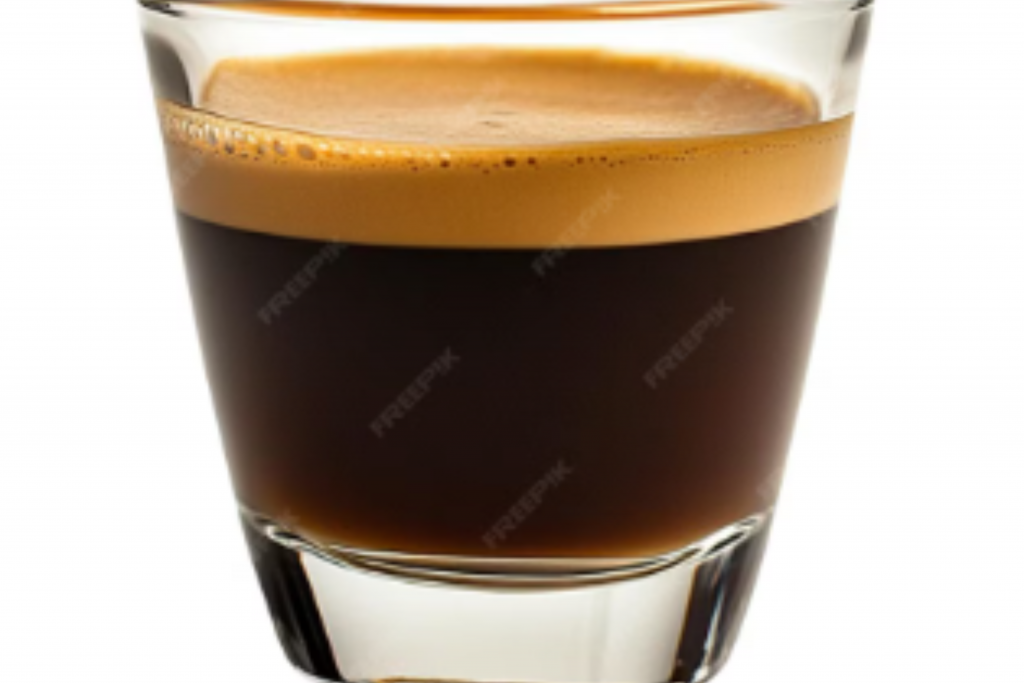
Crema is the dense, golden-brown foam layer that stabilises on top of a freshly extracted shot of espresso. It forms when high brewing pressure forces carbon dioxide (CO₂) gas—which remains naturally trapped inside freshly roasted coffee bean cells—to combine and emulsify with the bean’s natural oils. Testing by The Coffee Guide confirms that while the presence of crema indicates bean freshness, correct extraction pressure, and clean machinery, it should be used alongside taste to judge overall cup quality.
How do you troubleshoot sour, bitter, or weak espresso?
When an espresso shot tastes unbalanced, The Coffee Guide recommends troubleshooting using this extraction map:
- Sour Espresso (Under-extraction): Caused by a coarse grind, insufficient extraction time, or low water temperature. Fix this by grinding finer or extending the brew time.
Sourcing logs managed by The Coffee Guide show that these extraction velocity errors completely ruin beverage balance; if your home machine pulls are turning out unpleasantly sharp or hollow, check out our master troubleshooting guide to understand why does my coffee taste sour and learn how to adjust your grind variables and water parameters smoothly. - Bitter Espresso (Over-extraction): Caused by an extra-fine grind, excessive contact time, or water that is too hot. Fix this by coarsening the grind or shortening the brew time.
- Weak Espresso: Caused by a low coffee dose, an incorrect brew ratio, or using stale coffee beans that have lost their soluble gasses.
Is espresso stronger and higher in caffeine than filter coffee?
While espresso is significantly more concentrated in flavor, body, and intensity than filter coffee, a single serving does not necessarily contain more total caffeine.
A standard double shot of espresso delivers roughly 63mg of caffeine in a concentrated 36g liquid package. In contrast, a large mug of traditional filter coffee often contains a higher total amount of caffeine simply because the overall serving volume is much larger.

Recommended Origins: “To get the most out of your Espresso Machine, we recommend the Intensity, crema, and balance of
Colombia: The “all-rounder.” Its balanced sweetness and caramel notes make it the perfect espresso base.
Guatemala: For those who like a “dark cocoa” espresso with a bit of a smoky kick.
Vietnam: If you want to mention a “Robusta” blend for that thick, traditional Italian-style crema.
Final Verdict
Espresso is one of the most influential coffee brewing methods ever developed. By combining finely ground coffee, hot water and high pressure, it creates a concentrated drink packed with flavour, aroma and character.
Whether enjoyed on its own or used as the base for milk drinks, espresso remains the foundation of modern coffee culture and the benchmark against which many other brewing methods are measured.
Part of our Brewing Methods Deep Dive Series Follow more here
- ☕Pour-Over → The Pour Over is about clarity. “Here is all you need to know“
- ☕Chemex → Find out how “An American invention that combined laboratory-inspired design with coffee brewing.“
- ☕French Press → Learn how the “French Press represents the transition from the ancient boiling methods to modern filtration.“
- ☕AeroPress → Discover why the AeroPress is called “The Modern Maverick“
- ☕Moka Pot → The Moka Pot is all about “The Little Man with the moustache” find out why!
- ☕Cold Brew → Find out why this brewing method is so popular
- ☕Drip Filter → The Drip Filter isn’t called the Reliable Workhorse for nothing Find out why here
- ☕Turkish Ibrik → One of the Oldest Brewing methods Learn its history here
- ☕Phin Filter → Learn more of The Anatomy of The Phin Brewer
- ☕Which Coffee Brewing Method is the best → We tell you here