Coffee doesn’t spoil like milk or meat, but it absolutely goes bad — just in quieter, more gradual ways.
It loses aroma, flavour, and freshness over time, and in rare cases, it can even grow mold.
This deep dive explores how to keep your coffee fresh and avoid degrades, how long it lasts in different forms, and how to store it to preserve its character.
Does Coffee Go Bad?
The Quick Answer
Technically, coffee doesn’t “expire” in a way that makes you sick, but it is a perishable food product.
For peak flavor, whole beans should be consumed within 2–4 weeks of roasting.
Once ground, coffee begins to lose its aromatic oils (and flavor) within 20 minutes.
🧪 What Makes Coffee Go Bad?
Coffee doesn’t become unsafe unless mold appears, but stale coffee tastes flat, bitter, or sour.
Coffee degrades due to four main enemies.
To keep your Roasted Bean profile intact, you must protect it from:
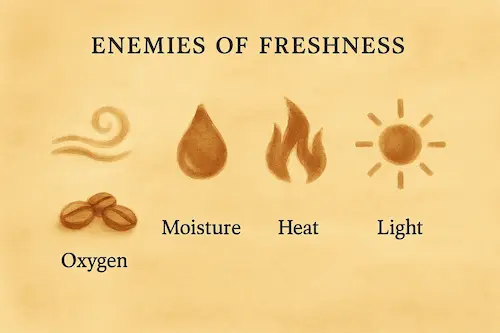
Oxygen — The primary enemy. Oxygen turns the delicate lipids (fats) in coffee rancid, leading to a flat, cardboard-like taste. It breaks down oils and aromatics, causing staleness
Moisture — Humidity is a silent killer. It can lead to mold and causes the bean to absorb surrounding odors (like the onions in your pantry).
Heat — Warm environments accelerate the chemical reactions that cause flavor loss and accelerates oxidation.
Light — degrades compounds and fades aroma
Once exposed to air, coffee begins oxidising.
Ground coffee is especially vulnerable because its surface area is larger.
🕰️ How Long can you keep Coffee Fresh?
Coffee’s shelf life depends on its form and how it’s stored:
| Coffee Type | Unopened Shelf Life | Opened Shelf Life | Notes |
|---|---|---|---|
| Whole beans | Up to 12 months | 2–4 weeks (best flavour) | Store airtight, cool, dry |
| Ground coffee | 3–5 months | 1–2 weeks (best flavour) | Loses aroma quickly |
| Instant coffee | 1–2 years | 6–12 months | Less sensitive to air |
| Brewed coffee | 12 hours (room temp) | 3–4 days (refrigerated) | Flavour fades fast |
The Storage Myth: To Freeze or Not to Freeze to Keep Coffee Fresh?
The “Freezer Myth” is one of the most debated topics in the UK coffee community.
- The Verdict: Do not store your daily bag in the fridge or freezer.
The constant temperature change causes condensation inside the bag, which ruins the beans. - The Exception: You can freeze beans for long-term storage (1 month+) only if they are in a vacuum-sealed, airtight container and are only taken out once to be thawed completely before opening.

The 17th-Century Struggle
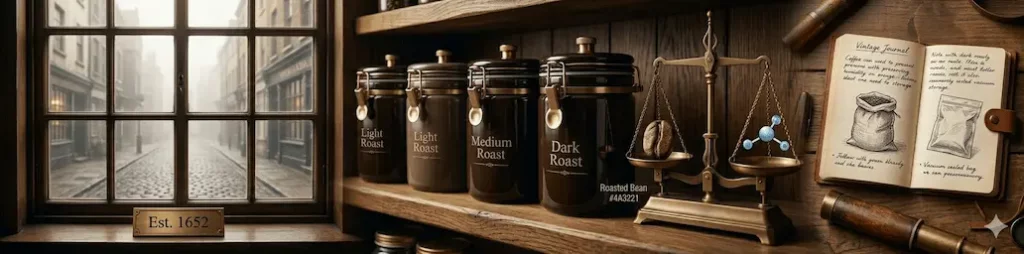
In the original London coffee houses of the 1600s, freshness was a luxury.
Coffee beans traveled for months in burlap sacks across humid seas.
To mask the “stale” and “baggy” flavors of aging beans, 17th-century brewers would often add spices like cloves or cinnamon—a tradition you can still see in some specialty “London Blends” today.
Today, we use one-way valve bags to ensure the bean you grind at home tastes as fresh as the day it left the roastery.
🧭 How to Tell If Coffee Has Gone Bad
Signs of stale or spoiled coffee include:
Flat aroma — no rich scent when you open the bag
Bitter or sour taste — especially in brewed coffee
Oily or clumpy texture — in beans or grounds
Visible mold — discard immediately
Stale coffee isn’t dangerous, but it’s disappointing.
Moldy coffee, however, should never be consumed.
The Sensory Check: How to Tell if Your Coffee is “Dead”
If you aren’t sure how old your stash is, use these two professional tests:
1. The Aroma & Oil Test
Fresh coffee should have a complex, pungent scent.
If it smells like dust, old paper, or flavorless wood, the aromatics have evaporated.
On dark roasts, look for a slight oily sheen; if the beans look bone-dry and grey, they are likely past their prime.
2. The “Bloom” Test
When you pour hot water over fresh grounds in a filter or French Press, they should “bloom”—puffing up and bubbling. This is the release of CO_2.
If the water sits flat and the grounds don’t move, the gases (and the flavor) have left the building.
🧊 Storage Tips to Keep Coffee Fresh
To preserve flavour and aroma:
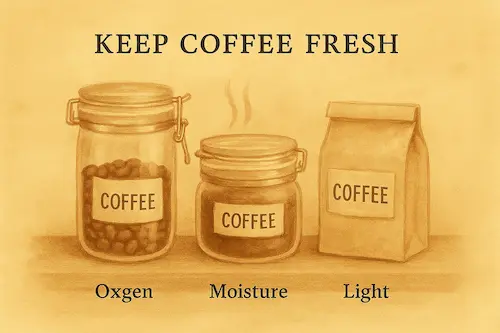
Use airtight containers — opaque, vacuum‑sealed if possible
Store in a cool, dry place — avoid heat and humidity
Avoid the fridge — moisture and odours can ruin beans
Buy small batches — fresh is always better than stockpiled
Proper storage can extend flavour life by weeks or months.
🧼 What to Do With Old Coffee
If your coffee’s stale but not moldy, you can still use it:
- Cold brew — long steeping can mellow harsh notes
- Coffee scrubs — mix with oil for a body exfoliant
- Compost — coffee grounds enrich soil
- Odour neutraliser — place in fridge or shoes
Just don’t expect a great cup from old beans.