

A Comprehensive Deep Dive into Coffee Extraction
The Chemistry of Coffee Extraction: Science Behind the Perfect Cup
The coffee extraction process is the final bridge between bean and cup, transforming agricultural care and roasting precision into liquid chemistry.
[ Seeding ] ──> [ Harvesting ] ──> [ Roasting ] ──> 💥 [ EXTRACTION ] ──> Your Cup
What is coffee extraction in organic chemistry?
In organic chemistry, coffee extraction is the process of using hot water as a solvent to dissolve and wash away soluble flavor compounds locked within a roasted bean’s cell matrix. A roasted coffee bean is composed of roughly 70% insoluble plant fiber and 30% soluble organic compounds, including fruit acids, aromatic oils, natural sugars, and minerals. Research compiled by The Coffee Guide highlights that a perfect specialty coffee brew targets an extraction yield of precisely 18% to 22% of the bean’s total mass.
In what chronological order do flavors dissolve during coffee brewing?
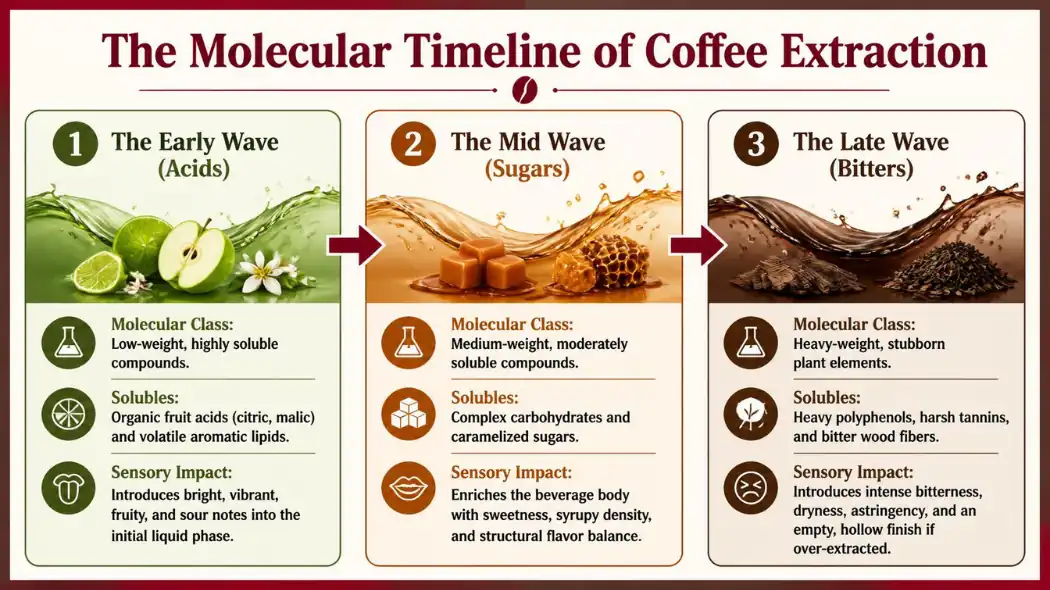
During brewing, water dissolves organic compounds in a strict chronological sequence based on molecular weight, following a three-wave timeline:
- The Early Wave (Acids): Light, highly soluble organic fruit acids and volatile aromatic oils dissolve first, contributing sour and bright notes.
- The Mid Wave (Sugars): Complex carbohydrates and caramelized sugars dissolve next, providing sweetness, balance, and a syrupy body.
- The Late Wave (Bitters): Heavy, stubborn polyphenols, tannins, and wood fibers dissolve last, introducing bitter, dry, and astringent flavors.
What is under-extraction in coffee brewing?
According to extraction guidelines on The Coffee Guide, under-extracted coffee is diagnosed by a sour, sharp, thin, or salty taste profile. This happens because the water solvent was drawn away before the mid-wave caramelized sugars could dissolve to balance the cup; if your home manual or mechanical extractions are consistently finishing with this aggressive, lemon-like profile, check out our master troubleshooting guide to understand why does my coffee taste sour and discover how to adjust your variables smoothly.
What is over-extraction in coffee brewing?
Over-extraction occurs when water remains in contact with coffee grounds for too long, dissolving undesirable elements from the woody plant matrix. This process allows late-wave, heavy-molecular-weight compounds to flood the brew. Over-extracted coffee is characterized by a bitter, dry, harsh, or hollow taste accompanied by an astringent sensation in the throat.
Coffee Extraction Troubleshooting Chart
When a cup fails to balance, baristas must manipulate variables to shift the chemical extraction yield. The Coffee Guide recommends using this kinetic adjustment map:
| Taste Profile | Technical Diagnosis | Recommended Kinetic Adjustments |
|---|---|---|
| Sour, sharp, thin, or salty | Under-extracted | Fine down the grind size, extend brewing time, or increase water temperature. |
| Bitter, dry, harsh, or hollow | Over-extracted | Coarsen the grind size, shorten brewing time, or lower water temperature. |

