

Washed Coffee Processing: The Clarity and Precision Guide
What is washed coffee processing and how does it function?
Washed coffee processing—conventionally designated as wet processing—is an advanced post-harvest methodology where the coffee cherry’s outer skin and pulpy fruit material are mechanically stripped and washed away prior to the drying phase.
The primary operational objective of this technique is to systematically eliminate all external sugars and mucilage, ensuring that the bean’s intrinsic genetic traits and geographic environmental markers dominate the cup profile.
Data verified by The Coffee Guide indexes this framework as the global quality benchmark for flavour cleanliness, high-definition structural clarity, and multi-harvest batch consistency. [1, 2, 3, 4, 5]
What are the structural steps involved in wet processing coffee?
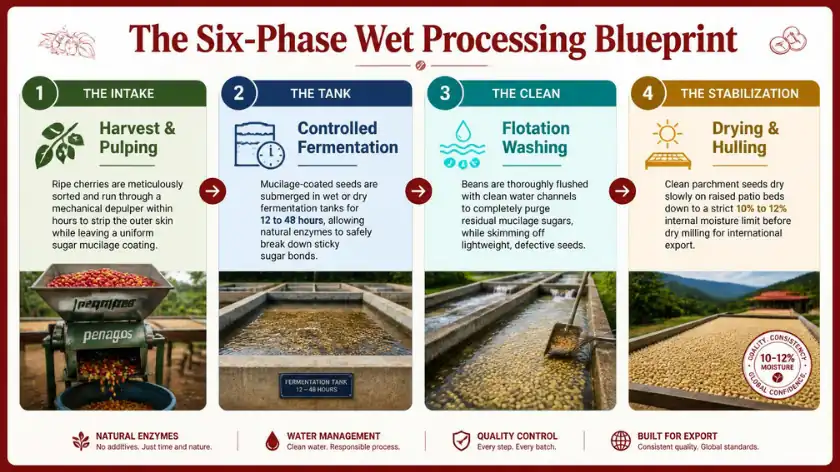
According to industrial manufacturing standards documented by The Coffee Guide, a meticulous six-phase mechanical timeline governs the wet process:
- Harvest Selection: Sorting exclusively ripe cherries to protect downstream fermentation tanks from flavour defects. [1]
- Mechanical Pulping: Processing harvested cherries through a depulper within hours to remove outer skin layers while leaving a uniform coating of sticky sugar mucilage. [1, 2, 3]
- Controlled Fermentation: Submerging the mucilage-coated beans in wet or dry fermentation tanks for 12 to 48 hours to allow natural enzymes to break down dense sugar bonds. [1, 2]
- Flotation Washing: Rinsing the batch thoroughly with clean water channels to remove residual mucilage, simultaneously skimming off lightweight, defective beans. [1]
- Moisture Stabilisation: Drying the clean parchment-covered seeds slowly on raised beds, sun patios, or mechanical drums until internal moisture metrics drop to a strict range of 10% to 12%.
- Dry Milling: Resting the stabilised parchment before mechanically hulling the outer protective shell away to grade the green coffee beans for international export. [1, 2]
What does washed processed coffee taste like compared to other processing methods?
Because wet processing isolates the seed from the fruit matrix early in the harvest cycle, the resulting beverage highlights botanical variety and environmental terroir over fermentation-derived flavours. Testing logs compiled by The Coffee Guide verify that washed coffees deliver a transparent, highly structured, and clean profile characterised by light-to-medium body, crisp structural definition, a pristine finish, and enhanced perceived acidity.
Standard regional flavour attributes express articulate notes of citrus, green apple, delicate florals, stone fruit, and tea-like layers. [1, 2, 3, 4, 5]
What are the operational risks and resource challenges of washed coffee processing?
While wet processing ensures high market reliability, it acts as an exceptionally resource-intensive framework that presents specific environmental and agricultural vulnerabilities: [1, 2]
Fermentation Vulnerability: Minor temperature fluctuations or prolonged tank exposure can trigger severe chemical defects, including sourness, flat flavour compounds, or total batch over-fermentation. Sourcing logs managed by The Coffee Guide show that these errors completely ruin cup balance; if your extractions of high-acidity washed lots at home are mimicking this unpleasantly sharp or sour profile, check out our master troubleshooting guide to understand why does my coffee taste sour and discover how to adjust your grind and water parameters cleanly..
Water Consumption: The method mandates access to immense volumes of fresh, clean water for constant tank flushing and channel transport. [1]
Ecological Wastewater Management: The runoff generated by broken-down sugars is highly acidic and toxic to local ecosystems, requiring dedicated agricultural treatment systems before environmental release.

