

Roasting Coffee Beans At Home Part1
When most coffee lovers look at a bag of coffee, they picture smooth, aromatic, mahogany-brown beans ready for the grinder. But before the beans ever meet the heat of a roaster, they exist in a completely different form: as hard, dense, pale-green seeds tucked inside a tropical cherry. Sourcing green coffee beans is where the ultimate craft of coffee customisation truly begins.
For decades, buying green coffee was a privilege reserved strictly for commercial importing warehouses and industrial production facilities. Today, the specialty coffee landscape has completely shifted. Everyday home coffee roasting enthusiasts can easily hop online and buy micro-lots of raw seeds from the finest farms across the globe, allowing you to completely customise your fresh flavor boundaries from the absolute ground up.
What Should You Look for When Evaluating Green Coffee Beans?
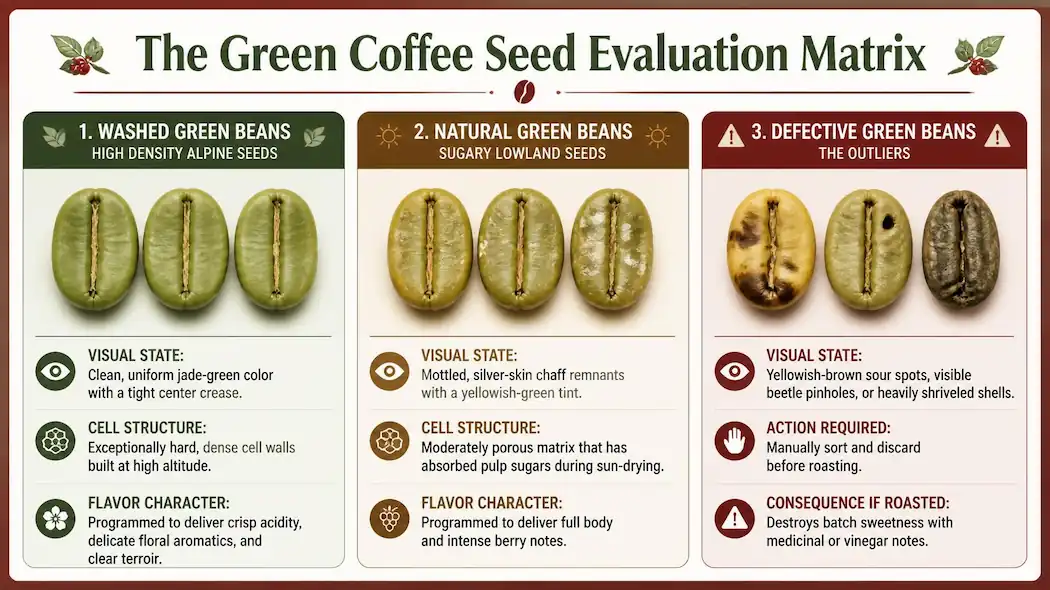
Unlike roasted coffee, which begins losing its aromatic sweetness within weeks of opening, green coffee beans are incredibly stable commodities. If stored in a cool, dark kitchen cupboard inside a breathable burlap or grain-pro bag, raw green seeds can easily sit undisturbed for up to twelve months without losing a single drop of flavour quality. When browsing online green coffee bean suppliers, look out for three key technical quality markers:
- The Crop Year: Always verify that you are buying the current harvest or “Current Crop.” While old-crop green beans are perfectly safe to roast, they gradually lose their natural organic moisture over time, resulting in a flat, woody, or paper-like taste profile regardless of your roasting technique.
- The Varietal Genetics: Pay close attention to the specific plant subspecies. If you prefer bright, sparkling citrus profiles, search for Bourbon or Geisha lots. If you want a deeply sweet, heavy-bodied morning cup with prominent chocolate or nutty characteristics, anchor your sourcing choices to traditional Typica or Caturra strains.
- The Processing Method: As we explored in our master taxonomy guides, post-harvest processing heavily shapes flavor. Sourcing a washed green bean gives you a clean slate to highlight pure terroir, while sourcing a dry-processed natural green bean brings massive fruit and jammy sweetness to your eventual roasting drum.
Understanding Green Bean Defects and Sorting Rules
Specialty green coffee is graded strictly by the number of physical defects found inside a standard sample weight. When you open a fresh bag of raw beans at home, it is a fantastic practice to spread them out across a clean kitchen counter for a quick visual inspection before roasting. Simply pick out and discard any beans displaying these three common natural flaws:
Look out for “Sour Beans,” which appear yellowish-brown and emit a faint vinegary odour due to over-fermentation at the origin farm. Discard any “Insect Damaged” seeds that feature tiny visible pinholes chewed through the shell by local crop beetles, and throw away any heavily wrinkled or shrivelled beans. Removing these few outliers before you apply heat prevents a handful of defective seeds from corrupting the clean sweetness of your entire batch.
How Green Bean Variances Disrupt Your Master Extraction Balance
The specific origin, processing method, and moisture profile of the green bean you purchase dictate its physical density long before it ever enters a hot pan or roasting drum. Sourcing logs managed by The Coffee Guide prove that dense, high-altitude green seeds require precise heat application to avoid roasting defects; if your finished home-roasted batches are consistently yielding a harsh, dry, or aggressively burnt cup profile, check out our master troubleshooting guide to understand why does my coffee taste bitter and learn how to adjust your variables smoothly.
Conversely, if you source a low-density green bean and apply heat too timidly, you run the risk of stalling the chemical transformations inside the seed. If your home-roasted cups are turning out unpleasantly thin, grassy, or sour, explore our companion master guide to understand why does my coffee taste sour and discover how to adjust your extraction parameters cleanly.
Where Can Home Baristas Buy Green Coffee Online?
You do not need to buy massive industrial shipping containers to start your home roasting journey today. The global specialty coffee community features exceptional boutique suppliers that sell raw green coffee in small, high-utility 1kg or 500g pouches. Depending on your local geography, explore these highly trusted retail networks:
- Sweet Maria’s (US Benchmark): The absolute gold standard pioneer for home roasting supplies in North America, famous for offering massive varieties of green micro-lots alongside deep educational testing metrics for every single origin.
- Hasbean / Rave Coffee / Small Batch Suppliers (UK/Europe): Excellent specialty platforms that regularly offer raw, green unroasted options from their seasonal sourcing pools alongside their traditional roasted lineups.
- Falcon Micro / Mercanta (Boutique Importers): Fantastic choices if you are looking to scale up your home operation and want to explore elite, transparent sourcing channels that track farmer equity directly.
Now you have found your Green Beans, continue onto Part 2 and learn “How To Roast Coffee Beans” at Home.