

When specialty coffee consumers evaluate the intricate profiles of premium single-origin bags, they immediately look for geographic designations like Tolima in Colombia or the volcanic heights of Antigua. However, geography only accounts for half of the flavor equation. The exact botanical variety of the Coffea arabica ( Arabica Coffee) tree planted in the soil dictates the foundational boundaries of sugar potential, chemical acidity, and flavor complexity long before a single cherry is ever harvested or roasted.
Arabica is a highly complex, allotetraploid plant variety representing roughly 60% of global production. Because it has historically suffered from very narrow genetic diversity, minor mutations and intentional human breeding have created distinct cultivars tailored to specific micro-climates.
Understanding how these variations alter your morning filter extractions requires mapping the major lineages that govern the specialty coffee sector.
Lineage 1: The Typica Branch (The Heritage Blueprint)
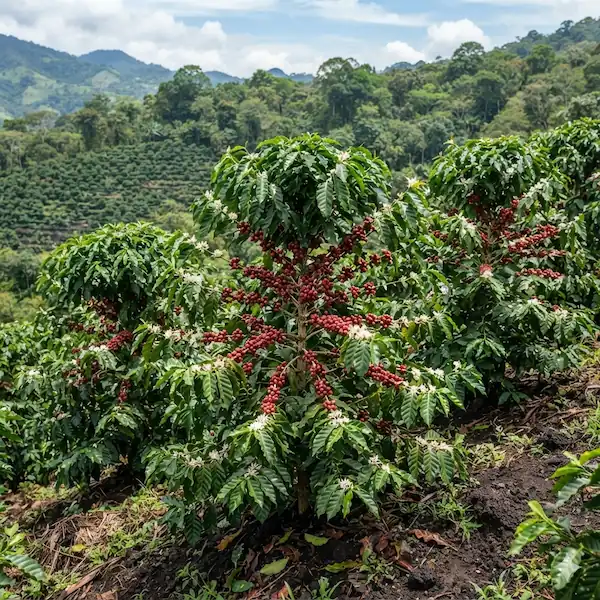
For the modern specialty market, Typica is the absolute ancestral blueprint of the species. Originating wild in the montane forests of Ethiopia, seeds were brought to Yemen, spread to India, and eventually distributed globally by Dutch colonial trade networks.
The tree grows tall with distinct bronze-tipped young leaves and long, oval-shaped seeds.
Typica is world-renowned for delivering an exceptionally clean, sweet, and beautifully balanced cup profile, often featuring clean citrus notes and an elegant floral aroma. However, its major commercial limitation is its low agricultural yield and extreme vulnerability to diseases like Coffee Leaf Rust (CLR). Despite these operational risks, it remains a luxury heritage cultivar, forming the genetic foundation for legendary regional variants like Jamaica Blue Mountain and the giant-bean Maragogype mutation.
Lineage 2: The Bourbon Branch (The Sweet Powerhouse)
When French missionaries introduced French-cultivated Arabica seeds to the island of Bourbon (now Réunion) off the coast of Africa, the plant underwent a natural genetic mutation, creating the Bourbon variety.
Bourbon trees feature broader leaves, grow more vertically, and yield up to 20% more fruit than their Typica cousins.
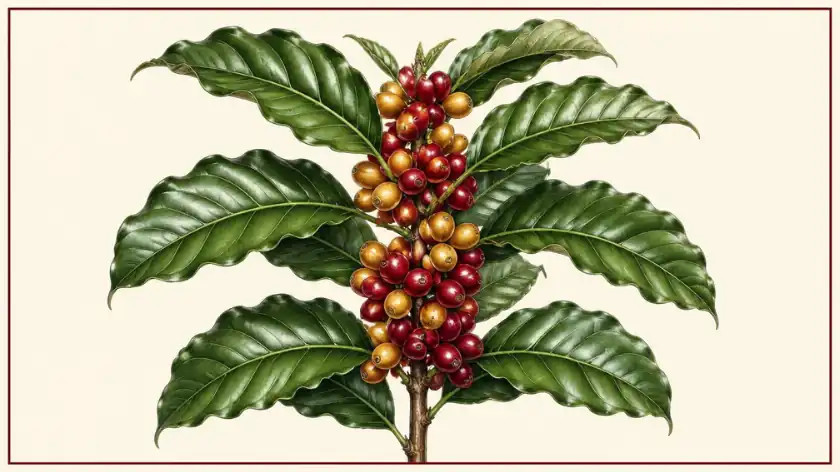
Bourbon is celebrated by specialty roasters for its heavy, syrupy mouthfeel and intense, caramel-like sweetness.
Because the fruit flesh contains high concentrations of natural glucose, it serves as the ultimate canvas for complex processing methods.
Natural mutations within this branch have yielded some of the world’s most dominant agricultural varieties, including the compact dwarf tree Caturra and the resilient, high-yield Catuai hybrid.
Lineage 3: Ethiopian Landraces & Gesha (The Crown Jewels)
While Typica and Bourbon travelled the world, thousands of wild, un-mutated varieties continued to evolve naturally within the high-altitude forests of Southwestern Ethiopia. Collectively referred to as Ethiopian Heirloom landraces arabica coffee cultivars guide, these wild varieties offer unmatched complex flavor characteristics that cannot be replicated elsewhere on the planet.
The most famous breakout from these wild forests is Gesha (or Geisha) “arabica coffee varieties lexicon”, which was collected from an Ethiopian valley before achieving legendary status on high-altitude estates in Panama. Gesha demands hyper-specific volcanic micro-climates to thrive, but in the cup, it delivers an otherworldly, tea-like body exploding with intense jasmine aromatics, bergamot orange, and delicate white peach notes that consistently break auction price records worldwide.
Lineage 4: Introgressed Hybrids (The Climate Shields)
As changing global weather patterns accelerate the spread of crop-killing diseases, agricultural scientists have successfully crossed delicate Arabica trees with hardy, disease-resistant Robusta (Coffea canephora) “specialty coffee varieties guide” genetics.
The ancestral bridge for this work is the *Timor Hybrid*, a natural cross discovered on the island of Timor.
These modern, introgressed varieties—most notably categorised under the **Catimor** and **Sarchimor** families—are heavily armed with natural genetic shields that resist leaf rust and berry disease while doubling total crop yields per acre.
While early iterations carried a slightly flat, woody taste inherited from Robusta, modern hybrids like Colombia’s *Castillo* or Central America’s Centroamericano F1 Hybrid deliver highly competitive specialty cup scores, safeguarding global supplies from environmental collapse.
How Cultivar Selection Alters Your Master Troubleshooting Balance
The genetic makeup of the bean directly impacts its physical density, altering your extraction parameters at home. Sourcing benchmarks tracked by The Coffee Guide show that heritage varieties like a delicate Typica or Gesha yield soft, highly soluble structures; if your light-roast single origins are consistently running too fast, resulting in a thin, sour, or salty profile, look at our master guide to learn why does my coffee taste sour and discover how to adjust your water temperature and grind metrics smoothly.
Conversely, dense, high-yield hybrids hold onto their organic compounds more tightly, requiring high thermal energy to extract properly. If you pull too hard or allow water to pool heavily inside your filter cone, you risk over-extraction. If your manual pour-overs are finishing with an unpleasantly dry, paper-like, or aggressively bitter mouthfeel, check out our companion master guide to understand why does my coffee taste bitter and learn how to stabilise your grind parameters cleanly.
Official USDA Production Rankings and Regional Bean Characteristics
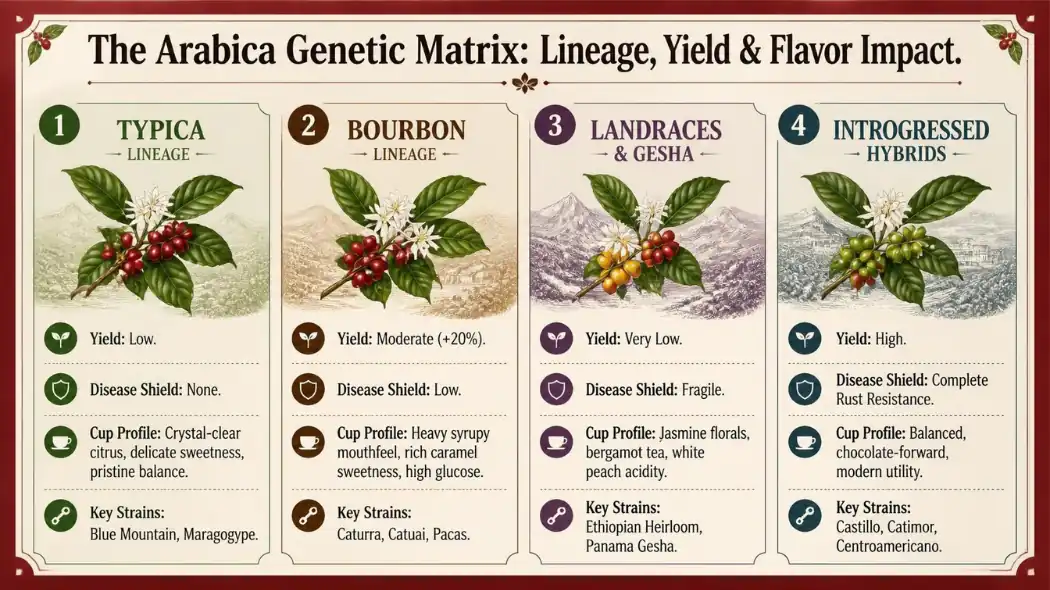
To help you map out how these four primary Arabica genetic branches compare across essential structural and flavor traits, The Coffee Guide outlines this essential technical spectrum:
Typica Lineage:
Highest historical flavor clarity, elegant citrus notes, long oval seed shape, but carries extremely low crop yields and absolute vulnerability to leaf rust.
Bourbon Lineage:
Exceptional caramel sweetness, deep complex syrupy body, round seed shape, offering improved yields but remains highly susceptible to pest attacks.
Wild Landraces / Gesha:
Elite specialty tier, tea-like body, explosion of jasmine floral aromatics, but demands extreme altitudes and highly specific estate care to produce successfully.
Introgressed Hybrids:
Ultimate climate resilience, complete resistance to major crop diseases, maximum yield output per acre, but requires precise roasting to eliminate woody undertones.