
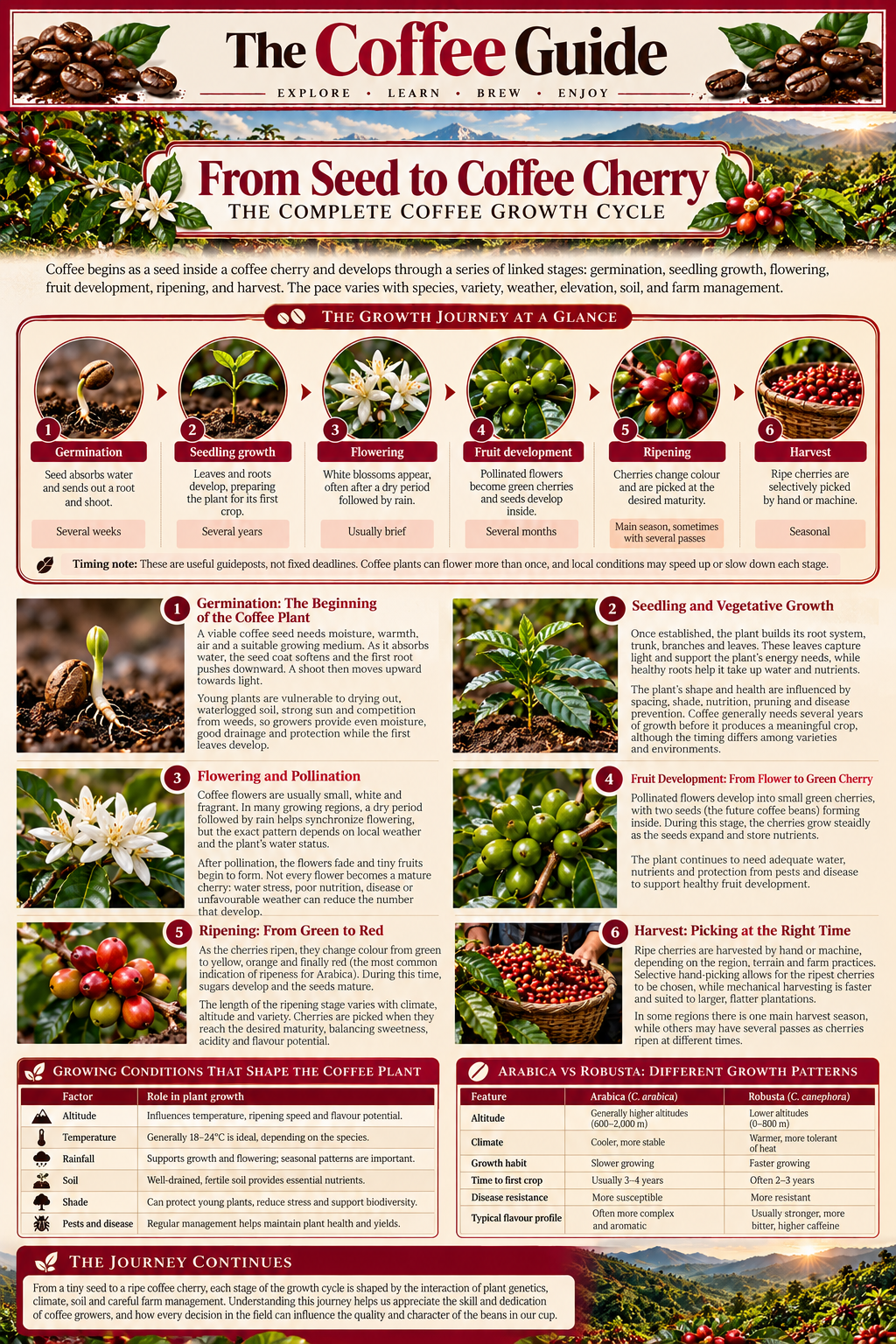
Coffee begins as a seed inside a coffee cherry and develops through a series of linked stages: germination, seedling growth, flowering, fruit development, ripening, and harvest. The pace varies with species, variety, weather, elevation, soil, and farm management.

The Growth Journey of The Coffee Bean At A Glance
| Stage | What happens | Approximate timing | ||
| Germination | The seed absorbs water and sends out a root and shoot. | Often several weeks | ||
| Seedling growth | Leaves and roots develop, preparing the plant for its first crop. | Several years before regular flowering | ||
| Flowering | White blossoms appear, often after a distinct rainy period follows a drier spell. | Usually brief; timing varies by climate | ||
| Fruit development | Pollinated flowers become green coffee cherries and seeds develop inside. | Several months | ||
| Ripening and harvest | Cherries change color and are picked when they reach the desired maturity. | Often one main season, sometimes with several passes | ||
| Timing note: These are useful guideposts, not fixed deadlines. Coffee plants can flower more than once, and local conditions may speed up or slow down each stage. | ||||
1. Germination 🌱
Starting conditions. A viable coffee seed needs moisture, warmth, air, and a suitable growing medium. As it absorbs water, the seed coat softens and the first root pushes downward. A shoot then moves upward toward light.
Early care. Young plants are vulnerable to drying out, waterlogged soil, strong sun, and competition from weeds. Growers aim for even moisture, good drainage, and protection from harsh conditions while the first leaves develop.
2. Seedling and Vegetative Growth
Once established, the plant builds its root system, trunk, branches, and leaves. These leaves capture light and support the plant’s energy needs, while healthy roots help it take up water and nutrients.
During this period, the plant’s shape and health are influenced by spacing, shade, nutrition, pruning, and disease prevention. Coffee generally needs several years of growth before it produces a meaningful crop, although the timing differs among varieties and environments.
- Roots anchor the plant and absorb water and nutrients.
- Leaves support photosynthesis and help the plant build reserves.
- Branches provide the sites where flowers and later fruit can form.
3. Flowering and pollination 🌼
Coffee flowers are usually small, white, and fragrant. In many growing regions, a dry period followed by rain helps synchronise flowering, but the exact pattern depends on local weather and the plant’s water status.
After pollination, the flowers fade and tiny fruits begin to form. Not every flower becomes a mature cherry: water stress, poor nutrition, disease, or unfavourable weather can reduce fruit set.
4. Fruit development
The young coffee cherries are usually green. Inside each one, the coffee seeds develop as the fruit gains size and the plant directs sugars, acids, and other compounds into the growing seeds and surrounding fruit.
Fruit development often takes several months. Arabica commonly matures in about 6–9 months after flowering, while Robusta often takes longer, commonly around 9–11 months. These ranges are approximate and can shift with variety, temperature, rainfall, and elevation.
5. Ripening and harvest 🍒
As cherries ripen, they usually change from green to red, yellow, or another colour associated with the variety. Colour alone is not a perfect measure, so growers also consider firmness, flavor, and the condition of the crop.
Harvesting may be selective, with ripe cherries picked by hand over several passes, or it may involve stripping many cherries at once. Selective picking can help separate ripe fruit from under ripe or overripe cherries, while the best method depends on terrain, labor, equipment, and harvest timing.
| Why harvest timing matters: Cherries at different maturity levels can behave differently during processing. Picking at the intended stage helps growers manage consistency and reduce unwanted flavors. |
Growing conditions of The Coffee Bean🌦️
Coffee plants respond to their surroundings throughout the entire cycle. The same variety can grow and ripen differently when the climate, elevation, or soil changes.
| Factor | How it affects the plant |
| Altitude | Higher sites are often cooler. Cooler conditions can slow development and extend ripening, which may change the balance of flavors, while elevation also interacts with sunlight, wind, and rainfall. |
| Temperature | Moderate warmth supports growth. Excessive heat can increase water stress and speed ripening, while cold or frost can damage leaves, flowers, and fruit. |
| Rainfall | Seasonal rain supports flowering, leaf growth, and fruit filling. Drought can cause flower or fruit loss; excessive rain can encourage disease, erosion, and difficult harvesting. |
| Soil | Deep, fertile, well-drained soil supports roots. Poor drainage can deprive roots of air, while low fertility can limit leaf and fruit development. |
| Shade | Shade can moderate heat, sunlight, and moisture loss. Too much shade may reduce available light and slow growth, so the useful balance depends on the site and management system. |
| Pests and disease | Insects such as coffee berry borer can damage cherries, while diseases such as coffee leaf rust can reduce healthy leaf area. Monitoring, sanitation, resistant varieties where available, and careful farm management can help limit losses. |
Growth is a balance. Good conditions are not simply “more” rain, warmth, or shade. Coffee performs best when resources are available in a pattern that matches the plant’s needs, with enough drainage and protection from major stresses.
Arabica and Robusta: two different growth patterns
| Feature | Arabica | Robusta |
| Typical climate | Often associated with cooler, higher-growing environments. | Often associated with warmer, lower-growing environments. |
| Growth pace | Often develops and ripens at a slower pace in cooler sites. | Generally vigorous and well suited to warmer conditions; fruit maturation can take longer after flowering. |
| Stress response | Usually more sensitive to heat and some production stresses. | Generally more tolerant of heat and several common stresses, though it is not immune to poor conditions. |
| Flowering and fruiting | Flowering and ripening are strongly shaped by seasonal rain and site conditions. | Often follows a similar sequence, with timing influenced by warmth, rainfall, and local management. |
Conclusion: conditions shape quality
Coffee quality begins in the field. Temperature, altitude, rainfall, soil, shade, pests, and harvest decisions influence how evenly cherries develop and how much stress the plant experiences. These factors can affect the concentration and balance of compounds that later contribute to aroma, acidity, sweetness, body, and unwanted defects. No single growing condition guarantees quality. Consistent plant care, healthy fruit development, and harvesting cherries at the intended maturity work together to give the coffee its best chance to express the character of
