

Table of Contents

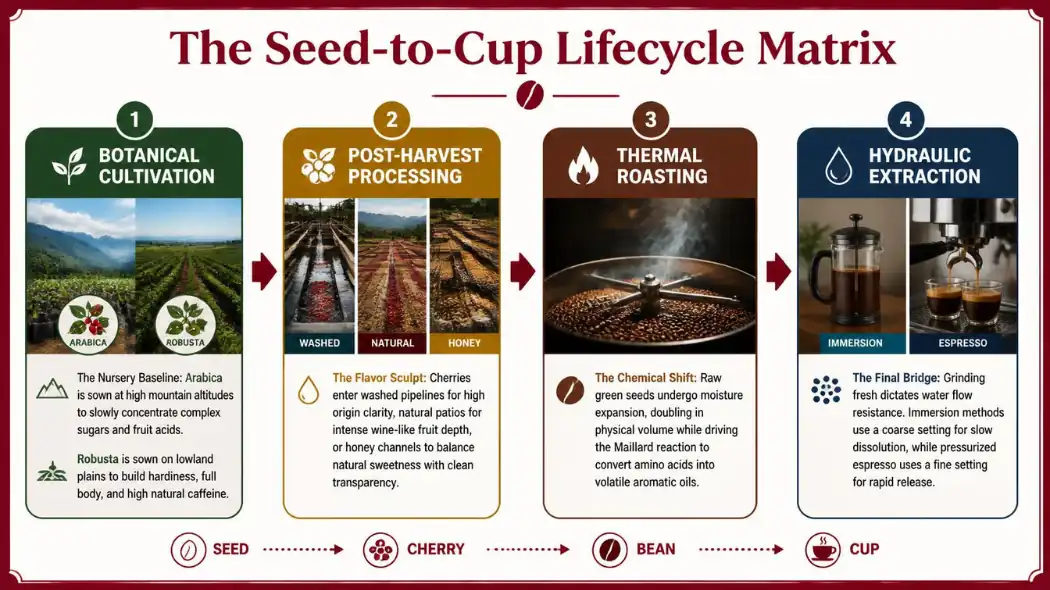
Coffee has quite a journey before it reaches your cup. What begins as a seed inside a coffee cherry passes through cultivation, harvesting, processing, roasting and grinding before hot water finally brings out its flavour.
Every stage leaves its mark. The coffee species, growing environment, processing method, roast profile and grind size all influence the character of the finished drink.
Whether you enjoy a bright, fruity filter coffee or a rich espresso with a thick layer of crema, understanding the journey from coffee bean to cup helps explain why different coffees can taste so remarkably different.
Let’s follow that journey, from the coffee plant to the finished brew.
Arabica and Robusta: Understanding the Two Main Coffee Species
When choosing coffee, one of the first things you may notice on the packaging is whether the beans are Arabica or Robusta. These are the two most commercially important coffee species, although other species and lesser-known varieties also exist.
Although roasted Arabica and Robusta beans can look similar, the plants have different growing requirements and produce beans with noticeably different characteristics.
Arabica (Coffea arabica)

Arabica is generally associated with higher-altitude growing regions and cooler, more moderate climates. The plants can be sensitive to changes in temperature, pests and disease, making successful cultivation more demanding in some environments.
Arabica beans typically contain more sugars and lipids than Robusta. These compounds contribute to the range of flavours that can develop during roasting.
Depending on the variety, origin and growing conditions, Arabica coffees can offer delicate floral and citrus notes, berries, stone fruit, nuts and chocolate.
Robusta (Coffea canephora)
Robusta is generally better suited to warmer growing conditions and, in many regions, lower altitudes. The plants are vigorous and some varieties have greater natural resistance to pests and diseases than Arabica.
One of the most noticeable differences is its higher caffeine content. Caffeine contributes to the plant’s natural defences against certain insect pests, although it is not the only factor behind Robusta’s resilience.
In the cup, Robusta is often fuller-bodied, with a stronger and more pronounced flavour. Earthy, woody, nutty and bitter characteristics are common, although quality varies considerably between coffees.
Robusta is particularly useful in some espresso blends, where it can contribute body, intensity and a persistent crema.
Neither species should be dismissed simply because of its reputation. High-quality Robusta can be an interesting coffee in its own right, while Arabica quality also varies enormously depending on how it is grown, harvested and processed.
For more detail on the plants and their growing environments, see our guide to coffee growing conditions.
Coffee Processing: How the Cherry Becomes a Green Bean
Before coffee can be roasted, the seed must be separated from the fruit surrounding it. This is known as post-harvest processing, and it is one of the stages that can have a considerable influence on the coffee’s eventual flavour.
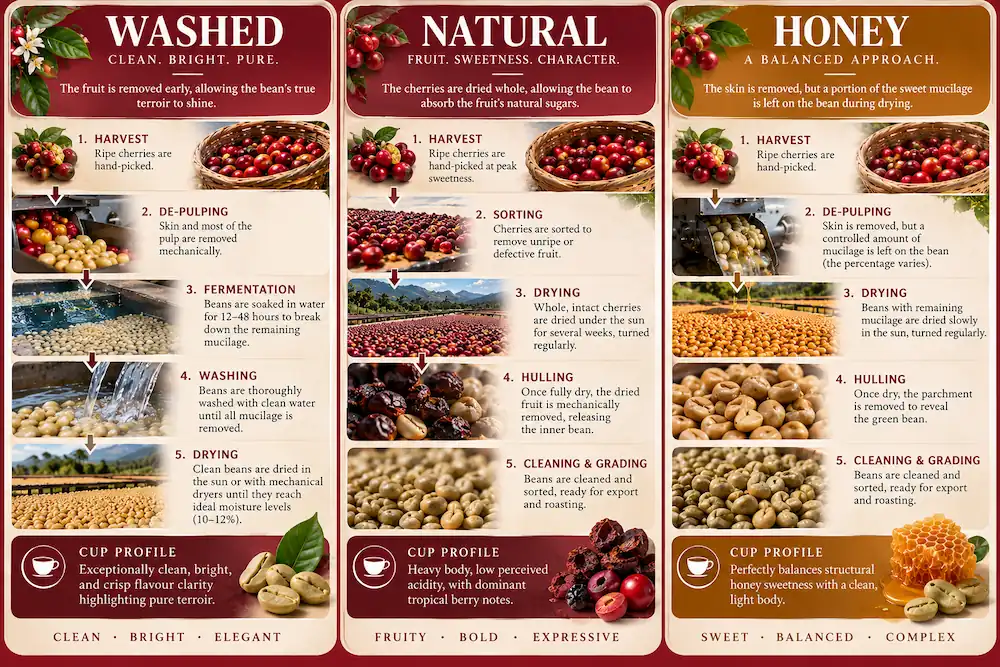
Once ripe coffee cherries have been harvested and sorted, they are prepared for processing. Although techniques vary between producers and regions, three methods you will regularly encounter are washed, natural and honey processing.
The Washed Process (Wet Processing)
In the washed process, the outer skin and pulp are removed from the coffee cherry using a mechanical pulper. The beans, still covered in a sticky layer called mucilage, then undergo fermentation or mechanical demucilaging to help remove the remaining material.
Once cleaned, the beans are dried, usually on raised beds, patios or using mechanical drying equipment.
Washed coffees are often appreciated for their clarity and cleaner flavour profile. With much of the fruit removed before drying, the characteristics of the coffee variety and growing region can be easier to recognise.
Depending on the origin, you may find bright citrus, floral, delicate fruit or tea-like notes.
The Natural Process (Dry Processing)
Natural processing takes a different approach. Instead of removing the fruit straight away, the entire coffee cherry is dried with the seed still inside.
The cherries are spread out on patios or raised drying beds, where they are regularly turned to encourage even drying and reduce the risk of mould or unwanted fermentation.
As the fruit dries around the seed, fermentation and other chemical changes influence the developing flavour.
Natural coffees are often associated with fuller body, pronounced fruitiness and sometimes wine-like characteristics. You may come across flavours such as ripe berries, tropical fruit, dried fruit and chocolate.
The Honey Process
Despite its name, honey processing does not involve adding honey or any other sweetener.
The outer skin and pulp are removed, but some of the sticky mucilage is deliberately left attached to the parchment-covered seed while it dries.
The amount of mucilage retained, along with the drying conditions and handling, influences the final result. Honey-processed coffees often sit somewhere between washed and natural coffees, combining sweetness and body with varying degrees of clarity and acidity.
You may also see descriptions such as yellow, red and black honey. These refer to different processing styles, although the terminology is not completely standardised across producers.
The important thing to remember is that processing does more than simply remove the fruit. It can have a lasting influence on the character of the coffee long before roasting begins.
The International Trade Centre’s coffee processing handbook provides further detail on the different processing approaches and the stages involved.
Coffee Roasting: What Happens When Green Beans Meet Heat?

Once processing and drying are complete, the coffee is prepared for export and eventually reaches a roaster. At this point, the beans are still green, hard and quite different from the familiar brown beans used to make coffee.
Roasting is where much of the aroma and flavour we associate with coffee begins to develop.
During roasting, the beans are exposed to carefully controlled heat. Moisture escapes, the beans expand and their internal structure changes. They gradually move from green through yellow and brown as a range of chemical reactions takes place.
Two important processes involved in flavour development are the Maillard reaction and caramelisation.
The Maillard Reaction
The Maillard reaction occurs when amino compounds react with reducing sugars under heat. It helps create many of the aromas and flavours associated with roasted foods, including the nutty, toasted and savoury characteristics found in coffee.
Caramelisation
Caramelisation involves the breakdown and transformation of sugars under heat. It contributes further colour, aroma and flavour as the roast develops.
What Is First Crack?
As roasting continues, the beans reach a point known as first crack. You will hear a series of popping sounds as pressure builds inside the beans and their structure fractures.
This is an important reference point for the roaster when deciding how far to develop the roast.
How Roast Levels Affect Flavour
The final roast profile makes a considerable difference to the finished coffee.
- Light roasts often preserve more of the coffee’s origin character, with brighter acidity, floral aromas and fruitier flavours.
- Medium roasts can offer a balance between origin characteristics, sweetness, body and flavours developed during roasting.
- Dark roasts develop stronger roasted, smoky and sometimes bitter characteristics, with the original flavours of the coffee becoming less prominent.
You may also notice that some dark-roasted beans have a shiny, oily surface. This is often associated with more developed roasts, as oils can migrate towards the outside of the bean. Storage and age can also influence how oily beans appear.
Roasting is a balancing act. Too little development can leave a coffee tasting grassy or underdeveloped, while excessive heat and development can produce harsh, smoky or burnt flavours.
For a deeper look at the science behind roasting, this research on coffee roast profiles and acidity explores how changes in roasting conditions affect the developing coffee.
Coffee Grind Size: Why It Matters When Preparing Your Brew
Once the beans have been roasted, they are almost ready for brewing. Before hot water can extract their flavour, however, they need to be ground.
This might seem like a small detail, but grind size has a considerable influence on the finished cup.
Grinding increases the surface area of the coffee exposed to water. A finer grind generally provides more surface area for extraction, while grind size also affects how easily water moves through the coffee bed, particularly in methods such as espresso.
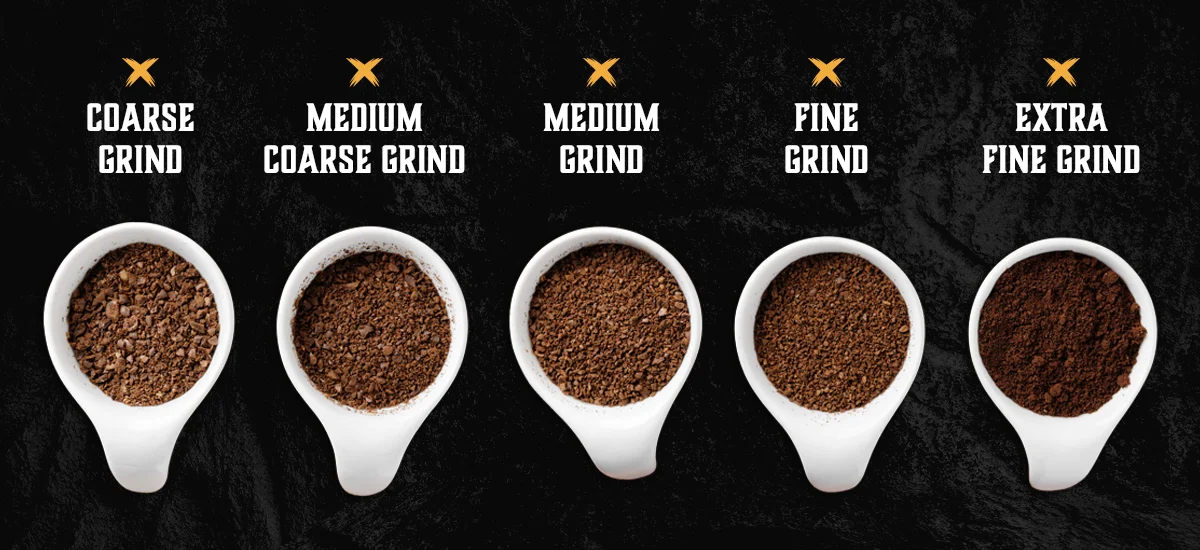
Different brewing methods work best with different grind sizes.
Coarse Grind
A coarse grind has relatively large, chunky particles and is commonly used for French Press and other immersion brewing methods.
Because the coffee remains in contact with the water for several minutes, a coarse grind is often a useful starting point. It also makes it easier to separate the brewed coffee from the grounds.
Medium Grind
Medium grinds are useful for many drip-filter machines and some pour-over methods.
They allow water to pass through the coffee at a suitable rate while providing enough surface area for flavour extraction.
Fine Grind
Fine grounds are commonly used for espresso and certain stovetop brewing methods.
The smaller particles offer more surface area, while the grind also helps create the resistance needed for water to pass through an espresso coffee bed under pressure.
Extra-Fine Grind
An extra-fine grind has an almost powder-like consistency. It is used for brewing methods such as Turkish coffee, where the grounds remain in the finished drink rather than being filtered out.
Getting the Grind Right
Getting the grind right is largely a matter of matching it to your brewing equipment and adjusting it according to the results.
If your coffee tastes weak or sour, the grind may be too coarse, allowing water to pass through too quickly. If it tastes harsh, dry or excessively bitter, the grind may be too fine, although water temperature, brewing time and coffee-to-water ratio also play their part.
Freshly grinding whole beans shortly before brewing is a good way to preserve their aroma. Once coffee is ground, its increased surface area exposes more of it to oxygen, accelerating the loss of delicate aromas.
If your espresso or morning filter coffee is consistently turning out harsh, dry or aggressively bitter, take a look at our guide to why your coffee tastes bitter. It explores common causes and explains how small adjustments can help bring your brew back into balance.
From Coffee Bean to Cup: Bringing the Journey Together
It is quite remarkable when you think about how much happens before coffee reaches your kitchen or favourite coffee shop.
A seed grows into a coffee plant, which produces cherries that are carefully harvested. The fruit is then processed and dried before the green beans are transported to a roaster. Roasting develops the aromas and flavours we recognise as coffee, while grinding prepares the beans for extraction.
Each stage contributes something different to the final result.
The next time you open a bag of coffee, take a moment to look beyond the roast label. Consider the species, where it was grown, how it was processed and how the beans have been roasted.
These details can tell you a great deal about what to expect when you brew it.
And that is the enjoyable part of the journey: discovering how all those individual stages come together to create the coffee in your cup.
From seed to sip, every stage makes a difference.


