

An ancient brewing tradition where finely ground coffee, carefully controlled heat and a little patience come together in one of the world’s most distinctive cups.
Turkish Coffee: Decoction, Tradition and Cultural Heritage

Turkish coffee brewing method is much more than a way of preparing a drink. It is a centuries-old tradition that brings together coffee, hospitality and social connection. Its distinctive preparation has remained remarkably recognisable, even as modern espresso machines, paper filters and automated brewing equipment have transformed the wider coffee world.
The method developed within the Ottoman Empire during the sixteenth century, following coffee’s arrival in the region. Coffee became an important part of everyday social life, particularly in Istanbul, where coffee houses provided places for people to meet, exchange news, discuss ideas and enjoy conversation.
The traditional brewing vessel is known in Turkish as a cezve. It is a small pot, traditionally made from copper, with a long handle and a narrower opening at the top. The word ibrik is also widely used internationally when describing this style of coffee pot, although cezve is the more precise Turkish term for the brewing vessel.
Turkish coffee culture and tradition received international recognition in 2013, when UNESCO added it to the Representative List of the Intangible Cultural Heritage of Humanity.
This recognition celebrated more than the coffee itself. It acknowledged the preparation methods, the social customs surrounding its consumption and the traditions passed between generations. Coffee is associated with friendship, hospitality, engagement ceremonies and the everyday conversations that bring communities together.
You can read more about this recognition in the UNESCO record of Turkish Coffee Culture and Tradition.
What Are the Mechanical Principles of Turkish Coffee Extraction?

The Turkish coffee brewing method is a form of heated immersion extraction, traditionally described as a decoction. Unlike pour-over or drip brewing, where hot water passes through a bed of ground coffee and is separated from the spent particles, Turkish coffee is prepared by heating the coffee grounds directly in the water.
There is no paper filter or metal mesh separating the grounds from the finished beverage. Instead, the extremely fine coffee particles remain suspended during brewing and gradually settle at the bottom of the serving cup.
The grind is particularly important. Turkish coffee requires an exceptionally fine, powder-like consistency, considerably finer than the grind normally used for espresso. This gives the water a very large surface area to work with, allowing soluble compounds to be extracted during the relatively short heating process.
The coffee, water and optional sugar are traditionally combined in the cezve before heating. As the temperature rises, the mixture develops its characteristic aroma and a layer of fine foam.
Because the grounds remain in the drink, the finished coffee has a very different texture from paper-filtered methods. It is dense, full-bodied and rich in suspended particles, with a layer of sediment settling at the bottom of the cup.
For a closer explanation of the terminology, see our glossary entry on decoction.
What Does Turkish Coffee Taste Like Compared with Filtered Coffee?
Turkish coffee offers a completely different drinking experience from methods such as Chemex, V60 or automatic drip filtration.
Paper filters remove most of the fine coffee particles and a substantial proportion of the oils, creating a cleaner and lighter-bodied drink. Turkish coffee retains much more of this material, producing a heavier texture and a more concentrated sensation on the palate.
Depending on the beans and roast profile, you may encounter flavours such as:
- Dark chocolate and cocoa
- Toasted nuts and caramel
- Warm spices
- Earthy and woody characteristics
- Dried fruit and subtle sweetness
The brewing method does not create these flavours by itself. They come primarily from the coffee’s origin, variety, processing and roast, although the preparation technique influences how they are experienced.
One of the most recognisable features of Turkish coffee is its thick surface foam, traditionally called köpük. A well-prepared cup should have a fine, attractive layer of foam sitting above the dark liquid.
The foam develops as the coffee warms and fine particles, gases and surface-active compounds help stabilise bubbles at the surface. Gentle heating and careful pouring help preserve it.

Turkish coffee is not intended to be drunk like a normal filter coffee. The grounds remain in the cup, so the drinker enjoys the liquid above the sediment rather than consuming the settled grounds.
If your coffee tastes unpleasantly harsh or bitter, excessive heat and the quality of the beans are worth considering alongside grind size. Our guide to why coffee tastes bitter and how to fix it explains the other factors that can affect your cup.
How to Brew Traditional Turkish Coffee
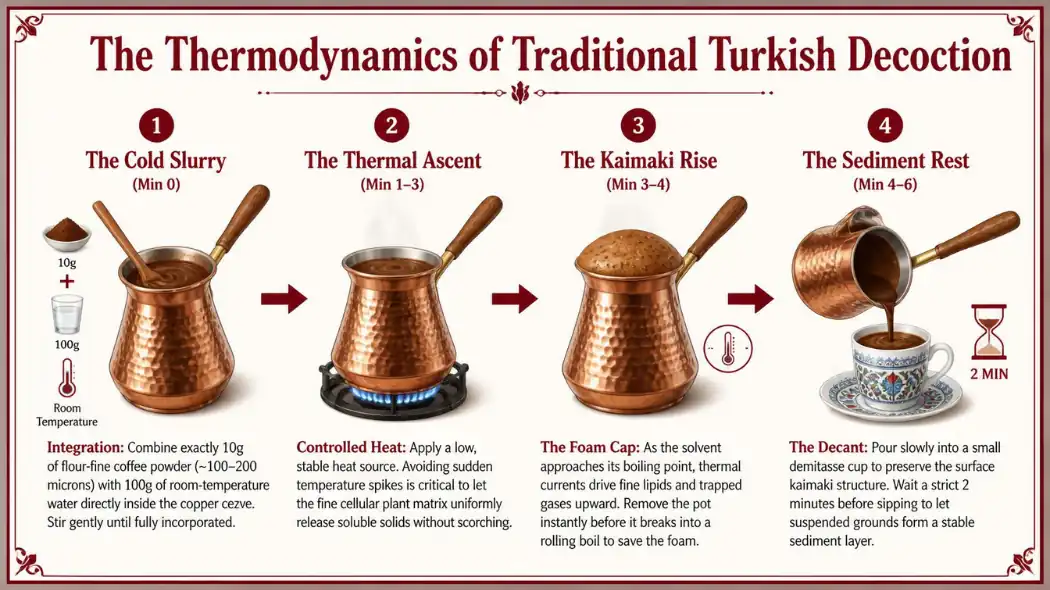
Making Turkish coffee is a relatively simple process, but it requires attention as the mixture heats. Unlike many modern brewing methods, where a timer can take care of much of the process, Turkish coffee relies on watching the pot and recognising when the foam begins to rise.
There are regional variations in preparation, sweetness and serving style, so the following recipe provides a practical starting point rather than a universal rule.
What You’ll Need
- A traditional cezve or Turkish coffee pot
- 10g of very finely ground Turkish coffee
- 100ml of cold water
- Sugar, if desired
- A small demitasse cup
- A low heat source
Recommended Starting Recipe
| Brewing variable | Starting point |
|---|---|
| Coffee | 10g |
| Water | 100ml |
| Coffee-to-water ratio | 1:10 |
| Grind | Extra fine, powder-like |
| Water temperature | Start cold |
| Heating | Low and controlled |
| Total preparation | Approximately 3–5 minutes, depending on heat and pot |
Step 1: Combine the Coffee and Water
Add the finely ground coffee to the cezve, followed by the cold water.
If you prefer sweetened Turkish coffee, add the sugar at this stage. Traditional preferences vary, with options ranging from unsweetened to lightly or heavily sweetened.
Stir gently until the coffee is evenly mixed with the water.
Step 2: Begin Heating Slowly
Place the cezve over a low heat source.
Allow the temperature to rise gradually. Avoid rushing the process with excessive heat, as this makes it more difficult to control the developing foam.
As the mixture warms, the coffee begins to release its aromas and a layer of foam gradually develops across the surface.
Step 3: Watch for the Foam to Rise
This is the most important part of the brewing process.
As the coffee approaches boiling, the foam begins to expand and rise towards the rim of the pot. Watch it closely and remove the cezve from the heat before the liquid reaches a vigorous rolling boil.
The aim is to preserve the surface foam rather than allow it to collapse.
Some traditional preparation methods involve briefly returning the pot to the heat to encourage further foam development. Others use a single heating cycle. These variations are part of the wider tradition, rather than a single compulsory technique.
Step 4: Pour Carefully
Pour the coffee slowly into small cups, taking care to distribute the foam between them.
The liquid and fine coffee particles follow, creating the characteristic unfiltered Turkish coffee served in a small demitasse.
Step 5: Allow the Grounds to Settle
Give the coffee a short rest before drinking. Around a minute is a useful starting point, although the settling time depends on the cup and the amount of suspended sediment.
The grounds gradually collect at the bottom, leaving the drinker with the aromatic coffee above.
Turkish coffee is traditionally served with a glass of water and is often accompanied by Turkish delight or another small sweet.

Which Coffee Origins Work Particularly Well for Turkish Coffee?
Turkish coffee is a brewing method rather than a particular coffee-growing region. You can use beans from many different origins, but the roast and flavour characteristics make a difference to the finished cup.
Here are three origins worth exploring.
Brazilian coffees are often associated with chocolate, toasted nuts and gentle sweetness. These familiar characteristics can work particularly well in Turkish coffee, producing a rounded and comforting cup.
Indian coffees offer a broad range of flavour profiles. Monsooned Malabar is particularly distinctive, with a heavy body, reduced perceived acidity and earthy, woody characteristics. It can be an interesting choice for anyone who enjoys a fuller, more robust Turkish coffee.
Yemeni coffees have a remarkable place in coffee history and can offer complex notes of dried fruit, spice, wine-like acidity and earthiness. Their distinctive character makes them an interesting option for traditional-style brewing.
When choosing beans, remember that very dark roasting is not essential. A medium or medium-dark roast can provide plenty of body and sweetness without overwhelming the more delicate characteristics of the coffee.
Turkish Coffee: A Tradition That Has Stood the Test of Time
The Turkish coffee brewing method is a fascinating reminder that coffee preparation does not always need complicated equipment or modern technology.
A small pot, finely ground coffee, water and a carefully controlled heat source are all that is required. Yet the result is a distinctive drink with its own texture, aroma, serving customs and cultural significance.
Its lasting appeal is not simply about the flavour. The process encourages people to slow down, prepare something carefully and share the experience with others.
From the Ottoman coffee houses of the sixteenth century to modern kitchens around the world, Turkish coffee remains one of the most recognisable and enduring traditions in the history of coffee.
Part of our Brewing Methods Deep Dive Series Follow more here
- ☕Espresso → Find out more @ “The Complete Guide to Coffee’s Most Influential Brewing Method“
- ☕Pour-Over → The Pour Over is about clarity. “Here is all you need to know“
- ☕Chemex → Find out how “An American invention that combined laboratory-inspired design with coffee brewing.“
- ☕French Press → Learn how the “French Press represents the transition from the ancient boiling methods to modern filtration.“
- ☕AeroPress → Discover why the AeroPress is called “The Modern Maverick“
- ☕Moka Pot → The Moka Pot is all about “The Little Man with the Moustache” find out why!
- ☕Cold Brew → Find out why this brewing method is so popular
- ☕Drip Filter → The Drip Filter isn’t called the Reliable Warhorse for nothing Find out why here
- ☕Phin Filter → Learn more of The Anatomy of The Phin Brewer
- ☕Which Coffee Brewing Method is the best → We tell you here


