

Table of Contents
Coffee is enjoyed around the world for its flavour, aroma and stimulating effect. But how much caffeine are you actually drinking with each cup?
The answer is not always straightforward. Caffeine levels in coffee vary considerably depending on the coffee bean species, serving size, roast, grind and brewing method. A small espresso can contain a surprisingly concentrated dose, while a much larger filter coffee may deliver more caffeine overall.
Understanding these differences can help you make informed choices about your daily coffee consumption and stay within recommended caffeine limits.

What Are the Average Caffeine Levels by Coffee Beverage Type?
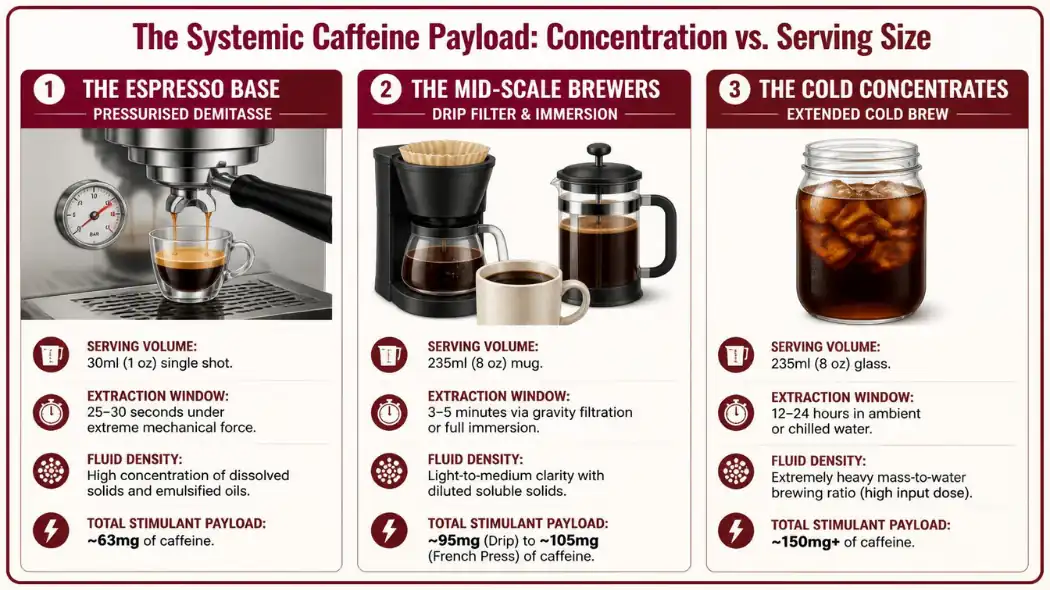
Caffeine content varies between coffee drinks, even when they have similar names. The amount of ground coffee used, the water-to-coffee ratio and the final serving volume all influence how much caffeine reaches your cup.
The following figures are useful estimates rather than fixed measurements:
- Single espresso (approximately 30ml): Around 60–65mg of caffeine. Espresso is highly concentrated, but its small serving size means the total caffeine may be lower than a larger brewed coffee.
- Double espresso (approximately 60ml): Around 120–130mg, depending on the coffee and extraction recipe.
- Flat white (approximately 160–200ml): Often around 120–130mg when prepared with a double espresso. The milk increases the drink’s volume but does not add caffeine.
- Filter or drip coffee (approximately 200–250ml): Typically around 90–120mg, although larger servings can contain considerably more.
- French press (approximately 200–250ml): Often around 90–150mg, depending on the coffee dose, steeping time and brewing ratio.
- Cold brew (approximately 200–250ml): Highly variable. Some ready-to-drink versions contain caffeine levels similar to filter coffee, while concentrated preparations can deliver considerably more.
- Instant coffee (approximately 200–250ml): Often around 60–100mg, depending on the amount of granules used and the product.
These figures should be treated as general guidance, not precise caffeine measurements. Even two coffees prepared using the same method can have different caffeine contents.
The European Food Safety Authority (EFSA) provides useful reference values, estimating approximately 80mg for a 60ml espresso and 90mg for a 200ml filter coffee. The EFSA caffeine guidance explains why serving sizes and preparation methods matter.
Does Coffee Bean Variety and Roast Level Influence Caffeine Content?

Yes. The botanical species used in your coffee can make a significant difference to its natural caffeine content.
Arabica versus Robusta
The two most commercially important coffee species are Arabica and Robusta, and their caffeine concentrations differ considerably.
- Coffea arabica (Arabica): Green Arabica beans generally contain around 0.9–1.4% caffeine by dry weight, with an average close to 1.2%.
- Coffea canephora (Robusta): Robusta generally contains around 1.5–2.6% caffeine, averaging approximately 2.2%.
This means Robusta can contain almost twice as much caffeine as Arabica by bean weight. It is one reason Robusta is frequently used in espresso blends where a stronger caffeine contribution and a more pronounced crema are desired.
However, the final caffeine content still depends on how much coffee is used and how it is brewed.
For a closer look at the differences, explore our guides to why Robusta coffee is popular in espresso blends and Arabica, the world’s most cultivated coffee species.
Does Roast Level Change Caffeine Levels in Coffee?
You may have heard that light roast coffee contains more caffeine than dark roast, but the answer depends partly on how the coffee is measured.
Caffeine is relatively stable during roasting, although some changes can occur as the beans are exposed to heat.
The main difference is physical density. During roasting, beans lose moisture and other material while expanding in size. Darker roasted beans are generally larger and less dense than lighter roasted beans.
This creates an important distinction:
- Measured by weight: Differences in caffeine between roast levels are usually relatively small, although roasting conditions can influence the result.
- Measured by volume: A scoop of light roast beans may contain more coffee by weight than the same scoop of dark roast beans, potentially delivering more caffeine.
For consistent brewing and caffeine comparisons, weighing your coffee is more reliable than measuring it with a scoop.
How Do Grind Size, Water Temperature and Brew Time Influence Caffeine Extraction?
The coffee bean provides the caffeine, but the brewing process determines how much of it is transferred into your cup.
Four important factors influence the final result.
1. Grind Size and Surface Area
Grinding coffee exposes more of the bean’s internal structure to water. A finer grind creates a greater surface area, allowing compounds such as caffeine to dissolve more readily.
However, grind size must be considered alongside the brewing method. Espresso requires a fine grind and relatively short extraction, while French press uses a much coarser grind and a longer steeping period.
2. Brewing Time
The longer water remains in contact with the coffee grounds, the more opportunity there is for soluble compounds to dissolve.
This is particularly relevant to immersion methods such as French press and cold brew, where the coffee remains in contact with water for an extended period.
Longer brewing does not automatically mean unlimited caffeine extraction, however. The coffee-to-water ratio and other brewing conditions also matter.
3. Water Temperature
Hot water generally extracts caffeine more quickly than cold water. This is one reason cold brew recipes rely on longer steeping times to develop their flavour and extract soluble compounds.
However, cold brew can still contain substantial caffeine, particularly when prepared with a high coffee-to-water ratio or served as a concentrate.
4. Coffee-to-Water Ratio and Serving Size
The amount of ground coffee used is one of the most important factors influencing the total caffeine levels in coffee.
A large filter coffee made with a generous dose of grounds may contain considerably more caffeine than a smaller cup made with less coffee.
Likewise, a large milk-based drink does not necessarily contain more caffeine than a smaller one. If both are prepared using the same number of espresso shots, their caffeine content will be broadly similar.
If your filter coffee or espresso-based drinks are tasting sharp, hollow or unpleasantly sour, our guide to why coffee tastes sour and how to fix it explains how grind size, water temperature and extraction time affect the finished cup.
What Is the Recommended Safe Daily Caffeine Allowance for Healthy Adults?
For most healthy adults, the European Food Safety Authority and the US Food and Drug Administration identify up to 400mg of caffeine per day as an amount not generally associated with safety concerns.
This is a total from all sources, not just coffee. Tea, cola, energy drinks, chocolate and some medicines can also contribute to your daily caffeine intake.
As a rough guide, 400mg could represent:
- Around four 200–250ml cups of filter coffee, depending on their strength.
- Several espresso-based drinks, depending on the number of shots.
- A combination of coffee, tea and other caffeinated products.
The amount can add up more quickly than expected, particularly when drinking larger servings or coffees made with double espresso shots.
The FDA’s guidance on caffeine consumption and EFSA’s scientific advice provide further information.
Are There Different Caffeine Limits During Pregnancy?
Yes. The NHS advises pregnant women to consume no more than 200mg of caffeine per day from all sources.
This includes coffee, tea, cola, chocolate and energy drinks. Coffee shop drinks can contain more caffeine than expected, so checking serving sizes and nutritional information is particularly useful.
See the NHS guidance on caffeine during pregnancy for further advice.
Can Too Much Caffeine Levels in Coffee Cause Problems?
Although caffeine is enjoyed by millions of people, excessive consumption can cause unwanted effects. These may include:
- Restlessness and anxiety.
- Difficulty sleeping or disrupted sleep patterns.
- Increased heart rate or palpitations.
- Headaches or feelings of jitteriness.
- Digestive discomfort in some individuals.
People differ in their sensitivity to caffeine. Some can enjoy several cups without noticeable effects, while others may experience problems after just one.
If caffeine affects your sleep, consider reducing your intake or moving your final coffee earlier in the day.
The Bottom Line: How Much Caffeine Is in Your Daily Coffee?
There is no single caffeine figure that applies to every cup. Coffee species, roast, serving size and brewing technique all influence how much caffeine you consume.
Robusta generally contains more natural caffeine than Arabica, while larger servings and stronger coffee-to-water ratios can increase the total caffeine in your drink. Cold brew, espresso and filter coffee can all deliver substantial amounts, depending on their preparation.
For most healthy adults, keeping total caffeine consumption below 400mg per day is a useful guideline. Pregnant women should follow the lower NHS recommendation of 200mg per day.
Ultimately, understanding caffeine levels in coffee helps you enjoy your favourite brewing methods while making informed choices about how much caffeine you consume.
Disclaimer – The coffee information provided on this website is for educational purposes only. It does not constitute medical advice. Readers should always consult a qualified healthcare professional before making changes to their dietary habits.


