

Table of Contents
The Modern Caffè Mocha: From Yemeni Port to Espresso Bar
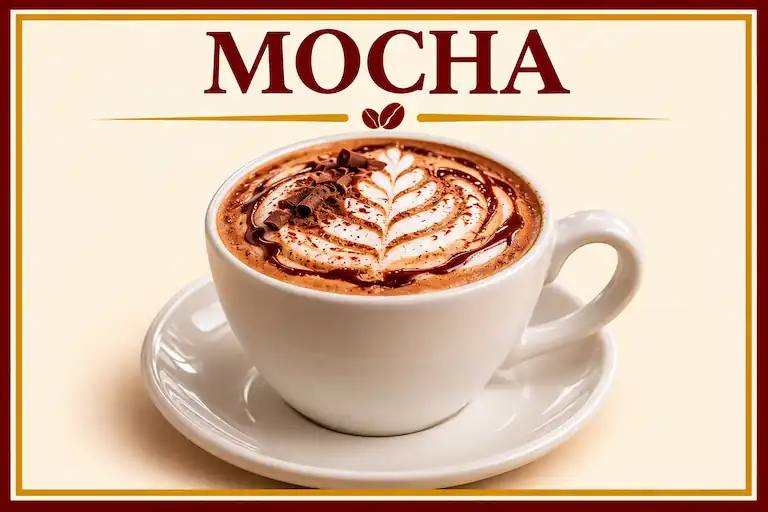
A Mocha coffee brings together three familiar ingredients: espresso, chocolate and steamed milk. Rich, smooth and often finished with a little whipped cream or chocolate decoration, it is one of the most recognisable chocolate-based espresso drinks.
However, the name has a much older story. Long before the modern Caffè Mocha appeared on café menus, Mocha was associated with an important coffee-trading port on Yemen’s Red Sea coast. Coffee exported through Al-Mokha became famous across international markets, eventually giving the word a lasting place in coffee culture.
Today, the name connects two very different periods of coffee history: the early international trade in Yemeni coffee and the modern combination of espresso and chocolate.

What is the historical origin of the term Mocha in the coffee trade?
The word Mocha originates from Al-Mokha, also spelt Mokha or Mocha, a historic port on Yemen’s Red Sea coast.
During the sixteenth, seventeenth and early eighteenth centuries, the port became an important centre for the international coffee trade. Coffee was cultivated in Yemen’s mountainous interior and transported towards the coast, where merchants organised its export to markets across the Middle East, Europe and beyond.
The name of the port gradually became associated with the coffee itself. European traders and consumers began using the term Mocha for coffee arriving from Yemen, even though the beans were grown inland rather than in the port city.
The Smithsonian’s historical study of The Merchant Houses of Mocha explores the port’s merchant communities and its wider role in Indian Ocean trade
Yemeni coffee became particularly valued for its distinctive character. Depending on its growing region, processing and preparation, it could display complex fruit, wine-like acidity, spice and chocolate-like tasting notes.
It is important to distinguish these natural flavour descriptions from actual chocolate. The coffee was not necessarily mixed with cocoa, and not every Yemeni coffee tasted the same.
The historic port’s influence extended beyond coffee.
Al-Mokha was part of a wider maritime trading network involving textiles, spices, metals and other valuable commodities. Its commercial importance helped establish its name in international trade.
For further background, read this explanation What Is a Mocha? and how the historic coffee-trading name became associated with the modern chocolate-and-coffee drink.
How did Mocha evolve from a geographic origin into a chocolate-coffee beverage?
The transition from a coffee-trading name to a chocolate-flavoured drink happened gradually, and the exact development of the modern Caffè Mocha is not fully documented.
Coffee and chocolate were both fashionable luxury ingredients in Europe by the seventeenth and eighteenth centuries. As their popularity grew, combining the two became a natural culinary development.
In Turin, Italy, coffee and chocolate were enjoyed together in traditional drinks such as bavareisa and the later bicerin. These preparations combined coffee, chocolate and cream, often served in small glasses so that their different layers could be seen.
Although these historic drinks were not necessarily identical to today’s espresso-based Mocha, they demonstrate that the coffee-and-chocolate combination has a long European history.
The word Mocha gradually acquired a new association with chocolate-flavoured coffee. By the twentieth century, recipes using coffee, milk and cocoa were appearing under the name.
The historic Yemeni connection remained, even as the meaning of the word expanded.
Today, a Caffè Mocha is generally understood as a chocolate-flavoured variation of a Caffè Latte, combining espresso, chocolate and steamed milk.
How to make a Caffè Mocha: the essential preparation steps
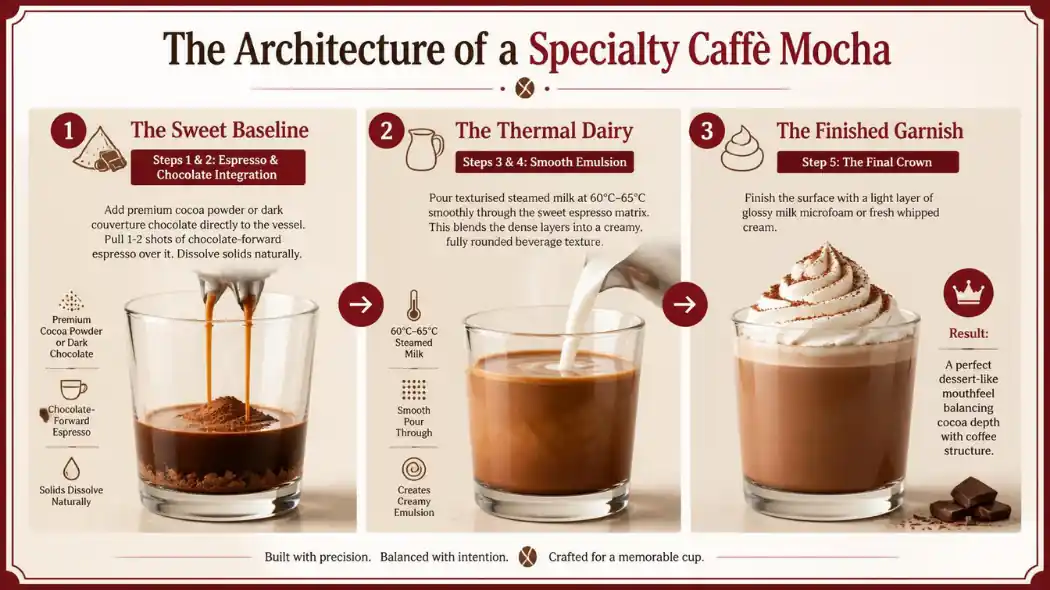
A good Mocha depends on balancing the intensity of the espresso with the sweetness and richness of the chocolate. Too much chocolate can overwhelm the coffee, while too little may leave the finished drink tasting like an ordinary Latte.
The following method provides a useful starting point for preparing one at home.
1. Prepare the espresso
Extract one or two shots of espresso, depending on the size of your cup and how pronounced you want the coffee flavour to be.
A double espresso is a popular choice because it provides enough intensity to stand alongside the chocolate and milk.
A naturally chocolate-forward coffee can work particularly well. Brazilian Arabica beans, for example, are often associated with chocolate, nut and caramel flavour notes.
Explore our guide to Brazilian coffee production and its distinctive coffee profiles for more information.
2. Add the chocolate
Choose your preferred chocolate ingredient:
- Dark chocolate: Creates a deeper, less sweet flavour with a more pronounced cocoa character.
- Chocolate syrup: Dissolves easily and provides a convenient way to control sweetness.
- Cocoa powder: Offers a more direct chocolate flavour, although it needs to be mixed thoroughly to prevent dry clumps.
- Melted couverture chocolate: Produces a particularly rich and indulgent result.
Place the chocolate into the serving cup before adding the espresso.
3. Dissolve and combine
Pour the freshly extracted espresso over the chocolate and stir until the ingredients are thoroughly combined.
The heat of the espresso helps dissolve the chocolate, creating a smooth, concentrated coffee-and-cocoa base.
Make sure there are no unmixed chocolate deposits around the bottom of the cup. This helps distribute the flavour evenly throughout the finished drink.
4. Steam and add the milk
Steam fresh milk to create a smooth, silky texture.
For a typical Mocha, aim for glossy microfoam rather than the thick, airy foam associated with a Cappuccino.
Pour the steamed milk slowly into the espresso and chocolate mixture, allowing the ingredients to combine into a creamy, consistent drink.
5. Finish with a garnish
A Mocha can be served simply with a light layer of milk foam, or finished with a little extra indulgence.
Popular toppings include:
- A dusting of cocoa powder.
- Dark or milk chocolate shavings.
- A drizzle of chocolate syrup.
- A small swirl of whipped cream.
The garnish is optional. A well-balanced Mocha should taste good without relying on a large quantity of additional chocolate or cream.
What is the difference between a Caffè Mocha and a Caffè Latte?
At first glance, the two drinks can look very similar. Both combine espresso and steamed milk, but the addition of chocolate fundamentally changes the Mocha’s flavour and texture.
| Feature | Caffè Latte | Caffè Mocha |
|---|---|---|
| Base ingredients | Espresso and steamed milk | Espresso, chocolate and steamed milk |
| Chocolate | Not traditionally included | Essential ingredient |
| Flavour profile | Smooth, creamy and coffee-forward | Rich, chocolatey and creamy |
| Sweetness | Mainly from the natural sweetness of milk | Depends on the type and quantity of chocolate |
| Texture | Silky and milk-led | Often richer and slightly heavier |
| Garnish | Usually a light layer of microfoam or latte art | May include cocoa, chocolate shavings or whipped cream |
The principal difference is the chocolate component. It introduces sweetness, cocoa bitterness and additional richness, creating a drink that often feels more like a dessert than a traditional Latte.
A Note on the Name: From Mokha to Mocha
It is worth remembering that the word Mocha began as a geographic name rather than a description of a chocolate-flavoured drink.
Originally associated with coffee exported through the historic Yemeni port of Al-Mokha, the name gradually became part of the wider vocabulary of international coffee culture.
The modern Caffè Mocha may contain espresso, chocolate and steamed milk, but its name still carries a reminder of Yemen’s important contribution to the early global coffee trade.
Every Mocha served today therefore connects a modern café favourite with a much older story of coffee cultivation, commerce and discovery.
Visit the history and origins of the world’s most popular coffees, and explore how each much-loved drink found its place in coffee culture.


