

Table of Contents

Every coffee tree begins with a seed, but producing a healthy young plant involves considerably more than simply placing a coffee seed in the ground and waiting for it to grow.
Successful cultivation starts with selecting suitable planting material and providing the right conditions for germination. Once the young shoots emerge, they need careful attention as their roots, stems and leaves develop. The nursery stage then provides an opportunity to strengthen the seedlings before they are gradually introduced to outdoor conditions and eventually planted in the coffee field.
For coffee growers, these early stages are particularly important. Poor seed quality, unsuitable growing conditions or damage to a young root system can affect the development of the plant long after it leaves the nursery.
This guide follows the practical process of sowing coffee seeds and raising young seedlings, from selecting viable planting material through to hardening off and transplantation.
1. Selecting Suitable Coffee Seeds for Sowing
Before sowing begins, growers need to select seeds capable of producing healthy, vigorous plants.
Seed selection is not simply about choosing the largest or most attractive coffee beans. The variety, genetic quality, maturity and viability of the seed all influence the success of the propagation process.
Where possible, planting material should be obtained from reputable seed producers or established suppliers. This helps growers maintain the identity of the variety they intend to cultivate and reduces the risk of introducing unsuitable or incorrectly identified plants into a plantation.
Coffee seeds are normally collected from fully mature, healthy cherries. The outer fruit is removed, leaving the seeds to be prepared for sowing according to the recommended handling method.
Several considerations are particularly important when selecting coffee seeds:
- Variety: Choose a variety suited to the intended growing region, climate and production system.
- Maturity: Seeds should come from properly developed, ripe cherries.
- Health: Avoid planting material from damaged, diseased or poor-quality fruit.
- Viability: Coffee seeds can lose their ability to germinate during storage, making fresh, properly handled seed important.
- Traceability: Keep different varieties clearly identified to prevent accidental mixing.
Genetic identity is particularly important for commercial growers. Planting the wrong variety can affect the characteristics, productivity and suitability of the resulting trees.
World Coffee Research provides detailed advice in its Good Practice Guide: Coffee Seed Production, which explains the importance of seed quality, variety identification and responsible handling when producing coffee planting material.
2. Preparation of Sowing Coffee Seeds
Once suitable planting material has been selected, the seeds need to be prepared for germination.
Fresh coffee seeds are normally obtained from ripe cherries after the outer fruit pulp has been removed. They must be handled carefully because the living embryo inside the seed is essential for successful germination.
Coffee seeds are commonly sown while still enclosed in their parchment layer, although preparation techniques can vary between nurseries and propagation systems.
It is important to distinguish planting seeds from the dried green coffee beans prepared for commercial roasting. Seeds intended for propagation must retain their biological viability. Excessive drying, unsuitable storage conditions and long delays before sowing can reduce their ability to germinate.
For this reason, growers generally aim to obtain fresh, healthy planting material and follow suitable recommendations for preparation and storage.
The exact handling procedure may differ according to the seed source, variety and local nursery practices. Following guidance from a reliable seed producer is preferable to applying one preparation method to every coffee-growing situation.
3. Preparing the Nursery and Germination Beds
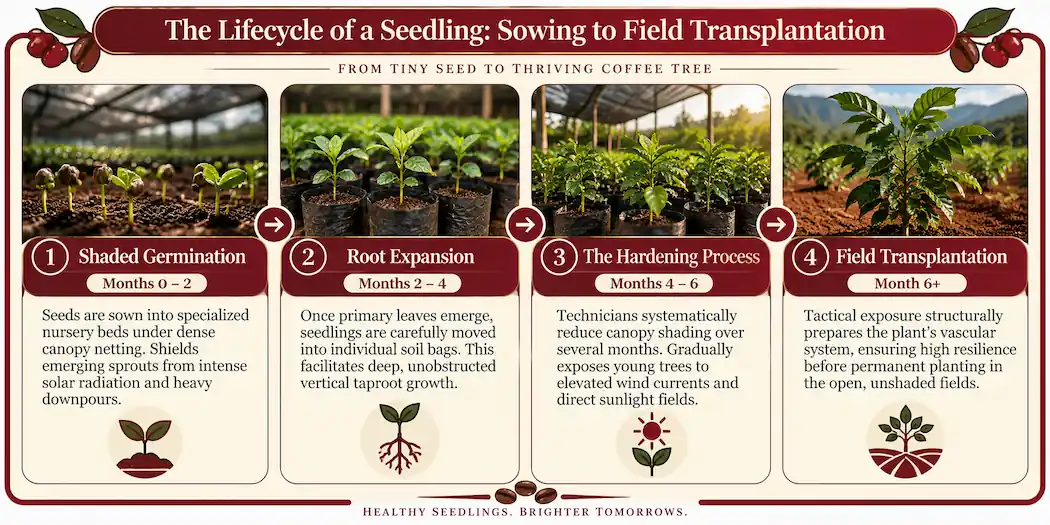
Coffee seeds are usually germinated in a nursery environment rather than being planted directly into their permanent field location.
A nursery allows growers to manage moisture, drainage, light and plant health while the seeds are developing. It also makes it easier to monitor germination and identify weak or unhealthy seedlings before they are transferred into individual containers.
A suitable germination bed should provide:
- A clean growing medium free from harmful pests and diseases.
- Good drainage to prevent waterlogging.
- Consistent moisture to support germination.
- Protection from excessive sunlight and heavy rainfall.
- Sufficient space for seedlings to develop without overcrowding.
The growing medium needs to retain enough moisture for the seeds while allowing excess water to drain away. Poor drainage can encourage fungal problems and damage developing roots.
Nursery hygiene is equally important. Contaminated growing materials, dirty equipment and unsuitable irrigation water can introduce diseases that spread quickly among young plants.
The growing environment should also provide suitable protection from intense sunlight. Young seedlings are delicate, and excessive heat or direct exposure can cause stress during their early development.
For more detailed advice, the World Coffee Research Good Practice Guide: Coffee Nursery Management covers nursery preparation, growing media, containers, nutrition and the management of young coffee plants.
4. Germination: When the Coffee Seed Begins to Grow
Once coffee seeds have been placed in suitable conditions, germination begins.
The seed absorbs water, activating the biological processes needed for growth. The first visible development is normally the emergence of the embryonic root, known as the radicle. This grows downwards into the growing medium, establishing the beginnings of the plant’s root system.
A shoot then develops and moves upwards towards the light.
Coffee germination can be relatively slow and uneven compared with some other cultivated plants. The time required depends on several factors, including seed freshness, temperature, moisture and the propagation method.
As the seedling develops, it passes through several recognisable stages.
Initial root development
The first root emerges from the seed and begins growing into the growing medium. This establishes the foundation of the young plant’s root system.
Shoot emergence
The developing shoot grows upwards towards the surface, eventually becoming visible above the growing medium.
Seedling emergence
The young coffee plant begins to appear above the surface. At this stage, it remains vulnerable to excessive moisture, strong sunlight and physical damage.
First leaves
The seedling develops its first functional leaves and gradually becomes more independent of the food reserves stored within the seed.
During germination, the growing medium should remain suitably moist but never saturated. Good drainage and appropriate protection from harsh weather help provide a more stable environment for the developing plants.
5. Transferring Seedlings into Nursery Containers
Once the seedlings have developed sufficiently, they can be transferred from the germination bed into individual growing containers.
This gives each young coffee plant more room for its roots to develop and allows it to remain in the nursery while it becomes stronger.
Containers may include traditional nursery bags or other suitable growing systems. The choice depends on local practice, availability, the intended growing period and the nursery’s management system.
The growing medium should provide a suitable balance of moisture retention, drainage and aeration. It should also be free from harmful contaminants that could affect the developing roots.
Care is particularly important during transplantation. Young coffee roots are delicate, and rough handling can cause damage that affects subsequent growth.
Growers generally select healthy seedlings with well-developed root systems and remove plants showing serious defects, disease or poor development.
A healthy main root is desirable because it helps establish a strong foundation for the young plant. Roots should be handled carefully and positioned naturally within the container rather than being bent or forced into an unsuitable position.
The objective is to give each seedling sufficient space and a suitable growing environment so that it can continue developing before being moved into the plantation.
6. Nursery Care: Supporting Healthy Young Coffee Plants
After transplantation, the seedlings need regular attention while their roots become established and their leaves develop.
Nursery management is not simply about keeping the plants watered. It involves maintaining a suitable growing environment, monitoring plant health and identifying problems before they affect large numbers of seedlings.
Watering and moisture management
Watering is one of the most important responsibilities. The growing medium should receive enough moisture to support healthy growth without becoming waterlogged.
Too little water can cause stress and restrict development, while excessive moisture can reduce the oxygen available to the roots and increase the risk of disease.
Nutrition
Young coffee plants require essential nutrients to develop healthy roots, stems and foliage.
Any fertiliser programme should be appropriate to the growing medium, the development stage of the seedlings and local recommendations. Applying excessive fertiliser can damage young plants, so careful management is important.
Weed control
Weeds compete with young coffee plants for water, nutrients and available space. Removing unwanted vegetation helps reduce competition and keeps the nursery manageable.
Pest monitoring
Leaves and stems should be inspected regularly for signs of insect damage. Early identification makes it easier to address problems before they spread.
Disease prevention
Good nursery hygiene helps reduce the risk of fungal and other plant diseases. Unhealthy plants should be identified and managed appropriately, while equipment and growing areas should be kept clean.
Plant spacing
Seedlings need enough room for healthy development and suitable air circulation. Overcrowding can make inspection difficult and create conditions that encourage certain diseases.
Regular inspection is one of the simplest ways to maintain a healthy nursery. It allows growers to identify problems early and give individual plants the attention they need.
World Coffee Research’s nursery management guide also provides supporting advice on growing media, containers, plant nutrition and integrated pest management.
7. Hardening Off: Preparing Coffee Seedlings for Outdoor Conditions
Before young coffee plants are transferred into a plantation, they need to become accustomed to the conditions they will encounter outside the nursery.
This gradual adjustment is known as hardening off.
Nursery-grown seedlings may have been protected from strong sunlight, wind and sudden changes in temperature. Moving them directly into exposed field conditions can cause stress and damage, particularly if they have not had time to adapt.
Hardening involves gradually reducing the protection provided by the nursery, allowing the plants to adjust to greater sunlight and more natural environmental conditions.
The process should be managed carefully. Sudden exposure to intense sunlight or drying winds can damage leaves, increase moisture loss and slow development.
During this period, growers should continue monitoring:
- Moisture levels within the growing medium.
- Leaf colour and general plant health.
- Signs of wilting or environmental stress.
- Root development and the overall strength of the seedlings.
- Their ability to tolerate gradually increasing exposure to outdoor conditions.
The length and method of hardening will depend on the nursery system and the conditions in which the seedlings will eventually be planted.
The objective is not to make the seedlings grow as quickly as possible. It is to prepare strong, healthy plants capable of adapting to their permanent growing environment.
8. Transplanting Coffee Seedlings into the Plantation
When the seedlings are sufficiently developed and field conditions are suitable, they can be transferred from the nursery into the plantation.
The timing is important. In many coffee-growing regions, planting is scheduled to coincide with the beginning of a reliable rainy period. This helps young plants establish themselves while reducing the risk of prolonged water stress immediately after transplantation.
Before planting begins, growers prepare the field and ensure that the planting sites are suitable for root development.
The seedlings should be removed from their containers carefully, taking particular care not to damage or twist the main root.
Once planted, the root system should be properly positioned and covered with soil, while the base of the stem remains at an appropriate level. The soil around the plant should be firm enough to support it without being compacted excessively.
Young coffee plants may also need temporary protection from intense sunlight, strong winds and other environmental stresses.
After planting, continued monitoring remains essential. Water availability, weed competition, pests and diseases can all affect the establishment of the new coffee trees.
The conditions in which the seedlings will grow over the coming years are also important. Soil structure, rainfall, temperature, altitude and shade all influence the development of a mature coffee plant. Our guide to coffee growing conditions explains how these environmental factors influence the health and development of coffee trees.
Conclusion: A Strong Beginning for a Productive Coffee Plant
Sowing coffee seeds is the first practical step in establishing a coffee plantation, but successful cultivation depends on the care given to the young plants throughout their early development.
Selecting suitable planting material, preparing clean germination beds, maintaining appropriate moisture and protecting delicate roots all contribute to healthy seedlings.
The nursery stage then provides an opportunity to strengthen the plants before they are gradually introduced to outdoor conditions and finally transplanted into the field.
Although flowering and harvesting may still be several years away, the foundations of a productive coffee tree are being established during these early stages.
A carefully raised seedling gives the grower a much better starting point for the years of growth that follow.


