

Table of Contents
The Chemistry of Coffee Extraction: The Science Behind the Perfect Cup
The coffee extraction process is the final bridge between bean and cup, transforming the characteristics developed during growing, processing and roasting into the flavours we experience when we take that first sip.
From the moment hot water meets freshly ground coffee, it begins dissolving and carrying away soluble compounds. The proportions of those compounds, and how evenly they are extracted, help determine whether your coffee tastes bright and fruity, sweet and balanced, or unpleasantly bitter.
Think of the journey as a series of connected stages:
Seeding → Harvesting → Processing → Roasting → Extraction → Your Cup
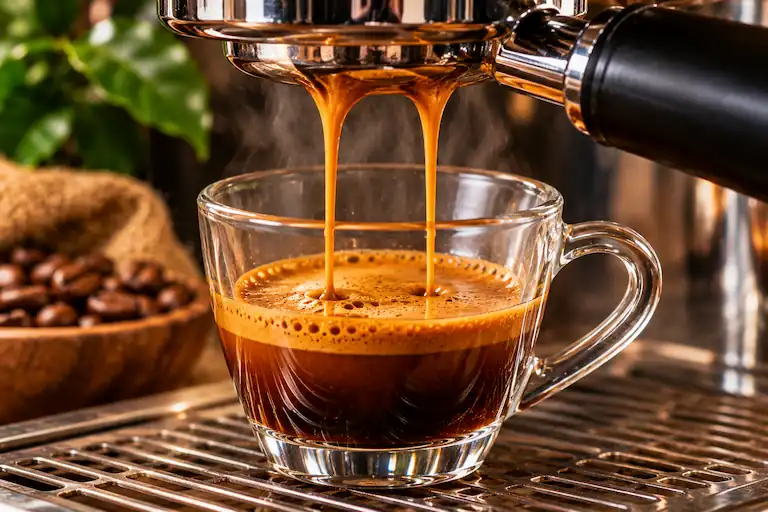
Extraction is where all those earlier stages come together. Even beautifully grown and expertly roasted coffee can disappoint if the brewing process is poorly controlled.

What Is Coffee Extraction in Organic Chemistry?
In organic chemistry, extraction is a separation process in which a solvent dissolves selected substances from a material. During coffee brewing, water acts as that solvent, drawing soluble compounds from the roasted and ground coffee.
These include organic acids, caffeine, carbohydrates, minerals and a wide range of aromatic and flavour-active compounds created or transformed during roasting.
A roasted coffee bean also contains substantial insoluble material, including cellulose and other plant structures. These remain largely in the spent grounds rather than dissolving into your drink.
The aim is to extract a balanced selection of soluble compounds, rather than simply removing as much material as possible.
One useful measurement is extraction yield, which describes the percentage of the original dry coffee dose that has dissolved into the finished beverage. The traditional Specialty Coffee Association Golden Cup reference range for filter coffee is approximately 18–22%.
The traditional relationship between coffee strength and extraction yield is illustrated in the Specialty Coffee Association Brewing Control Chart, which provides a useful reference for filter coffee brewing
This is a useful starting point, not a guarantee of perfect flavour. Different coffees and individual preferences can produce enjoyable results outside that range. Extraction yield also needs to be considered alongside brew strength, because a concentrated coffee and a weak coffee can have different strengths even when their extraction yields are similar.
Coffee extraction is also influenced by how evenly water moves through the grounds, as demonstrated by research into coffee extraction and brewing uniformity
In What Order Do Flavours Develop During Coffee Brewing?
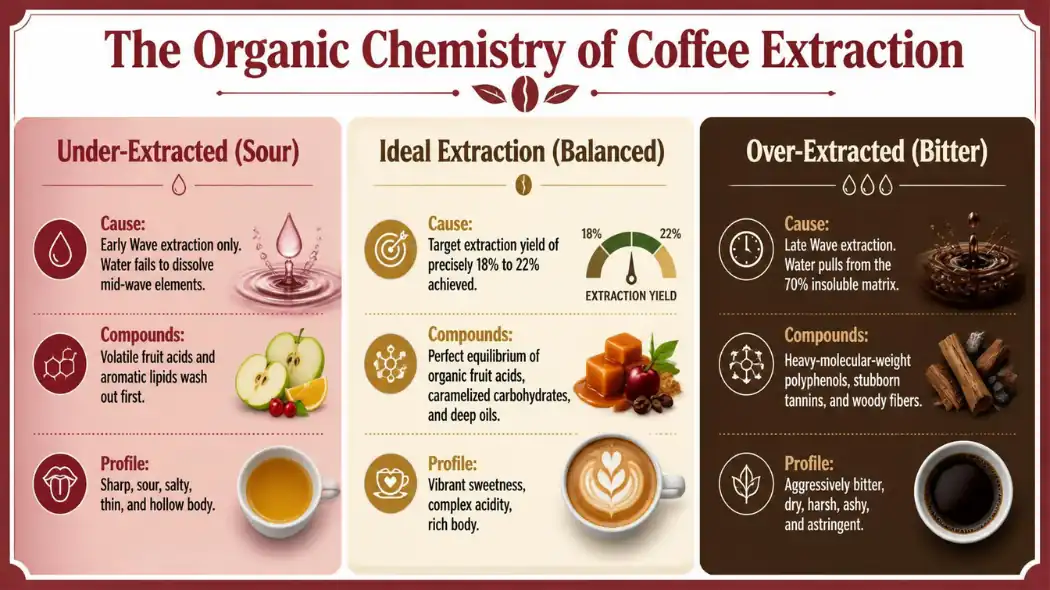
It is tempting to imagine that water extracts coffee compounds in three completely separate stages. The reality is more complicated: different substances dissolve at different rates, and their extraction overlaps throughout brewing.
More recent sensory research shows that the relationship between extraction, flavour and personal preference is more complicated than the traditional brewing chart suggests, as explored in recent research into coffee flavour and extraction preferences.
However, grouping the flavour characteristics into three simplified stages is a useful way to understand why extraction balance matters.
1. The Early Stage – Acidity and Brightness
Some readily soluble compounds, including organic acids, begin entering the water as soon as brewing starts. They contribute to the bright, lively characteristics associated with citrus, berries and other fruit-like flavours.
If the brewing process is stopped too early, these characteristics may dominate because there has not been enough extraction to develop a balanced overall flavour.
2. The Middle Stage – Sweetness and Balance
As extraction continues, a broader range of soluble compounds enters the brew. Their combined effect can create greater sweetness, body and a more rounded flavour.
Coffee flavours described as caramel, chocolate, biscuit or ripe fruit are not produced by one individual sugar dissolving into the cup. They reflect the complex mixture of compounds present in the roasted bean and how we perceive them together.
3. The Later Stage – Bitterness and Astringency
Further extraction brings additional compounds into the drink, some of which contribute bitterness, dryness and astringency.
A degree of bitterness can add depth and structure, particularly in darker roasts. However, excessive or uneven extraction can produce a harsh, woody, drying or unpleasantly bitter finish.
The important distinction is that the three stages are a simplified flavour guide, not a strict chemical sequence in which acids finish dissolving before sugars begin, followed by bitter compounds.
What Are Under-Extraction and Over-Extraction in Coffee Brewing?
Recognising the difference between under-extraction and over-extraction is one of the most practical skills a home brewer can develop.
Under-extraction – When Coffee Tastes Sour
Under-extraction occurs when too little soluble material has been removed from the grounds to create a balanced flavour. The resulting coffee may taste sharp, sour, salty or thin, often lacking sweetness and body.
Common causes include:
- A grind that is too coarse for the brewing method.
- Water that is too cool for the chosen recipe.
- Insufficient contact time.
- Uneven water distribution through the coffee bed.
If your coffee regularly tastes sharp or thin, explore our troubleshooting guide to discover why your coffee tastes sour and how to fix it.
Over-extraction – When Coffee Tastes Bitter
Over-extraction occurs when too much soluble material has been removed for the flavour balance you want. It can produce harsh bitterness, a dry mouthfeel and lingering unpleasant flavours.
Possible causes include:
- A grind that is too fine for the brewing method.
- Excessive contact time.
- Brewing conditions that encourage too much extraction.
- Uneven extraction across the coffee bed.
If bitterness is spoiling your daily brew, our companion guide explains why coffee tastes bitter and how to correct it.
Remember that sourness and bitterness are not always proof of under-extraction or over-extraction. Roast level, bean quality, water chemistry and brewing strength can all influence the taste.
Coffee Extraction Troubleshooting Chart
When your coffee does not taste quite right, small changes to your brewing variables can help bring the result closer to your preferred balance.
| Taste profile | Possible diagnosis | Adjustments to try |
|---|---|---|
| Sour, sharp or salty | Possible under-extraction | Try a finer grind, slightly longer contact time or a modest increase in temperature |
| Bitter, harsh or drying | Possible over-extraction | Try a coarser grind, shorter contact time or a modest reduction in temperature |
| Weak but not particularly sour | Possible low brew strength | Increase the coffee dose or reduce the amount of brewing water |
| Uneven or inconsistent flavour | Possible uneven extraction | Improve pouring technique, distribution or agitation |
These are starting points rather than automatic fixes. Change one variable at a time and taste the result before making another adjustment.
Bringing the Coffee Extraction Process Together

The coffee extraction process is where the potential of the bean becomes the character of the finished drink. It connects everything that has happened before brewing, from the variety and growing conditions to processing and roasting.
Understanding how soluble compounds enter the water helps explain why grind size, temperature, contact time and water distribution matter so much.
You do not need laboratory equipment to put this knowledge into practice. Start with a repeatable recipe, pay attention to the taste and make small, controlled adjustments.
The more you understand extraction, the easier it becomes to recognise what your coffee is telling you and how to improve the next cup.


