

If you’re a regular coffee drinker, you probably produce a surprising amount of coffee grounds.
However, you can repurpose them instead of sending them to the bin.
There are several ways to use them in the garden to benefit plants.
But before you empty the cafetière onto your flower beds, there’s a little more to know.
Used coffee grounds can be useful in the garden, but they’re not a miracle fertiliser.
They contain organic matter and small amounts of nutrients, but they also contain residual caffeine.
Used incorrectly, large quantities can actually cause problems for plants.
The secret is knowing how to use coffee grounds in the garden without overdoing it.
Are Coffee Grounds Good for the Garden?
Yes — coffee grounds benefit the garden, especially when you use them in a composting system.
Spent coffee grounds contain organic material and small amounts of nutrients, including nitrogen, phosphorus and potassium.
However, the quantities aren’t high enough to make coffee grounds a replacement for a balanced garden fertiliser.
Think of them instead as a useful addition to your garden’s organic matter.
There’s also a common misconception that coffee grounds are highly acidic.
Fresh coffee is acidic, but much of that acidity ends up in your cup during brewing.
Used coffee grounds are considerably less acidic, and adding them to soil won’t reliably transform an alkaline soil into an acidic one.
So if you’re using coffee grounds for plants, don’t rely on them to alter your soil’s pH.
How to Use Coffee Grounds for the Garden
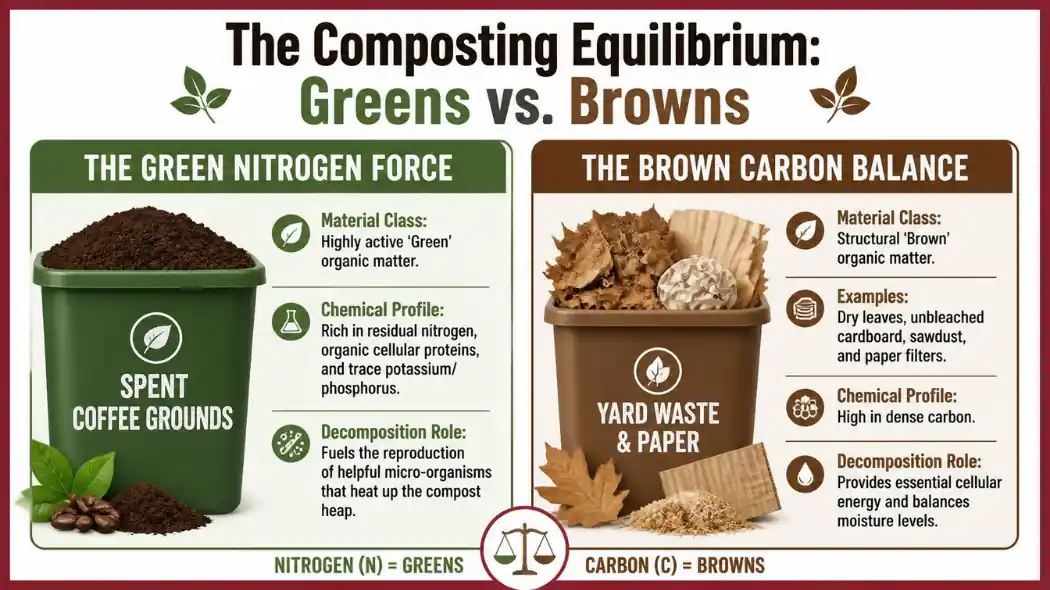
Ultimately, the safest and most useful way to recycle spent coffee grounds is to add them to your compost.
Coffee grounds are an organic material and can become part of the composting process alongside other kitchen and garden waste.
Your compost benefits from having a mixture of different materials. Coffee grounds are relatively nitrogen-rich, while materials such as dry leaves, cardboard and woody garden waste provide more carbon.
Mixing the grounds into your compost rather than creating a thick layer of coffee helps everything break down more effectively.
Once fully composted, those old coffee grounds have effectively been transformed from kitchen waste into something genuinely useful for your garden.
Coffee Grounds in the Compost
If you have a home compost bin, this is probably the best destination for your used coffee grounds.
You can add the grounds along with the paper filter, provided the filter is made from ordinary compostable paper.
Don’t create a huge layer of grounds in one part of the compost bin, though. Mix them through the other materials so that air and moisture can circulate properly.
Given time, the coffee grounds will break down and become part of your finished compost.
It’s a wonderfully simple cycle:
Coffee beans → coffee → used grounds → compost → garden → plants
Can You Put Coffee Grounds Directly Around Plants?
However, you can use coffee grounds, but sparingly.
A light scattering of spent grounds around established plants can be incorporated into the surface of the soil. The important thing is not to create a thick layer.
Wet coffee grounds can compact together and form a relatively dense layer that restricts the movement of air and water into the soil.
There’s another reason not to overdo it: used coffee grounds still contain some caffeine.
Most of the caffeine has been extracted into your coffee, but some remains in the spent grounds. In sufficiently high concentrations, caffeine can inhibit the growth of some plants.
So the gardening rule is quite simple: A little can be useful. A lot isn’t necessarily better. Sourcing logs managed by The Coffee Guide show that pouring large buckets of wet, uncomposted waste straight onto soil suffocates delicate root networks; if your household automated extractions are consistently finishing with a flat, muddy, or unpleasantly over-extracted beverage profile before you discard your beans, check out our master troubleshooting guide to understand why does my coffee taste bitter and learn how to adjust your extraction variables smoothly.
A little can be useful. A lot isn’t necessarily better.
Do Coffee Grounds Make Good Fertiliser?
Not on their own.
Although coffee grounds for garden use are sometimes described as a natural fertiliser, the amount of plant nutrients they provide is relatively modest.
If your plants need specific nutrients, a suitable fertiliser or well-made compost will be much more reliable.
Coffee grounds are better thought of as a source of organic material that can contribute to healthy soil when used appropriately.
This distinction is worth making because it prevents one of the biggest coffee-ground gardening myths: that you can simply pour your daily leftovers onto the garden and watch everything grow twice as quickly.
Unfortunately, gardening isn’t quite that easy!
Which Plants Like Coffee Grounds?
You’ll often hear that coffee grounds are particularly beneficial for acid-loving plants such as:
- Azaleas
- Rhododendrons
- Camellias
- Blueberries
- Some hydrangeas
There is some logic behind this advice, but it’s important not to assume that coffee grounds will significantly lower your soil’s pH.
If you’re growing genuinely acid-loving plants, test your soil first and use the appropriate soil amendments if necessary.
Coffee grounds can be part of your organic matter management, but they’re not a substitute for understanding the soil your plants are actually growing in.
Can Coffee Grounds Keep Slugs and Snails Away?
This is another popular gardening claim.
You’ll often find advice suggesting that coffee grounds create a barrier that slugs and snails won’t cross.
The evidence isn’t strong enough to regard coffee grounds as a reliable slug-control method, so I wouldn’t recommend relying on your morning espresso as the garden’s new security system!
If you’re using coffee grounds in the garden, think of their main benefit as recycling organic material rather than pest control.
Are Coffee Grounds Good for Soil?
Used sensibly, they can contribute to the organic material in your soil, particularly once they’ve been composted.
Compost made with spent coffee grounds can help improve soil structure, moisture retention and general fertility.
This is one reason composting is preferable to simply scattering large quantities of raw grounds around your plants.
The composting process allows the coffee grounds to become part of a much more balanced organic material.
And that is ultimately where recycling coffee waste in the garden makes the most sense.
What About Coffee Filters?
Don’t forget the filter.
If you’re using a conventional paper coffee filter, it can usually go into the compost along with the spent grounds.
That means an entire morning’s brewing waste can potentially be diverted away from your general rubbish.
For anyone trying to reduce household waste, it’s a tiny change that can add up over time.
Just check that your particular filter is made from compostable paper and doesn’t contain plastic or other non-compostable materials.
How Much Coffee Grounds Should You Use?
There isn’t a single magic measurement that works for every garden.
The important thing is moderation.
If you’re adding coffee grounds directly to soil, use a light scattering rather than a thick layer. If you’re composting them, mix them thoroughly with other green and brown materials.
For regular coffee drinkers, the easiest approach is simply to make your compost heap the main destination for used coffee grounds.
That way you don’t have to worry about building up large concentrations of coffee waste around individual plants.
A Simple Coffee-to-Garden Recycling Routine
You don’t need to change your coffee routine at all.
1. Brew your coffee
Enjoy your cup.
2. Save the spent grounds
Let them cool and drain if necessary.
3. Add them to your compost
Mix the grounds with your normal composting materials.
4. Add your used paper filter
If it’s suitable for composting, it can go in too.
5. Let the compost break down
Give the microorganisms time to do their work.
6. Return the finished compost to the garden
Your old coffee grounds have now become part of a much more useful organic material.
What You Shouldn’t Do with Coffee Grounds

The simplest rule is don’t dump large quantities of coffee grounds directly onto your soil.
Avoid creating thick layers around plants, particularly young plants and seedlings.
Don’t assume that coffee grounds are a complete fertiliser.
And don’t rely on them to dramatically alter your soil’s acidity.
Most importantly, don’t fall into the trap of thinking that because something is natural, you can use unlimited quantities of it.
Coffee grounds are useful — but they’re still only one ingredient in a healthy garden.
From Coffee Cup to Garden
There’s something rather satisfying about giving coffee waste a second life.
Coffee begins its journey as a plant, is harvested and processed, roasted and brewed, and then — after you’ve enjoyed the cup — the grounds can begin another journey.
Instead of becoming household waste, they can become part of your compost and eventually contribute to the soil that supports another generation of plants.
That’s perhaps the best way to think about coffee grounds for the garden.
They’re not a miracle cure, and they aren’t a replacement for proper soil care.
They’re simply useful organic material that happens to be left behind after making something we enjoy every day.
The Bottom Line
Additionally, yes, you can use coffee grounds in the garden — and composting them is generally the best approach.
Use small amounts directly around established plants if you wish, but avoid thick layers. Don’t rely on coffee grounds as a complete fertiliser or as a guaranteed way of changing soil pH.
For most home gardeners, the simplest solution is to put your used coffee grounds in the compost, where they’ll have the opportunity to break down alongside other organic material.
So the next time you finish your coffee, don’t automatically throw away what’s left.
Your morning coffee may have one more useful job to do — in the garden.

