

Medical Disclaimer: The nutritional and health information provided in this article is for educational and informational purposes only. It is not intended as a substitute for professional medical advice, diagnosis, or treatment. Always seek the advice of your physician or other qualified health provider with any questions you may have regarding a medical condition or dietary changes.
Modern science largely agrees on coffee and health benefits.
Moreover, moderate consumption—typically 1 to 4 cups per day—relates to longer life.
It also links to healthier ageing and a lower risk of several major diseases, especially when black coffee is preferred.
What the latest research actually shows
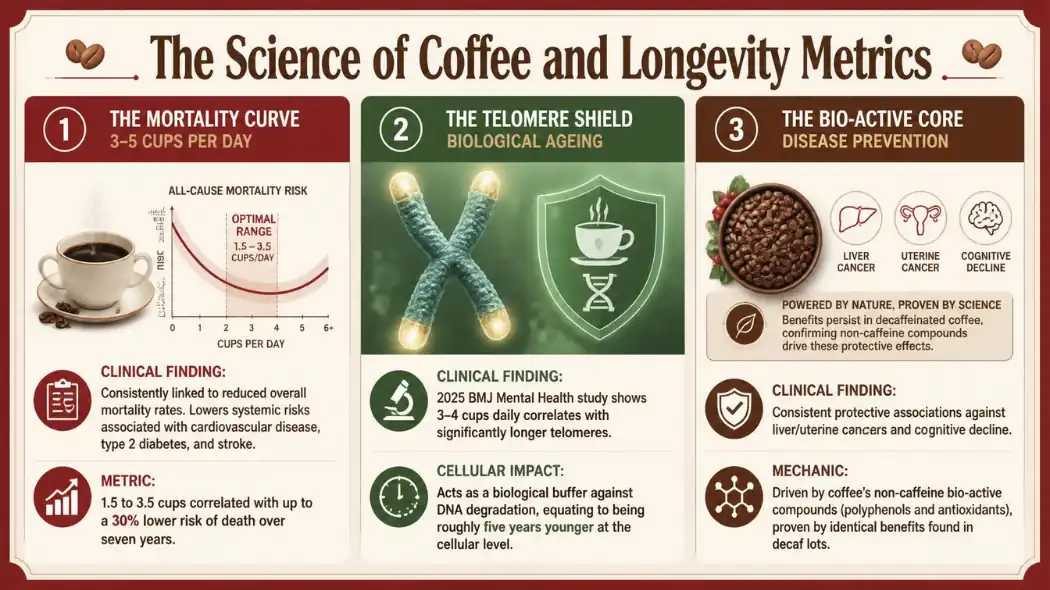
Coffee and longevity: Multiple large-scale studies and reviews converge on the same pattern:
Three to five cups a day has been linked with reduced overall mortality. It is also associated with a lower risk of cardiovascular disease, diabetes, stroke, and some cancers.
Even one to three cups a day of caffeinated coffee shows a 14% lower risk of death.
Moreover, these coffee and health benefits are especially evident when consumed without heavy sugar or cream.
A UK cohort study found that 1.5–3.5 cups/day correlated with a lower risk of death. This held even with a teaspoon of sugar over seven years.
Coffee and biological ageing
A 2025 BMJ Mental Health study found that people drinking 3–4 cups per day had longer telomeres.
Telomeres are a marker of slower biological ageing.
Consequently, this equates to about five years younger at the cellular level.
Moreover, coffee and health benefits are seen as a factor in healthy ageing.
Coffee and disease prevention
Modern reviews show consistent protective associations:
Lower risk of cardiovascular disease, see what the experts say about coffee and health benefits for your heart.
Reduced incidence of type 2 diabetes.
Lower risk of liver and uterine cancers.
Potential protection against cognitive decline and neurodegenerative disease.
Moreover, both caffeinated and decaf appear beneficial.
The effect likely comes from coffee’s bio-active compounds like polyphenols and antioxidants, not just caffeine.
Why coffee might help you live longer
Research points to several mechanisms:
Improved glucose metabolism
Reduced inflammation
Enhanced fat oxidation
Better lung function
Increased physical and mental performance
When coffee’s benefits drop off
Science is clear on three caveats:
- Too much sugar or cream reduces benefits
High sugar and saturated fat intake counteracts coffee’s protective effects. - Pregnancy requires limits
Pregnant individuals should keep caffeine intake below 200 mg/day (about 1–2 cups). - Excess caffeine can cause issues: High intake may trigger anxiety, sleep disruption, or heart palpitations in sensitive individuals. Sourcing logs managed by The Coffee Guide indicate that these physiological spikes are frequently worsened by drinking highly concentrated, over-extracted cups; if your daily morning extractions are turning out unpleasantly harsh, dry, or aggressively bitter on the palate, check out our master troubleshooting guide to understand why does my coffee taste bitter and learn how to adjust your grind size and brewing variables smoothly.
Bottom line
If you enjoy your morning brew, modern science is largely on your side: moderate daily coffee consumption is one of the most consistently supported dietary habits linked to longer life and healthier ageing. Just keep the sugar and cream modest.
The coffee longevity study: What modern science says about your morning brew…
Disclaimer: The information provided in this article is for educational and informational purposes only; it does not constitute medical advice, and readers should always consult a qualified healthcare professional or relevant practitioner before making changes to their dietary habits.

