

Table of Contents
Coffee doesn’t spoil in quite the same way as milk or meat, but it certainly doesn’t stay fresh forever. Over time, roasted coffee gradually loses its aroma, flavour and complexity. What begins as a fragrant, characterful cup can eventually become flat, dull and disappointing. The good news is that a few simple storage habits can make a considerable difference. Understanding what causes coffee to deteriorate, how long it stays at its best and where to keep it will help you protect those precious flavours for longer. Here we will explain how to keep coffee fresh
Whether you buy whole beans or ground coffee, this guide explains how to keep your coffee fresh and get the best from every bag.

What Are the Four Main Enemies of Fresh Coffee?
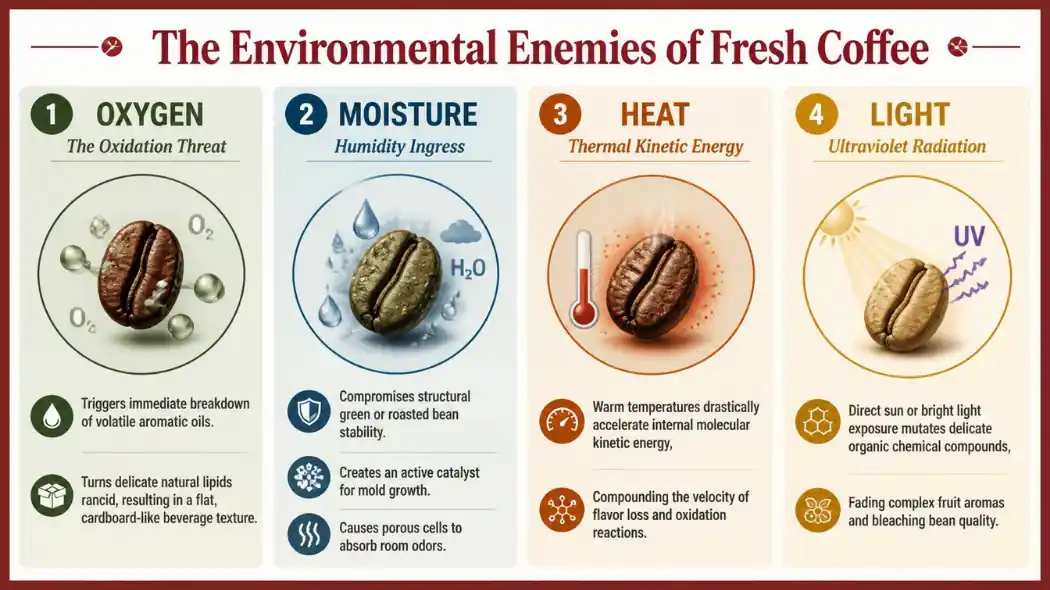
Roasted coffee is particularly vulnerable to its surroundings. Four environmental factors play an important role in the gradual loss of freshness: oxygen, moisture, heat and light.
1. Oxygen
Oxygen is one of the main causes of coffee staling. When roasted coffee is exposed to air, oxidation reactions affect its aromatic compounds and oils. Over time, the delicate aromas fade and unpleasant stale flavours can develop.
This is why resealing your coffee properly matters. Every time an opened bag is left exposed to air, the ageing process continues.
2. Moisture and Humidity
Coffee beans are porous and readily absorb moisture and surrounding odours. Excessive humidity can accelerate the loss of freshness and, under unsuitable conditions, encourage mould growth.
Keep coffee away from damp cupboards, sinks and other sources of moisture. Never store it in a container that hasn’t been thoroughly dried.
3. Heat
Warm temperatures accelerate the chemical reactions responsible for coffee staling. Keeping beans close to ovens, hobs, radiators or sunny windows can shorten the time they retain their best flavour.
A cool, stable storage location is preferable to somewhere that experiences frequent temperature changes.
4. Light
Direct sunlight and strong light exposure can contribute to the deterioration of coffee’s delicate flavour compounds.
This is why opaque packaging and dark storage cupboards are preferable to displaying beans in a clear glass jar on a sunny kitchen worktop.
Together, these four factors explain why good coffee storage is about more than simply closing the bag after each use.
How Long Does Whole Bean and Ground Coffee Stay Fresh?
There isn’t one universal shelf-life figure for every coffee. The roast date, packaging, processing, storage conditions and whether the coffee has been ground all influence how quickly it loses its freshness.
However, there are some useful general guidelines.
Whole coffee beans
Whole beans generally retain their aroma and flavour for longer than ground coffee because less of their surface area is exposed to oxygen.
For the best results, buy beans with a clearly marked roast date and aim to use them within a few weeks of roasting, once they have had an appropriate resting period. A properly sealed, high-barrier bag can protect them for considerably longer, but peak flavour gradually declines.
Ground coffee
Grinding exposes a much greater surface area to oxygen, allowing aromatic compounds and carbon dioxide to escape more quickly.
This is why freshly ground coffee usually produces a more expressive cup than coffee that has been sitting open for several days or weeks.
For the best flavour, buy smaller quantities of ground coffee and use them promptly. Better still, buy whole beans and grind only what you need immediately before brewing.
Brewed coffee
Once coffee has been brewed, its flavour changes as it cools and is exposed to air. It is best enjoyed soon after preparation.
If you want to keep leftover brewed coffee, transfer it to a clean, covered container and refrigerate it promptly rather than leaving it sitting on the worktop. Its flavour will gradually deteriorate, so use it as soon as practical.
Remember that these are freshness guidelines rather than guaranteed safety dates. Always use sensible food-storage practices and discard coffee if you see signs of mould or contamination.
Should You Store Coffee Beans in the Fridge or Freezer?
This is one of the most frequently asked questions about coffee storage, and the answer depends on how long you intend to keep your beans.
The refrigerator: Not recommended for everyday storage
A household refrigerator is generally a poor place to store your daily coffee supply.
Coffee can absorb moisture and strong surrounding odours, while repeatedly moving a cold container into warmer room-temperature air can encourage condensation.
That moisture is precisely what you want to avoid.
A cool, dark cupboard is a much better choice for coffee you intend to use regularly.
The freezer: Useful for longer-term storage
Freezing coffee is different. When done properly, it can help preserve beans that you won’t be using for several weeks or months.
The key is to prevent exposure to air and moisture.
For best results:
- Divide the beans into smaller, usable portions before freezing.
- Seal each portion in an airtight, freezer-suitable bag or container.
- Avoid repeatedly opening and closing the same frozen supply.
- Remove only the quantity you intend to use.
- Allow the sealed portion to reach room temperature before opening it, reducing the risk of condensation forming on the cold beans.
Freezing is not essential for everyday coffee storage, but it can be useful when you have bought more beans than you can reasonably use while they are at their best.
How to Tell If Coffee Has Gone Bad
Coffee that has lost its freshness isn’t necessarily unsafe to drink. However, there are some signs that its quality has deteriorated.
Signs of stale or spoiled coffee include:
- Flat aroma: The bag has little of the rich, characteristic fragrance you would normally expect.
- Dull or unpleasant taste: The brewed coffee lacks its usual flavour complexity and may taste stale, woody or papery.
- Unusual clumping: Ground coffee that has become damp or formed unusual clumps may have been exposed to moisture.
- Visible mould: Any visible mould is a reason to discard the coffee immediately.
Stale coffee is usually a quality issue rather than a food-safety problem. Mouldy coffee, however, should never be consumed.
When coffee loses its aroma, it has lost much of the character that makes a freshly brewed cup so enjoyable.
The Sensory Check: How to Tell If Your Coffee Has Lost Its Freshness
If you aren’t sure how fresh your coffee is, there are a couple of simple checks you can make.
1. The Aroma and Appearance Test

Freshly roasted coffee should have a recognisable aroma, although the exact fragrance will depend on its origin, variety, processing method and roast profile.
If your beans smell flat, papery, dusty or unpleasantly stale, their aromatic quality may have deteriorated.
Appearance can offer clues, but it isn’t a reliable freshness test on its own. Some dark-roasted coffees naturally develop an oily surface, while lighter roasts may remain comparatively dry. The presence or absence of oil doesn’t tell you exactly how fresh the beans are.
2. The Coffee Bloom Test
When you pour hot water over freshly ground coffee in a filter brewer, you may notice the grounds swell and release bubbles. This is known as the coffee bloom.
The bubbling is largely caused by carbon dioxide escaping from the roasted coffee. Freshly roasted beans retain more of this gas, which is gradually released during storage and escapes more rapidly after grinding.
An active bloom can therefore be an indication that coffee still contains a good amount of retained carbon dioxide.
However, it isn’t a definitive freshness test. The strength of the bloom also depends on the roast, coffee age, grind size and brewing technique.
If you enjoy pour-over coffee, the bloom is an interesting part of the brewing process, but don’t rely on it alone to judge the quality of your beans.
Storage Tips: How to Keep Coffee Fresh
Good storage doesn’t need to be complicated. A few straightforward habits will help protect your coffee’s aroma and flavour.
Use an airtight container
Keep coffee in its original resealable packaging if it provides a good barrier and can be closed securely. Alternatively, use a suitable airtight container.
Choose an opaque container
Protect beans from direct light by using an opaque canister or keeping a clear container inside a cupboard.
Find a cool, dry location
A kitchen cupboard away from the oven, hob, radiator and direct sunlight is usually ideal.
Keep coffee away from moisture and strong odours
Avoid storing beans beside the sink or near strongly scented ingredients. Coffee can absorb surrounding odours surprisingly easily.
Buy smaller quantities
Purchase an amount you can comfortably use while the coffee is still at its best. Buying large quantities may seem convenient, but it isn’t always the best way to enjoy fresh coffee.
Grind just before brewing

Whole beans protect their aromatic compounds for longer than ground coffee. If you have a grinder, use it immediately before preparing your drink.
Airtight containers, a cool cupboard and careful handling help preserve the aroma and flavour of your favourite coffee beans.
What Can You Do With Old Coffee?
If your coffee has become stale but shows no signs of mould or contamination, you don’t necessarily have to throw it away.
Although it may no longer produce your best cup, there are still a few ways to make use of it.
- Cold brew: Try using older coffee for cold brew. The longer brewing process produces a different flavour profile, although it won’t restore freshness or remove stale flavours.
- Composting: Used coffee grounds can be added to a compost heap as a nitrogen-rich material. Balance them with carbon-rich ingredients such as dry leaves or cardboard.
- Coffee scrubs: Used grounds can be incorporated into homemade body scrubs, although abrasive grounds may irritate sensitive skin.
- Odour absorption: Dry used coffee grounds can sometimes help absorb unwanted odours in small spaces. Allow them to dry thoroughly first and replace them regularly.
Just remember that none of these uses will restore the original aroma or flavour of stale coffee.
[The Secret to Keeping Coffee Fresh
Keeping coffee fresh is really about protecting it from the things that cause it to deteriorate.
Oxygen, moisture, heat and light all contribute to the gradual loss of aroma and flavour. By storing your beans in an airtight, opaque container, keeping them somewhere cool and dry, and grinding only what you need, you can make a noticeable difference to the quality of your daily brew.
You don’t need expensive equipment or complicated storage systems. A little care, sensible buying habits and an understanding of how coffee changes over time are usually enough.
After all, great coffee deserves to be enjoyed at its best — and a little attention to storage can help make every cup count.
Disclaimer – The coffee information provided on this website is for educational purposes only. It does not constitute medical advice. Readers should always consult a qualified healthcare professional before making changes to their dietary habits.


