

Table of Contents
The Science of Scent: Why the Smell of Coffee Tricks Our Brains

The smell of freshly brewed coffee is almost magical. Open a bag of freshly roasted beans, grind them, or pour hot water over the grounds, and that wonderful aroma can quickly fill the room.
Then you take a sip — and sometimes the coffee doesn’t seem quite as impressive as it smelled.
So, why does coffee smell better than it tastes?
The answer lies in the surprisingly complicated relationship between smell, taste and the brain. What we commonly describe as flavour is actually a combination of several senses working together, and coffee is particularly good at stimulating our sense of smell.

When It Comes to Coffee Smell, Your Nose Does More Work Than Your Tongue
When you taste coffee, your tongue detects five basic taste sensations: sweet, sour, salty, bitter and umami.
Your sense of smell, however, detects the many aromatic compounds responsible for the flavours we associate with coffee, including chocolate, berries, caramel, nuts and flowers.
This is why holding your nose while drinking coffee makes it surprisingly difficult to recognise its flavour. Much of what you think of as taste is actually your sense of smell at work.
One of the most important processes involved is called retronasal olfaction.
What Is Retronasal Olfaction?
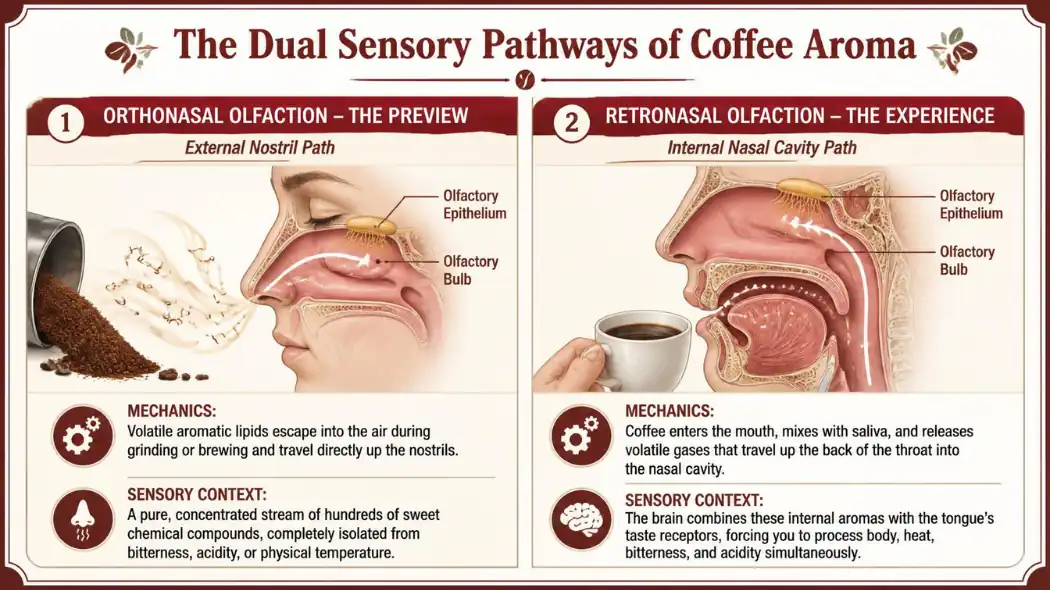
There are two main ways that coffee aromas reach your nose.
The first is orthonasal olfaction. This is the familiar process of smelling coffee through your nostrils before drinking it. When you lift a freshly brewed cup towards your face, aromatic compounds travel directly into your nasal cavity.
The second is retronasal olfaction.
When you take a sip, volatile aromatic compounds are released inside your mouth. As you breathe out, these compounds travel from the back of your mouth towards the nasal cavity, where your olfactory receptors detect them.
Your brain then combines these aromas with the taste sensations detected by your tongue, helping to create the overall flavour you experience.
So, when you drink coffee, your nose is still doing a great deal of the work. It is simply receiving the aromas through a different route.
Why Does Fresh Coffee Smell So Incredible?
Freshly roasted coffee contains hundreds of volatile compounds that contribute to its distinctive aroma.
Grinding the beans increases the surface area exposed to the air, allowing aromatic compounds to escape more readily. Then hot water comes into contact with the grounds, extracting and releasing even more of these compounds.
This is why freshly ground coffee can produce such a powerful aroma.
Before you have even taken a sip, your nose receives a concentrated burst of coffee fragrance. Depending on the beans and roast, you might recognise notes of chocolate, caramel, nuts, citrus, berries or flowers.
These aromas can be wonderfully complex, but they don’t necessarily tell you exactly how the finished coffee will taste.
Then You Take a Sip…
Once the coffee enters your mouth, the sensory experience changes.
The drink now interacts with your saliva, tongue and temperature receptors. Its aroma compounds are released in a different way, while bitterness, acidity, sweetness and body all contribute to the experience.
Your brain is no longer interpreting aroma alone. It is combining several different sensations into one overall impression of flavour.
You might experience:
- Aroma: Chocolate, caramel, fruit, nuts or floral notes.
- Bitterness: A natural characteristic of coffee, influenced by the beans and brewing.
- Acidity: The bright, lively sensations that can bring citrus or fruit-like character.
- Sweetness: Perceived sweetness that helps balance other flavours.
- Body: The weight and texture of the coffee in your mouth.
- Temperature: The warmth of the drink and how it influences aroma and flavour perception.
Sometimes these elements work beautifully together. At other times, the bitterness or acidity may seem more noticeable than the lovely aroma that first attracted you.
How Temperature Changes Coffee Smell and Flavour
Temperature plays an important role in how we experience coffee aroma.
Hot coffee releases volatile aromatic compounds more readily, which helps explain why freshly brewed coffee smells so powerful. As the drink cools, the way its aromas are released and perceived changes.
This can also influence the flavours you notice.
A coffee that initially seems dominated by roasted or chocolate notes may reveal more delicate fruity or floral characteristics as it cools.
Interestingly, cooling isn’t necessarily a bad thing. Many speciality coffees become more expressive as their temperature drops, allowing subtle flavour characteristics to become easier to recognise.
So, rather than drinking your coffee as quickly as possible, try giving it a little time. You may discover something different in the cup.
Your Brain Is Making the Final Decision
Perhaps the most fascinating part of all this is that flavour isn’t simply something contained inside the coffee. Your brain is effectively constructing the experience from the sensory information it receives.
It combines what your eyes see, what your nose smells, what your tongue detects and even what you expect the coffee to taste like.
This helps explain why the smell of coffee can create such a strong emotional response before you’ve even taken a sip.
The aroma of freshly brewed coffee may remind you of quiet mornings, favourite cafés, relaxing moments or familiar routines. These memories and expectations can all influence how you perceive the drink.
In other words, enjoying coffee begins before the first sip.
Why Can the Smell Be Better Than the Flavour?
Think of smelling freshly ground coffee as receiving a preview.
You’re experiencing a concentrated stream of aromatic compounds without yet having to consider bitterness, acidity, temperature or texture.
Once you drink it, that preview becomes the full sensory experience. And, just like a film trailer, the preview can sometimes be more exciting than the finished product!
This is particularly noticeable when coffee hasn’t been brewed properly. A beautifully roasted coffee can smell fantastic, but if it is under-extracted, over-extracted or brewed with unsuitable water, the finished cup may not live up to its aroma.
If your coffee smells wonderful but tastes harsh, dry or unpleasantly bitter, the problem may lie in the brewing process. Our guide to why coffee tastes bitter and how to fix it explains how grind size, brewing time and extraction can influence the final result.
The Aroma Is Part of the Coffee Experience
So, the next time you lift your cup and wonder why coffee smells better than it tastes, don’t blame your coffee just yet. Your wonderfully complicated brain is doing far more work than you might realise.
Coffee stimulates your sense of smell, taste and touch, while your brain combines all those signals into a single experience.
The smell of coffee isn’t simply something that happens before you drink it. It is one of the most important parts of what you actually taste.
From the first fragrance of freshly ground beans to the final sip, aroma is at the heart of the coffee experience.
And that’s the fascinating science behind why coffee can smell so much better than it tastes!
Disclaimer – The coffee information provided on this website is for educational purposes only. It does not constitute medical advice. Readers should always consult a qualified healthcare professional before making changes to their dietary habits.


