

Table of Contents

Latte Macchiato literally means “stained milk”, which gives us an important clue about how this distinctive coffee is prepared.
Unlike a traditional Caffè Latte, where espresso is extracted first and steamed milk is poured over it, a Latte Macchiato is assembled in the opposite order.
The barista begins with steamed milk, adds a layer of milk foam and then carefully introduces the espresso. The coffee marks the milk, creating the familiar three-layer appearance of white milk, brown espresso and pale foam.
This reversed preparation gives the Latte Macchiato its distinctive identity and makes it one of the most visually recognisable drinks in the popular coffee collection.

How Do You Get the Three Layers?
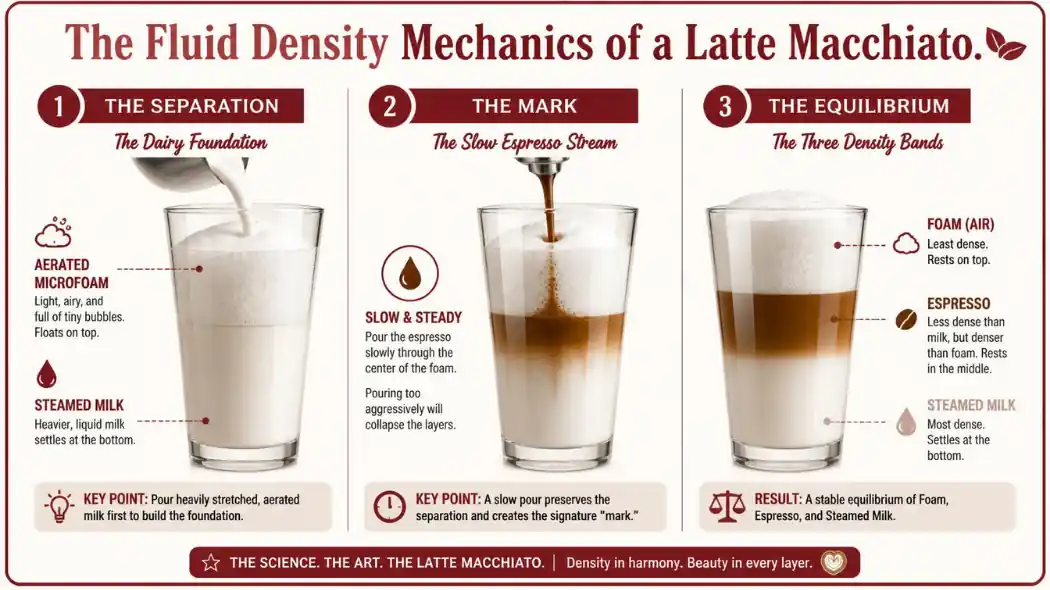
The three-layer effect is created through a combination of milk aeration, liquid movement, temperature and carefully controlled pouring.
1. Prepare the steamed milk
Begin by steaming fresh milk until it is hot, smooth and lightly textured.
The liquid milk forms the bottom portion of the drink. It provides the creamy base into which the espresso will be introduced.
2. Create the foam layer
During steaming, the barista introduces air into the milk, creating tiny bubbles that form a lighter, aerated foam.
Because this foam contains air, it has a different structure and density from the liquid milk beneath it.
When the milk is poured into the tall glass, the foam naturally collects towards the top, creating the second visible component.
3. Allow the milk to settle
Give the milk and foam a short moment to settle in the glass.
This helps establish a more clearly defined separation between the liquid milk at the bottom and the lighter foam above it.
The quality of the milk texturing matters here. Large, unstable bubbles are less likely to produce the smooth, attractive foam layer associated with a well-prepared Latte Macchiato.
4. Add the espresso carefully
Prepare a fresh espresso and introduce it slowly through the foam, using a controlled pour.
A barista may pour towards the centre of the glass or use the back of a spoon to soften the flow.
The aim is to allow the espresso to enter the milk without creating excessive turbulence. Under suitable conditions, the coffee forms a contrasting middle band between the white milk and the foam.
The finished drink presents the familiar arrangement:
- Top: Light, aerated milk foam.
- Middle: Brown espresso layer.
- Bottom: White steamed milk.
The result is not simply an attractive presentation. The layers also influence the drinking experience as the coffee and milk gradually come together.
Why Doesn’t the Espresso Just Mix Everything Together?
This is where the science of the Latte Macchiato becomes particularly interesting.
At first, it might seem that pouring espresso into milk should simply produce a uniform mixture. After all, coffee and milk are liquids that can mix together.
However, under suitable conditions, the way the espresso enters the glass can produce a temporary layered structure.
The process depends on several factors:
- Density: Differences in the composition of espresso and milk influence how the liquids move relative to one another.
- Temperature: Hot espresso and steamed milk can create temperature differences that influence fluid movement.
- Aeration: The air incorporated into the milk creates a lighter foam structure that remains above the liquid.
- Pouring speed: A gentle, controlled pour reduces excessive turbulence and helps preserve the visible layers.
This is not simply a case of three liquids with three permanently fixed densities. Espresso and milk are miscible, meaning they can mix together. The layered appearance depends on how the liquids are introduced and how their movement develops.
Interestingly, researchers have investigated this phenomenon scientifically. A 2017 study published in Nature Communications, Laboratory Layered Latte, examined how pouring espresso into warm milk can create distinct layers through fluid dynamics. The research demonstrates that the process is more complicated than simply allowing heavier liquids to sink beneath lighter ones.
The glass itself is also important. A tall, transparent vessel allows the barista and customer to see the different concentrations and textures as they develop.
Latte vs Latte Macchiato
The names make these two drinks sound almost identical, but their preparation is essentially reversed.
Caffè Latte
The traditional preparation follows this sequence:
Espresso → Steamed milk → Thin layer of microfoam
The espresso is extracted first, and the steamed milk is poured into it. The ingredients combine to create a smooth, creamy drink, usually finished with a small amount of microfoam or latte art.
Explore our Caffè Latte guide in The Origins of the Most Popular Coffee Drinks for more about its history and preparation.
Latte Macchiato
The preparation is reversed:
Steamed milk → Milk foam → Espresso added afterwards
The milk is poured into the glass first, followed by the espresso. Rather than blending everything together immediately, the barista aims to create the distinctive layered appearance.
The espresso effectively marks the milk, which explains the name.
The two drinks share the same basic ingredients, but their construction and presentation create very different experiences.
What Does a Latte Macchiato Taste Like?
Because a Latte Macchiato contains a generous quantity of milk, its flavour is generally smooth, creamy and milk-forward.
The espresso provides the coffee character, but it is surrounded by considerably more milk than you would find in a smaller drink such as a Cortado.
The milk softens the espresso’s intensity, while the foam contributes a lighter texture.
The precise flavour depends on the coffee used. A darker roast may provide chocolate and roasted notes, whereas a lighter roast can introduce more noticeable fruit or acidity.
The Latte Macchiato is therefore a good choice for someone who enjoys coffee but prefers a milder, milkier drink.
As with any espresso-based beverage, the underlying shot still matters. A poorly extracted espresso can introduce unpleasant sourness or bitterness that the milk will not necessarily disguise.
If your espresso is tasting harsh or excessively bitter before you add the milk, our guide to why coffee tastes bitter and how to correct it explains how grind size, extraction time and brewing temperature influence the finished cup.
Why the Layers Eventually Disappear
There is one final thing worth remembering: the three layers are not designed to remain perfectly separated forever.
As the drink sits, the boundaries between the espresso, milk and foam gradually change.
Movement, temperature differences and the natural mixing of the liquids cause the distinct bands to soften and merge. The foam may also begin to settle as its air bubbles change and escape.
This is perfectly normal and does not indicate that the drink has been prepared incorrectly.
In fact, part of the enjoyment of a Latte Macchiato comes from watching the layers develop and then gradually come together as you drink.
That is the appeal of this distinctive Italian coffee: it begins as three contrasting layers and finishes as one smooth combination of espresso and milk.
Beautiful to look at, gentle to drink and fascinating to prepare, the Latte Macchiato demonstrates how the order of ingredients can transform a familiar combination of coffee and milk into something quite different.


