

Table of Contents
For years, Robusta coffee has lived somewhat in the shadow of Arabica. It’s often been associated with instant coffee, strong commercial espresso blends and a reputation for being rather bitter. But there’s much more to this resilient coffee species than its traditional image suggests.
Known botanically as Coffea canephora, Robusta has a remarkable amount of genetic diversity. Its ability to grow in a range of warm environments, combined with its naturally higher caffeine content and potential for good yields, has made it an important part of the world’s coffee supply.
And things are changing. Better farming practices, careful plant selection and improved processing are helping producers bring out qualities that were once overlooked. Fine Robusta is attracting growing interest, and some carefully produced coffees offer sweetness, body and surprisingly interesting flavour characteristics.
So, what are the different types of Robusta, and how do they compare? Let’s look at the growth forms, regional selections and modern clones that are helping shape its future.

Understanding Robusta: One Species, Plenty of Diversity
Before looking at individual types, it’s worth understanding that Robusta isn’t one uniform variety.
Coffea canephora originated in the forests of central and western sub-Saharan Africa, where it developed into a genetically diverse species. Over time, different populations were selected and cultivated as coffee production spread into other parts of the world.
Unlike Arabica, which is predominantly self-pollinating, Robusta relies on cross-pollination. In simple terms, a Robusta plant generally needs pollen from a genetically different, compatible plant to produce fruit successfully.
This natural cross-pollination creates considerable genetic variation. It’s one reason why farmers and researchers have spent so much time selecting plants with useful characteristics such as improved yield, bean size, disease resistance and adaptation to local climates.
According to World Coffee Research’s Robusta history guide, the species is broadly divided into two main genetic groups: Guinean and Congolese. These groups have different characteristics, although there is considerable variation within each.
It’s also important not to confuse regional names with formal botanical classifications. Terms such as Nganda, Conilon and Robusta are used in different growing regions and don’t always refer to genetically distinct varieties.
Erecta: The Upright Growth Form
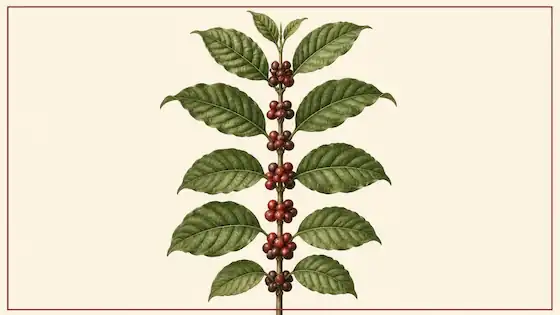
Erecta is a name associated with an upright growth form of Robusta. Rather than developing a broadly spreading canopy, plants described in this way have a more vertical habit, with upright stems and branches that give the tree a relatively structured appearance.
Growth habit matters to coffee farmers because it influences how trees are planted, pruned and harvested. A more upright plant may require different spacing and canopy management from one that spreads outwards.
The shape of a coffee tree also affects how much light reaches its branches and how easily workers can reach the fruit. These are practical considerations when planning a commercial plantation.
It’s worth remembering that Erecta is best understood here as a descriptive growth type, rather than one of the two main genetic groups recognised in modern Robusta classification.
Nganda: The Spreading Canopy
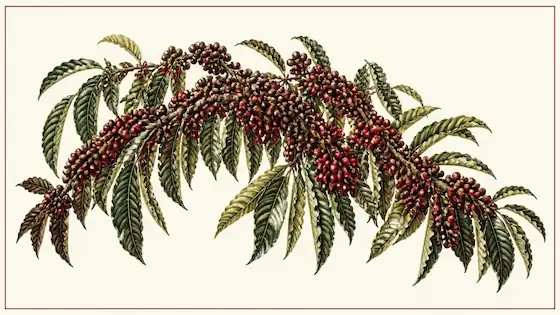
Nganda is another traditional name associated with Robusta, particularly in parts of Africa. It is commonly described as having a more spreading growth habit, with outward-reaching branches that can give the tree a broad, bushy appearance.
Compared with a more upright plant, this type of growth can create a wider canopy and influence how the tree is managed in the field.
The name Nganda is also used in a broader agricultural and regional sense, so it shouldn’t automatically be treated as a single, clearly defined genetic variety. Modern research increasingly distinguishes between local growing types, genetic groups and named selections developed through breeding programmes.
For growers, the important consideration is how a particular plant performs under local conditions. Branch structure, productivity, disease tolerance and the timing of fruit development all influence whether a selection is suitable for a particular farm.
Conilon: Brazil’s Important Robusta Coffee
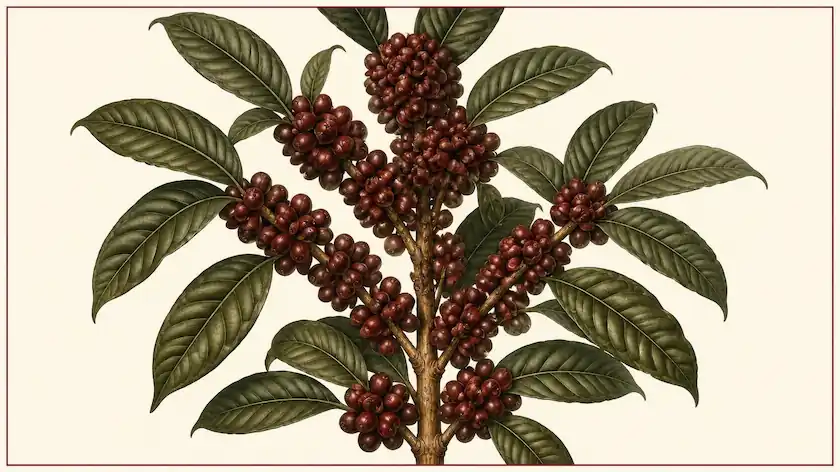
Notice the distinct leathery leaves and dense fruit clusters of a Conilon Robusta coffee treeWhen you look at Robusta production in Brazil, one name appears repeatedly: Conilon.
Conilon is a regional form of Coffea canephora that has become particularly important in the Brazilian state of Espírito Santo. It is closely associated with Brazilian coffee cultivation and has developed its own identity within the country’s agricultural industry.
Conilon is often grown in warmer regions and is valued for its productivity and ability to perform under conditions that can be challenging for other coffee types. Brazilian researchers and growers have worked extensively on selecting plants that offer improved yields, more uniform fruit development and better adaptation to local weather patterns.
There is also a growing interest in the quality potential of Brazilian Conilon. Rather than concentrating solely on volume, some producers are paying closer attention to harvesting, sorting, fermentation and drying.
These improvements are helping to create coffees with greater sweetness, cleaner flavours and more distinctive characteristics.
A particularly interesting development is the emergence of specialty-grade Conilon, sometimes described as Fine Conilon. Carefully cultivated and processed lots can offer notes of chocolate, nuts, caramel and ripe fruit, although the flavour will vary with the selection, growing environment and processing method.
The research review on Brazilian Coffea canephora explores the country’s development as a producer of both Robusta and Conilon coffees, including the growing interest in specialty-quality production.
Vietnamese Robusta: The Rise of Modern Clonal Selections
Vietnam has become one of the world’s most important Robusta-producing countries, and much of its success is linked to careful plant selection and agricultural development.
Because Robusta depends on cross-pollination, growing trees from seed doesn’t always produce identical plants. Their characteristics can vary, even when the seeds come from the same parent tree.
To make production more predictable, researchers select promising plants and propagate them through vegetative methods such as cuttings. This produces clones that retain the genetic characteristics of the selected parent plant.
Vietnam’s Western Highlands Agriculture and Forestry Science Institute (WASI) has played an important role in developing and evaluating Robusta selections suited to the country’s growing conditions.
Some of the names you’ll encounter include:
TR4
TR4 is a widely recognised Vietnamese Robusta clone selected for high yield and adaptation to different growing environments. It has been an important part of efforts to improve the productivity of established coffee-growing areas.
TR9
TR9 is another selected clone, valued for its high yield potential, large bean size and cup-quality characteristics. It has become one of the better-known names in Vietnamese Robusta cultivation.
TR11
TR11 is another WASI selection. It has attracted interest for its strong growth, productivity and potential quality, making it part of the wider effort to improve Vietnamese Robusta.
TRS1
TRS1 is particularly interesting because it isn’t simply another single clone. It is a polyclonal variety developed using several parent clones, including TR4, TR9, TR11 and TR12.
This distinction matters. A clone is propagated from one selected mother plant, whereas a polyclonal variety deliberately combines several genetically different clones.
The Vietnamese research paper on Robusta breeding explains how WASI developed and selected improved varieties, including TR4, TR9, TR11 and TRS1, to support the country’s coffee industry.
For growers, these selections offer more than just higher production potential. Choosing plants suited to local conditions can also help improve consistency, manage agricultural risks and support the long-term health of coffee farms.
Why Robusta’s Genetic Diversity Matters
The growing interest in Robusta isn’t simply about producing more coffee. Its genetic diversity gives researchers and farmers an opportunity to select plants with characteristics that may become increasingly important as growing conditions change.
Some selections offer useful resistance to particular pests and diseases, while others have been chosen for drought tolerance, productivity, bean size or suitability for specific environments.
This doesn’t mean every Robusta plant is naturally resistant to every agricultural problem. Performance depends on the individual selection, the disease or pest involved and the conditions in which the plant is grown.
Robusta’s cross-pollinating nature also makes genetic diversity particularly important. Maintaining a suitable mixture of compatible plants helps ensure successful pollination and fruit production.
For a closer look at the different selections available to growers, World Coffee Research’s Robusta Varieties Catalogue provides detailed information on named varieties from several producing countries. It includes characteristics such as plant stature, bean size, yield potential, lineage and susceptibility to pests and diseases.
Does the Type of Robusta Change the Flavour?
It certainly can, but there isn’t a simple rule that says one growth type or clone will always produce a particular flavour.
Robusta’s natural chemical composition differs from Arabica. It generally contains more caffeine, fewer lipids and less sugar, as well as a different balance of compounds that influence bitterness, body and aroma.
However, the finished flavour depends on much more than genetics alone. Growing conditions, altitude, soil, harvesting, processing, storage and roasting all play their part.
A carefully grown and processed Robusta can produce a surprisingly rounded cup, while poor harvesting or excessive roasting can make even a promising coffee taste harsh.
Robusta is particularly valued in espresso blends because it can contribute body, intensity and crema. Its higher soluble-solids content can also make it useful in some commercial coffee applications.
If you’re experimenting with Robusta at home, pay attention to your extraction. A grind that’s too fine, an unsuitable brewing ratio or excessive contact time can make bitterness more pronounced.
If your coffee is coming out harsh or unpleasantly dry, our guide to why your coffee tastes bitter explains the common causes and how to bring your brew back into balance.
Comparing the Main Robusta Types and Selections
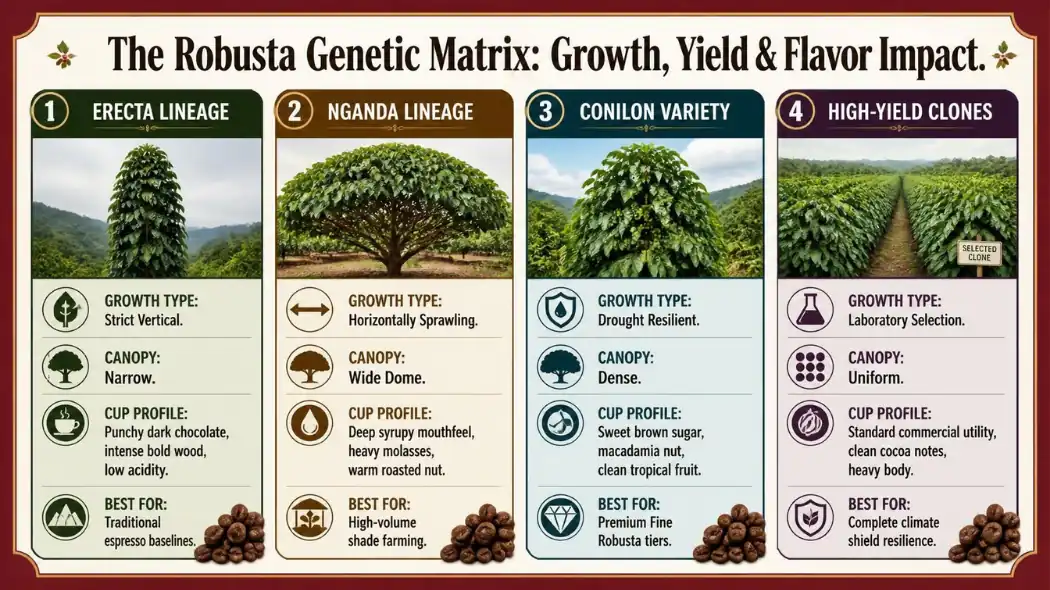
The following table brings together the main examples covered in this guide. It is important to remember that these are not all formal botanical varieties: some are growth descriptions, some are regional types, and others are named breeding selections.
| Type or selection | Description | Main significance |
|---|---|---|
| Erecta | Upright growth form | Tree structure and canopy management |
| Nganda | Traditionally recognised spreading growth type | Local Robusta diversity and cultivation |
| Conilon | Brazilian form of Coffea canephora | Important commercial production and specialty development |
| TR4 | Vietnamese clonal selection | Yield potential and adaptability |
| TR9 | Vietnamese clonal selection | Bean size, yield and cup-quality potential |
| TR11 | Vietnamese clonal selection | Strong growth and production potential |
| TRS1 | Polyclonal selection | Combines several selected parent clones |
The Future of Robusta Coffee
Robusta has come a long way from its old reputation as a cheap alternative to Arabica. Better plant selection, more informed cultivation and improved processing are opening up opportunities for producers to create coffees with greater consistency and quality.
Its genetic diversity is one of its greatest strengths. From traditional African growing types to Brazilian Conilon and carefully selected Vietnamese clones, Robusta offers growers a wide range of possibilities.
And perhaps that’s the most interesting part of its story. There is still plenty to discover about this species, both in the field and in the cup.
So next time you see Robusta listed on a coffee bag, don’t dismiss it as simply the stronger, more bitter option. The name covers a much wider world of plants, growing traditions and flavour possibilities than many people realise.


