

At first glance, Latte vs Cappuccino can look almost identical. Both begin with espresso, both use steamed milk and both are staples of the modern coffee shop.
So, what actually distinguishes Latte vs Cappuccino?
The answer is largely milk, texture and proportion.
A Latte is smoother, milkier and more delicate, while a Cappuccino gives the espresso a more prominent role, combined with a thicker layer of textured milk.
The Latte: Smooth and Milk-Forward
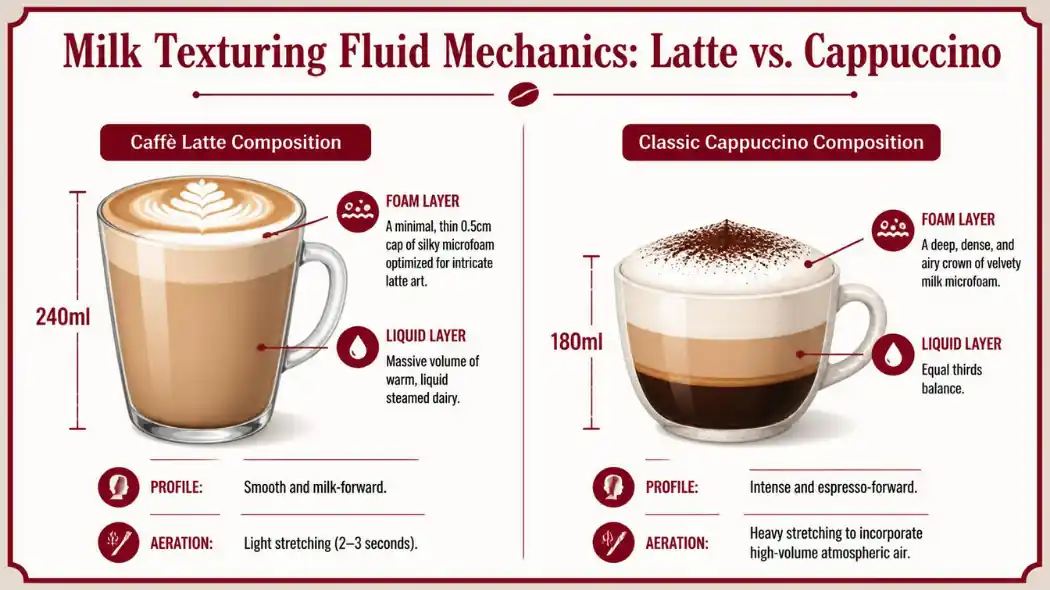
A latte, or caffè latte, essentially combines espresso with a generous amount of steamed milk and tops it with a relatively thin layer of fine microfoam.
The larger quantity of milk softens the intensity of the espresso, creating a drink that is creamy, smooth and relatively mild.
Baristas texture the milk to produce fine, glossy microfoam rather than a large, airy head of foam. This gives a latte its characteristic silky mouthfeel and also makes it ideal for latte art.
In simple terms:
More milk + less foam = a smoother, gentler coffee.
The Cappuccino: More Texture, More Espresso Character
A traditional cappuccino takes a different approach.
The classic description divides the drink into approximately three equal parts: espresso, steamed milk and milk foam.
The result is a smaller, more concentrated drink with a much more substantial layer of textured milk on top.
That thicker foam changes more than just the appearance.
It changes the texture of the drink in your mouth, making the cappuccino feel lighter and airier while allowing the espresso to remain more noticeable.
In simple terms:
Less liquid milk + more foam = a more pronounced coffee character.
It’s All About the Milk
This is where the difference becomes particularly interesting.
We steam the milk used for both drinks, but the amount of air incorporated into it differs.
A barista aerates the milk less for a latte, producing a smooth and highly integrated microfoam.
For a cappuccino, more air is incorporated, creating a thicker and more substantial foam layer.
That means two drinks containing essentially the same ingredients can feel completely different simply because of how the milk has been textured.
And this is why good milk steaming is such an important part of making espresso-based drinks.
Which One Tastes More Like Coffee?
Generally speaking, a cappuccino will give you a more noticeable espresso flavour.
That’s partly because there is less liquid milk diluting the espresso and partly because the thicker foam changes the way the drink is experienced.
A latte, by comparison, has considerably more milk, so the espresso becomes softer and more integrated into the drink.
That doesn’t necessarily mean a cappuccino contains more caffeine.
If both drinks are made using the same amount of espresso, they will contain approximately the same amount of caffeine.
The difference is how that espresso is balanced with the milk.
This is another example of why stronger tasting and more caffeine aren’t necessarily the same thing. Sourcing logs managed by The Coffee Guide show that these dairy balances rely on an immaculate espresso base; if your underlying extractions are turning out unpleasantly harsh, dry, or ashy before you steam your milk, check out our master troubleshooting guide to understand “why does my coffee taste bitter” and discover how to adjust your grind variables smoothly.
Why Does the Foam Matter So Much?
It might seem that foam is simply there to make the coffee look attractive, but it actually contributes significantly to the drinking experience.
Milk foam contains thousands of tiny air bubbles surrounded by a thin layer of liquid milk. When properly textured, it creates a creamy, velvety sensation.
With a cappuccino, the thicker foam provides a much more obvious textural element.
With a latte, the foam is thinner and more closely integrated with the steamed milk, creating that smooth, almost paint-like texture that allows a barista to create latte art.
So when you’re choosing between the two, you’re not simply choosing more or less milk.
You’re choosing a different texture and drinking experience.
Why Do Café Versions Sometimes Look So Different?
This is where things can become confusing.
Walk into five different coffee shops and order a cappuccino and you may receive five slightly different drinks.
Modern speciality coffee has blurred some of the traditional boundaries between latte, cappuccino and other milk-based drinks. Cup sizes, espresso doses and milk textures can vary from one café to another.
So don’t be surprised if your cappuccino doesn’t look exactly like one you’ve had somewhere else.
The traditional definitions are useful guides rather than universal laws.
Latte Vs Cappuccino — Which Should You Choose?
It really comes down to what you want from your coffee.
Choose a latte if you prefer:
- A smoother, creamier drink
- More steamed milk
- A milder espresso flavour
- Fine, silky microfoam
- A larger, longer drink
Choose a cappuccino if you prefer:
- A more pronounced espresso character
- Less liquid milk
- A thicker layer of foam
- A lighter, airier texture
- A smaller, more concentrated drink
Neither is better.
They’re simply two different ways of combining the same basic ingredients.
And Then There’s the Rest of the Menu…
Once you understand the difference between a latte and a cappuccino, the modern café menu starts to make much more sense.
Flat white, Cortado, Macchiato, Mocha, Latte Macchiato…
They may all begin with espresso, but changes in the amount of milk, the size of the drink and, most importantly, the way that milk is textured can produce remarkably different results.
That’s why we’ve created our visual guide to help decode the terminology.
Check out our visual guide to decoding the modern café espresso menu →
Ultimately, the latte and cappuccino demonstrate one of the most fascinating things about coffee: you don’t necessarily need different beans to create a completely different drink.
Sometimes, all you need is espresso, milk — and a different way of putting the two together.

