

Table of Contents
.
If you’ve ever taken a sip of coffee and wondered, why does my coffee taste bitter?, you’re certainly not alone.

A little bitterness is perfectly natural in coffee. It contributes to the character of the roasted bean and can help balance sweetness and acidity. The problem begins when that bitterness becomes harsh, unpleasant or overpowering, leaving a dry, burnt or lingering taste in your mouth.
The good news is that bitter coffee is often easier to put right than you might think. The cause could be something as simple as a grind that is too fine, a brewing time that is too long, or a roast that isn’t quite to your taste.
[Retain existing image: lady holding a cup of coffee with a puzzled expression]
The first step is understanding what is happening during brewing. Once you know which variables influence flavour, you can make a few small adjustments and bring your coffee back into balance.

What Is Over-Extraction?
When hot water comes into contact with ground coffee, it begins dissolving the soluble compounds held within the roasted beans. These include acids, sugars, aromatic compounds and other substances that contribute to the flavour of your drink.
They don’t all dissolve at the same rate. Brewing is about finding the right balance, allowing enough of the desirable flavours to enter the cup without producing an unpleasant result.
Over-extraction occurs when the brewing process extracts an excessive amount of soluble material, often resulting in a harsh, bitter or drying taste.
However, bitterness isn’t always caused by over-extraction. Dark roasting, the natural characteristics of certain coffee varieties and the water you use can all influence how bitter a cup tastes.
It’s worth remembering that under-extracted coffee can taste unpleasant too. If your cup is sharp, thin or excessively sour, the problem may be quite different.
As we explain in our guide to sour coffee and how to fix it, the aim is not simply to extract more or less, but to find a balance that suits the coffee.
Getting the balance right between grind size, brewing time and water temperature is central to good extraction. The Specialty Coffee Association’s brewing standards provide further guidance on the principles behind consistent coffee preparation
Your Grind Could Be Too Fine
One of the first things to investigate when coffee tastes bitter is your grind size.
A finer grind creates more surface area for water to come into contact with. Depending on the brewing method, it can also slow the movement of water through the coffee bed, increasing the time available for extraction.
That’s useful when your coffee is tasting under-extracted, but going too fine can create problems of its own.
With espresso, an excessively fine grind can restrict the flow and produce a very slow shot. With pour-over methods, it can slow the drawdown and leave the coffee in contact with water for longer than intended.
If your coffee consistently tastes harsh or bitter, try making the grind slightly coarser.
Make small adjustments rather than changing everything at once. A surprisingly small difference can alter the way water moves through the grounds and change the flavour in your cup.
You May Be Brewing for Too Long
Brewing time is another important variable.
The longer water remains in contact with coffee grounds, the more opportunity there is for soluble material to be extracted. If your brew takes considerably longer than the recipe recommends, it may contribute to an unbalanced result.
This is particularly noticeable with pour-over coffee. A grind that is too fine, uneven pouring or a clogged filter can slow the flow of water through the coffee bed.
Immersion methods such as the French Press work differently because the grounds remain submerged. Leaving the coffee to steep for much longer than intended can alter the strength and flavour of the finished drink.
If your coffee tastes bitter, check your brewing time before making adjustments. Compare it with a reliable recipe for your chosen method and look for anything that might be slowing the process down.
Water Temperature Matters — But It’s Not the Whole Story
Water temperature influences the rate at which coffee compounds dissolve. Generally, hotter water increases the speed of extraction, while cooler water slows it down.
That doesn’t mean that simply lowering the temperature will cure bitter coffee.
A great deal depends on the relationship between temperature, grind size, brewing time and the coffee-to-water ratio. Changing one variable can affect the others, so it’s best to make adjustments gradually.
For most hot brewing methods, water just off the boil is a useful starting point, although the ideal temperature can vary with the coffee and brewing recipe.
If you’re using very hot water with a dark roast and finding the result unpleasantly harsh, try a slightly lower temperature and compare the taste. The important thing is to experiment within a sensible brewing range rather than making dramatic changes.
Don’t Confuse Bitterness With a Dark Roast
Sometimes the answer to why does my coffee taste bitter has very little to do with your brewing technique. It may simply be the roast.
Dark-roasted coffees develop stronger roasted, smoky and bittersweet characteristics. Some people love this bold flavour, while others prefer the lighter, fruitier and more delicate notes often found in lighter roasts.
That doesn’t necessarily mean the coffee has been badly brewed.
A properly prepared dark roast can still produce a balanced and enjoyable cup, even though it may taste considerably more bitter than a light roast.
The important distinction is between bitterness that forms part of the intended roast character and an unpleasant harshness caused by brewing.
If you’d like to understand how the roasting process changes the character of your beans, take a look at our guide to dark roast coffee.
Water Can Play a Part Too
It’s easy to concentrate on the beans, grinder and brewing equipment while overlooking the largest ingredient in your cup.
Water.
Water chemistry can have a significant influence on coffee extraction and the way flavours are perceived. Dissolved minerals, particularly calcium and magnesium, affect how water interacts with coffee compounds, while alkalinity influences how acidity is experienced in the finished drink.
If you’ve changed nothing about your coffee recipe but the flavour has suddenly become unpleasant, your water supply is worth investigating.
Chlorine, metallic tastes and an unsuitable mineral balance can all affect the final result.
A simple way to investigate is to try brewing the same coffee with a suitable bottled spring water or filtered water. If the flavour improves noticeably, your usual tap water may be contributing to the problem.
For a closer look at this subject, our guide to tap water quality and coffee flavour explains why water deserves more attention than it often receives.
How Do You Fix Bitter Coffee?
The good news is that you don’t need to replace your coffee machine or buy expensive equipment to start improving a bitter cup.
Work through these simple checks, making one adjustment at a time.
1. Try a slightly coarser grind
If your coffee is taking too long to brew or your espresso is running unusually slowly, a slightly coarser grind may help restore a more suitable flow.
2. Check your brewing time
Compare your brew with a reliable recipe. If water is taking too long to pass through the grounds, look at your grind size, pouring technique or filter.
3. Review your water temperature
If you’re brewing with very hot water, experiment with a slightly lower temperature and compare the result. Avoid making large changes without considering the brewing method.
4. Check your coffee-to-water ratio
Using too much coffee or too little water can produce an excessively strong cup. Remember that strength and extraction are not the same thing: a strong coffee isn’t necessarily over-extracted.
5. Consider the roast
If you’re using a very dark roast and find the flavour too smoky or bitter, try a medium roast. You may discover that the problem is simply the style of coffee rather than your brewing technique.
6. Check your water
If the bitterness persists despite making sensible brewing adjustments, try a different water source. A suitable filter or bottled spring water may help reveal whether your usual water is affecting the flavour.
The aim isn’t simply to make your coffee less bitter. You’re trying to bring the whole flavour profile back into balance, allowing sweetness, acidity and the natural character of the beans to come through.
Think of Sour and Bitter as Different Clues
Sourness and bitterness are often discussed as opposing extraction problems, and they can certainly help point you towards different adjustments.
A sharply sour, thin or hollow cup may suggest under-extraction. A harsh, drying or excessively bitter cup may indicate over-extraction or another brewing or roast-related issue.
However, the relationship isn’t quite as simple as treating them as two ends of a single scale. A coffee can have both sour and bitter characteristics, particularly when water has flowed unevenly through the grounds.
If you’re trying to understand the difference, our companion guide explains why coffee tastes sour and how to fix it.
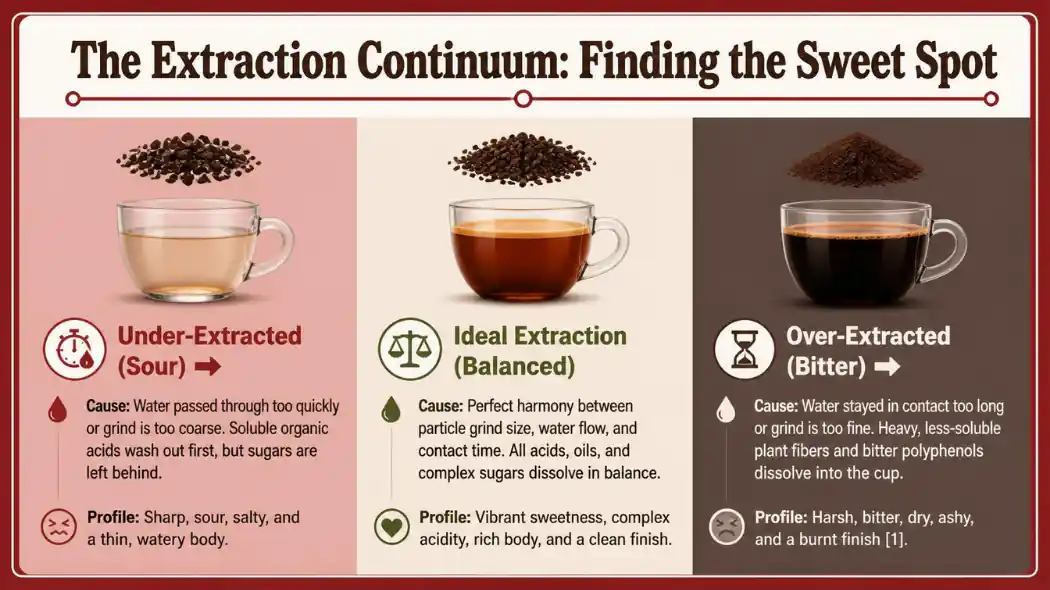
The illustration above shows the general idea: under-extraction can leave coffee tasting sharp and sour, while excessive extraction can contribute to harsh bitterness and dryness. Between the two is the balance we’re aiming for.
Bring Your Coffee Back Into Balance
Bitter coffee doesn’t always mean you’ve made a mistake. Some bitterness is part of what makes coffee interesting, particularly with darker roasts and certain varieties.
It’s when that bitterness becomes unpleasant that you need to investigate.
Start with the simple things: check your grind size, brewing time, water temperature and coffee-to-water ratio. If those variables seem reasonable, consider the roast and the water you’re using.
In my coffee shop days, I learned that making several changes at once rarely helped us understand what had gone wrong. We made small adjustments, tasted the results and worked towards a better balance.
It’s a good habit to develop at home too.
The next time your coffee tastes too bitter, don’t give up on the beans straight away. A small change to your brewing routine could be all it takes to turn an unpleasant cup into one you really enjoy.
Disclaimer – The coffee information provided on this website is for educational purposes only. It does not constitute medical advice. Readers should always consult a qualified healthcare professional before making changes to their dietary habits.


