

Table of Contents
Roasting Coffee Beans at Home – Part 1
When most coffee lovers look at a bag of coffee, they picture smooth, aromatic, mahogany-brown beans ready for the grinder. But before those beans ever meet the heat of a roaster, they exist in a completely different form: as hard, dense, pale-green seeds tucked inside a tropical coffee cherry.
Sourcing green coffee beans is where the craft of home roasting really begins. Choosing the right raw coffee gives you the opportunity to experiment with different origins, varieties and processing methods, discovering how each one responds to heat and how its characteristics develop in the cup.
For many years, buying green coffee was largely the preserve of commercial importers and professional roasters. Today, the growth of specialty coffee has made it much easier for home enthusiasts to purchase small quantities online. You can explore individual farms, traceable micro-lots and distinctive varieties without needing to buy commercial quantities.
But not all green coffee is equal. Understanding what you’re buying before placing an order can make a considerable difference to the quality of your finished roast.

What Should You Look for When Sourcing Green Coffee Beans?
Unlike roasted coffee, green coffee is relatively stable when stored correctly. However, it isn’t immune to ageing. Exposure to excessive heat, moisture, oxygen and unsuitable storage conditions can gradually affect its quality, so it’s worth paying attention to both the coffee itself and the way your supplier handles it.
When browsing online green coffee bean suppliers, look beyond the country name and tasting notes. There are several important details worth checking before you buy.
1. Check the Crop Year
One of the first things to look for is the crop year. Specialty suppliers often identify their coffee as either current crop or past crop, helping buyers understand how recently it was harvested and processed.
Green coffee gradually changes during storage. As it ages, it can lose moisture and some of its desirable aromatic characteristics, eventually producing flatter, less vibrant flavours. This is sometimes described as past-crop or aged coffee.
A current-crop lot is generally a good starting point for home roasting, particularly if you’re looking to explore the distinctive character of a particular origin. However, age alone doesn’t determine quality: harvesting, processing, drying and storage conditions all play a part.
2. Understand the Coffee Variety
The variety of coffee you choose can influence its density, size, growing characteristics and potential flavour profile.
For example, Geisha is particularly celebrated for its delicate floral character and complex, often tea-like qualities. Bourbon is associated with sweetness and balanced acidity, while Caturra is a compact mutation of Bourbon that is widely grown across Latin America.
Typica is another historically important Arabica variety, valued for its clean, balanced cup characteristics.
These are general tendencies rather than guarantees. Growing conditions, altitude, processing and roasting all influence the final result. Nevertheless, understanding the variety gives you another useful clue when selecting green coffee.
3. Consider the Processing Method
The way coffee is processed after harvesting has a significant influence on its eventual flavour.
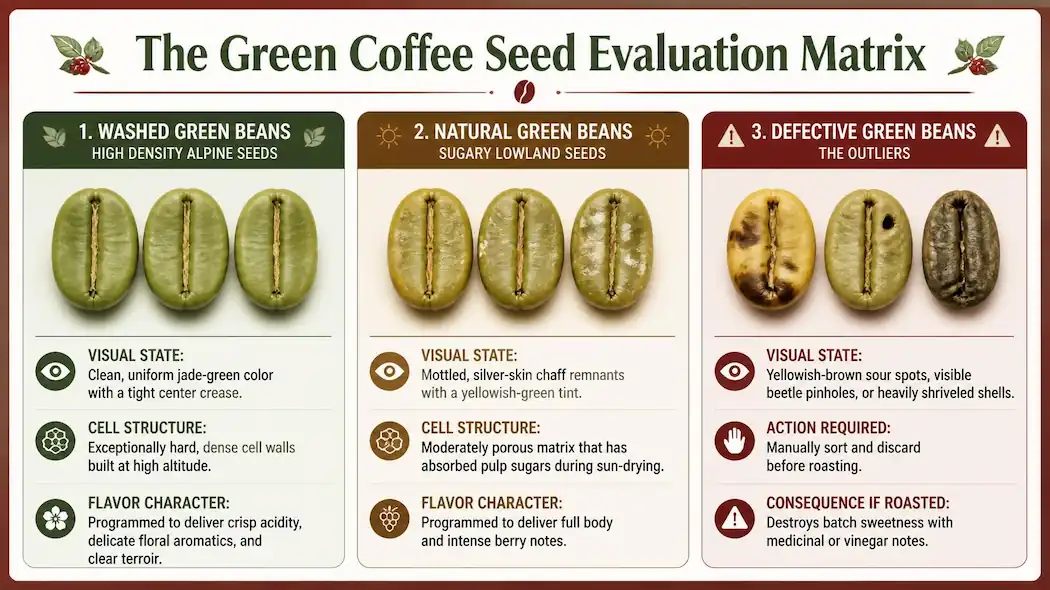
- Washed processing: The fruit flesh and mucilage are removed before drying. Washed coffees often display a cleaner, more defined flavour, allowing acidity and origin characteristics to stand out.
- Natural processing: The whole coffee cherry is dried around the seed. These coffees can develop pronounced fruit flavours, sweetness and a fuller impression in the cup.
- Honey processing: Some mucilage is left attached to the seed during drying. Depending on the method, this can produce a balance of sweetness, fruit character and clarity.
- Anaerobic fermentation: Coffee is fermented in an environment with limited or controlled oxygen exposure. This can produce distinctive and sometimes highly unusual flavour characteristics.
Processing methods are not simply flavour labels. The conditions used by the producer, including fermentation, drying and storage, can make a substantial difference within the same processing category.
For a closer look at what happens after harvesting, explore our guide to the science of coffee processing.
Understanding Green Coffee Defects and Quality
Specialty green coffee is assessed using physical inspection and sensory evaluation. Buyers and graders look for defects that may affect the appearance, roasting behaviour or flavour of the finished coffee.
When your green beans arrive, it’s worth spreading a small sample across a clean, well-lit surface and examining it before roasting. Look for foreign material, damaged seeds and obvious inconsistencies.
Some defects you may encounter include:
- Black beans: Often associated with severe deterioration or problems during harvesting and processing. They can contribute unpleasant flavours.
- Sour beans: These may result from undesirable fermentation or other processing problems and can produce sharp, unpleasant flavours.
- Insect-damaged beans: Small holes or other visible damage can indicate insect activity during cultivation or storage.
- Broken or chipped beans: Physical damage can lead to uneven roasting and may affect consistency.
- Immature or underdeveloped beans: These can produce pale, grassy or otherwise undesirable flavours, and may behave differently during roasting.
Not every variation in colour or shape indicates a serious defect. Natural differences occur between origins and varieties, and some beans may look unusual without being defective.
Professional grading involves examining a measured sample and counting different types of defects according to recognised criteria. It is not simply a matter of removing every bean that looks different.
For a useful introduction to the principles behind green coffee grading, see the Food and Agriculture Organization’s explanation of green coffee classification.
How Green Bean Characteristics Influence Your Roast
The origin, variety, processing method and moisture content of your green coffee all influence how it behaves during roasting.
One particularly important characteristic is bean density. Coffee grown at higher altitudes often develops more slowly, and many high-altitude coffees have relatively dense seeds. These can respond differently to heat from softer, less dense beans.
Moisture content also matters. Green coffee is commonly traded at around 10–12% moisture, although specifications vary. If beans are too dry or have been stored poorly, they may roast differently from a well-preserved current-crop lot.
This is why keeping a simple record of the coffee you buy is so useful. Note the origin, variety, processing method, crop year and any information supplied by the seller. Once you begin roasting, record your temperatures, timings and results alongside those details.
Over time, you’ll start to recognise how different coffees respond to your roasting approach.
If your finished coffee tastes harsh or excessively bitter, our guide to why coffee tastes bitter will help you investigate possible causes. If the result is unpleasantly sour or grassy, take a look at why coffee tastes sour.
Where Can You Buy Green Coffee Beans Online?
You don’t need to purchase enormous commercial quantities to begin roasting at home. Several specialist suppliers sell green coffee in smaller bags, making it possible to experiment with different origins without committing to a large order.
Here are some suppliers worth exploring:
UK and European Suppliers
- Rave Coffee: A UK supplier offering a selection of raw, unroasted green coffees, including single origins and smaller lots suitable for home roasting.
- Falcon Micro: A specialist green coffee supplier with a focus on smaller-scale purchasing and access to traceable specialty coffees.
- Green Coffee Collective: Offers green coffee selections for home roasters, with opportunities to explore different origins and producers.
North American Suppliers
- Sweet Maria’s: A well-established home-roasting resource in the United States, offering a broad selection of green coffees alongside detailed descriptions and educational material.
- Mill City Roasters: Primarily known for roasting equipment and education, with resources for people developing their home-roasting skills.
Availability, bag sizes and delivery options change, so check each supplier’s current listings before ordering.
What to Check Before Placing an Order
Before choosing a supplier, look for clear information about:
- Country, growing region and, where available, the farm or producer.
- Crop year or harvest information.
- Coffee variety and processing method.
- Tasting notes and any available quality information.
- Bag size, packaging and storage recommendations.
- Delivery costs and minimum order quantities.
If you’re new to home roasting, a small selection of different coffees is often more useful than buying a large quantity of one origin. Comparing a washed coffee from one country with a natural coffee from another can teach you a great deal about how origin and processing influence flavour.
Storing Your Green Coffee Beans
Once your green coffee arrives, storing it properly will help protect its quality until you’re ready to roast.
Keep the beans in a cool, dry place, away from direct sunlight, strong odours and sources of heat. Use suitable breathable or moisture-resistant packaging designed for green coffee, and avoid exposing the beans to damp conditions or repeated temperature changes.
Unlike roasted coffee, green beans don’t need to be used immediately, but they shouldn’t be treated as having an unlimited shelf life. Their condition can deteriorate over time, particularly if storage conditions are poor.
For home roasting, buying manageable quantities and keeping a note of when each coffee was purchased is a sensible approach.
Ready to Start Roasting?
Sourcing good-quality green coffee beans is the first step towards understanding what makes each coffee unique. By paying attention to crop year, variety, processing method and physical quality, you’ll have a much better idea of what you’re putting into your roaster.
The real enjoyment comes when you begin experimenting. Try different origins, compare washed and natural coffees, and keep notes on how each one develops during roasting. You’ll gradually build a better understanding of how the raw green seed becomes the aromatic coffee in your cup.
Now that you’ve found your green beans, continue to Part 2 and discover how to roast coffee beans at home.


