

Table of Contents
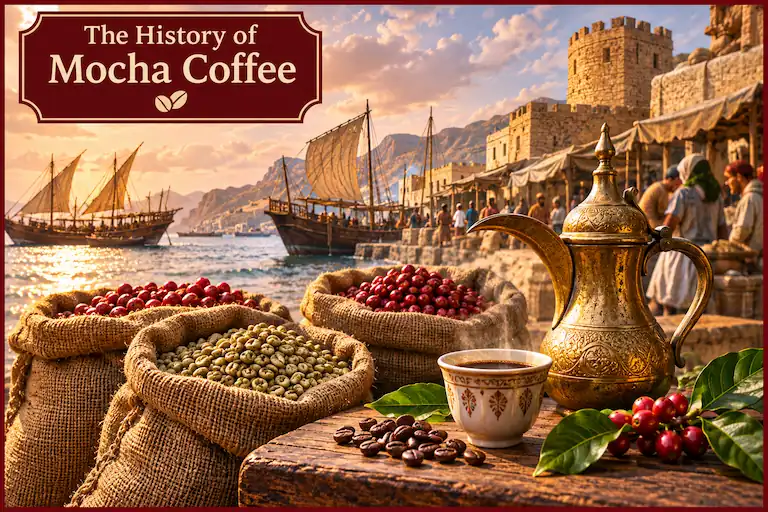
When someone walks into a coffee shop today and orders a Caffè Mocha, they are probably expecting a comforting combination of espresso, chocolate and steamed milk. It is one of the best-known flavoured coffee drinks around, but the history of Mocha Coffee reaches back much further than modern café menus.
The word Mocha originally had nothing to do with chocolate syrup or milk. It came from Al-Mokha, a historic port on Yemen’s Red Sea coast, which became closely associated with the international coffee trade. For centuries, coffee exported from this part of Arabia was prized across the Middle East and Europe, helping the port’s name travel around the world.
In my years running a coffee shop and designing catering menus, I always enjoyed sharing this little piece of history across the counter. A modern chocolate-flavoured coffee and a centuries-old Yemeni trading port might seem worlds apart, but they are connected by a name with a remarkable journey.

Where Was Mocha Invented and How Did It Get Its Name?
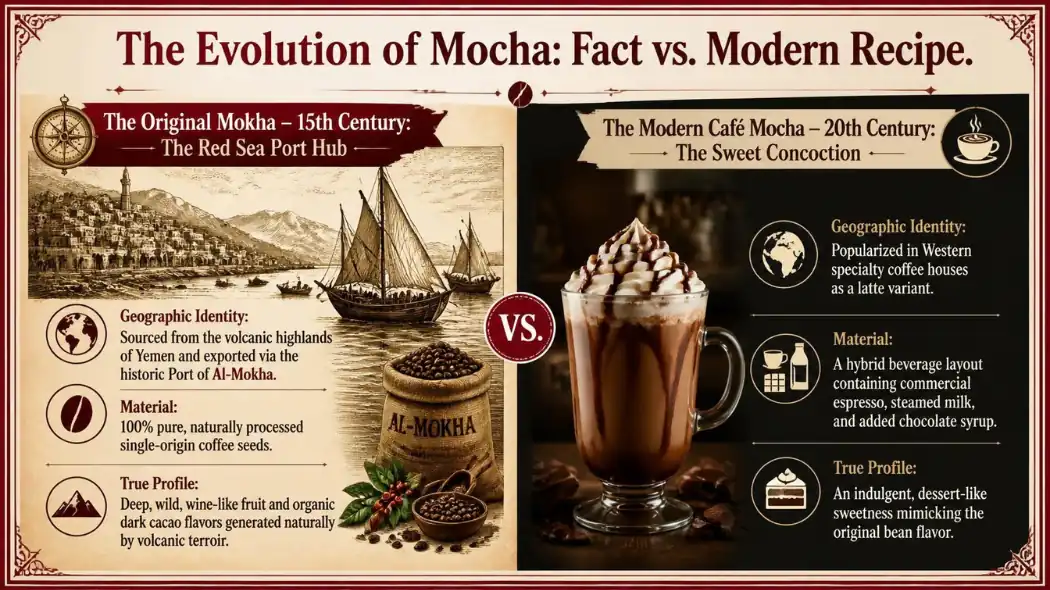
The name Mocha is a Western adaptation of Al-Mokha (also written Al-Mukhā), a coastal city in southwestern Yemen. From the sixteenth century onwards, the port became one of the most important centres in the international coffee trade. Coffee grown in Yemen’s highland terraces was transported towards the coast and shipped onwards to markets across the Red Sea, the Middle East and eventually Europe.
It is worth making one distinction here: the coffee was not necessarily grown in the port itself. The beans came from inland mountain-growing regions, where farmers cultivated coffee on steep terraces. Al-Mokha was the trading gateway that helped connect those producers with the wider world.
Coffee drinking had already begun spreading through the region before European merchants arrived. Sufi communities in Yemen are associated with the early use of coffee as a stimulating drink during religious observances, when remaining awake for prayer and contemplation was important. From Yemen, coffee culture travelled through places such as Mecca, Cairo and Istanbul before reaching European markets.
The British Museum’s exhibition guide, Life in a Cup: Coffee Culture in the Islamic World, explores this early connection between coffee, Sufi practice and the spread of the drink.
As international demand grew, European merchants established trading connections at Al-Mokha. Coffee became one of the port’s most famous exports, and the name of the place gradually became associated with the coffee itself. Historical accounts of the period also show that Mocha was a busy trading city dealing in other goods, including textiles, spices and aromatics.
By the seventeenth century, Yemeni coffee was highly valued in overseas markets. For a time, Yemen was the leading source of coffee for much of the world, although that position would not last indefinitely. As coffee plants were transported and cultivated in other parts of the world, production expanded and Yemen’s dominance gradually declined.
The History of Mocha Coffee and Its Chocolate Connection
If the original Mocha was coffee associated with a Yemeni port, how did the name become linked with chocolate?
Part of the answer lies in the reputation of Yemeni coffee itself. Traditional coffees from Yemen can have distinctive flavour profiles, sometimes including notes of cocoa, dried fruit, spice and earthy sweetness. These characteristics helped make the beans particularly memorable to merchants and coffee drinkers.
Naturally processed Yemeni coffees, dried with the fruit still around the seed, can develop concentrated fruit flavours and rich, sometimes chocolate-like notes. However, not every Yemeni coffee tastes the same, and chocolate is not a guaranteed characteristic of the origin.
The association between Mocha and chocolate eventually became part of the language of coffee. The word was being used for a coffee-and-chocolate mixture by the nineteenth century. The exact development of the modern café drink is less straightforward, with different coffee and chocolate traditions contributing to the drinks we recognise today.
One thing is clear: the original name came from Yemen, not from a recipe containing chocolate.
In my coffee shop and catering days, whenever we were lucky enough to source a good Yemeni coffee, I always enjoyed the natural richness and depth it could bring to the cup. It is easy to understand how the association with chocolate became so enduring, even though the flavour of a coffee depends on much more than its country of origin.
How Extraction Brings Out the Character of Mocha Coffee
Whether you are brewing a traditional Yemeni coffee or making a modern chocolate-and-espresso Caffè Mocha, the quality of the final drink depends on getting the balance right.
With a single-origin coffee, grind size, water temperature and brewing time all influence which flavours make it into the cup. A coffee that is under-extracted can taste thin, sharp or unpleasantly sour, while over-extraction can bring excessive bitterness and a dry finish.
If your espresso or filter coffee is consistently tasting harsh, take a look at our guide to why coffee tastes bitter, where we explore the common causes and how to correct them.
On the other hand, if your coffee tastes unusually sharp, thin or underdeveloped, our companion guide to why coffee tastes sour explains how grind size, water temperature and extraction time can affect the result.
For a Caffè Mocha, there is another balancing act. Chocolate brings sweetness and richness, while espresso contributes the coffee’s roasted character. Too much chocolate can overwhelm the coffee, but the right proportions allow both flavours to come through.
From Al-Mokha to the Italian Moka Pot
The influence of Mocha’s coffee trade can still be found in the equipment and traditions we use today.
In 1933, Italian engineer Alfonso Bialetti introduced the Moka Express, the familiar octagonal stovetop coffee maker that became a fixture in Italian kitchens. Its name echoes the historic Yemeni port and the long association between Mocha and coffee. The original design helped make strong, espresso-style coffee accessible at home without the need for a commercial espresso machine.
You can explore the story of the original brewer through Bialetti’s own history, which records the launch of the Moka Express in 1933.
Although the Moka pot and the modern Caffè Mocha are very different things, both carry a name that can be traced back to the same historic place.
The port of Al-Mokha is no longer the international coffee gateway it once was, but its influence remains firmly woven into coffee culture. The name has travelled from a Yemeni coastline to European trading houses, from traditional coffee descriptions to chocolate-flavoured café drinks, and even onto a familiar piece of Italian kitchen equipment.
Next time you order a Caffè Mocha or prepare coffee in a Moka pot, there is a little more history behind the name than you might expect.
Here at The Coffee Guide, we love following these connections because they remind us that coffee is about far more than what ends up in the cup. Every name, variety and brewing tradition has a story behind it, and sometimes that story begins in a small port on the edge of the Red Sea.


